Hidden Storage: Creating Recessed Wall Shelving
Maximize space and add architectural interest with sleek built-in storage solutions
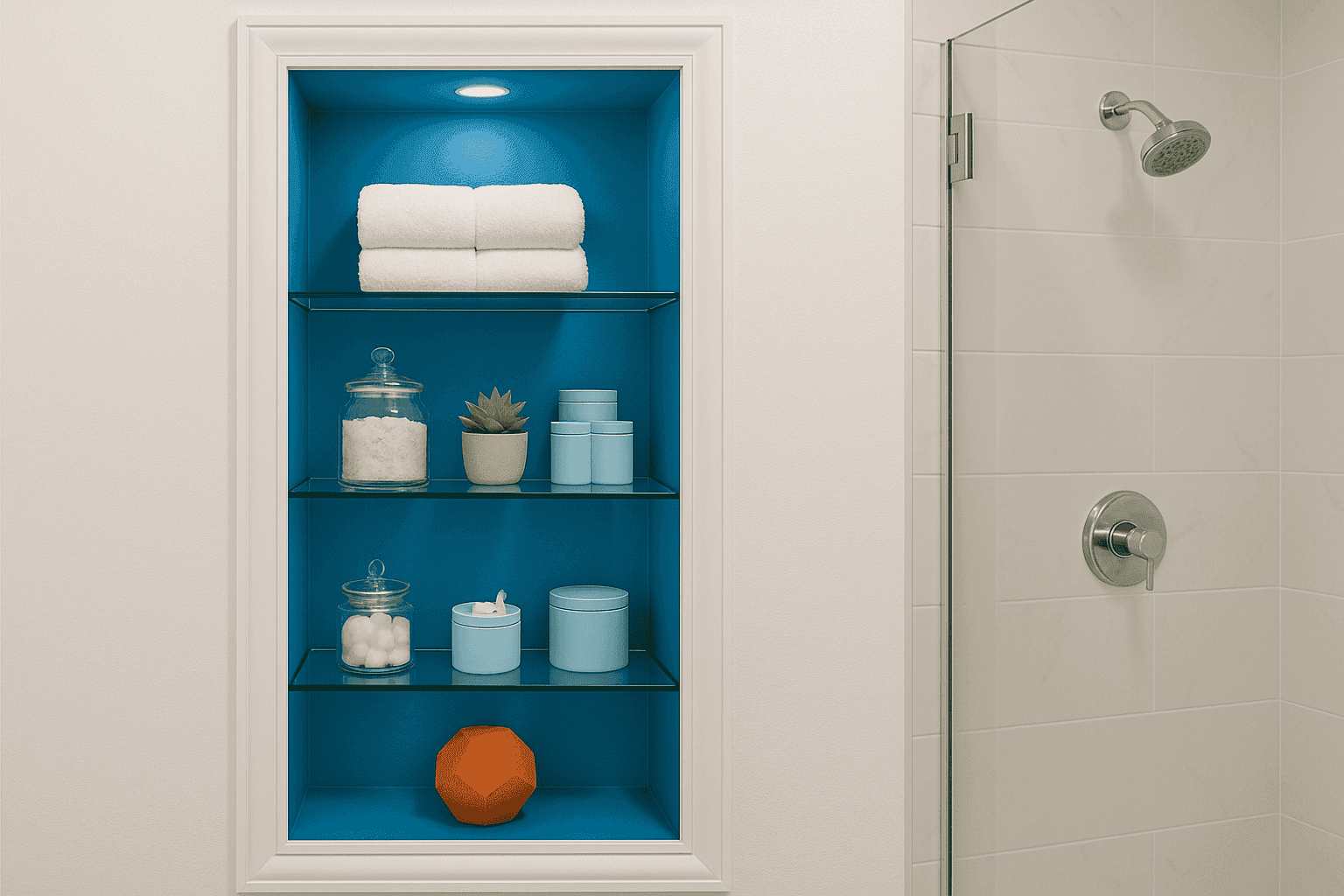
Recessed shelving offers the perfect solution for adding storage without sacrificing valuable floor space. By utilizing the unused area between wall studs, you can create sleek, built-in niches that add both function and architectural interest to your home. Particularly effective in smaller spaces like bathrooms and hallways, these streamlined storage solutions keep essentials accessible while maintaining a clean, uncluttered aesthetic that enhances rather than detracts from your overall design.
Materials & Tools
| • Detection Tools: Stud finder, voltage detector |
| • Cutting Tools: Drywall saw, utility knife, jigsaw |
| • Construction Materials: 2x4 lumber, drywall |
| • Shelf Materials: Wood boards, glass shelves, or tile |
| • Finishing Supplies: Joint compound, sandpaper, primer |
| • Tools: Level, measuring tape, drill, screwdriver |
| • For Wet Areas: Waterproof materials, caulk, tile |
| • Optional: LED lighting strips, glass shelf clips |
Installation Process
- Locate wall studs. Use a stud finder to identify and mark wall studs in your chosen area. Standard studs are typically spaced 16" apart, creating a 14.5" wide cavity that can be utilized for shelving.
- Check for obstacles. Use a voltage detector to check for electrical wiring, and be aware of potential plumbing within the wall. Avoid areas with these obstructions or plan to work around them.
- Design your niche. Determine dimensions based on stud locations and intended use. For standard stud walls, width will typically be 14.5", but height and depth can vary based on your needs and wall construction.
- Mark and cut opening. Draw the outline of your niche on the wall, ensuring it's level and positioned between studs. Use a drywall saw to carefully cut along your outline, avoiding any electrical wires.
- Build the frame. Construct a box frame using 2x4s to fit inside the wall cavity. This will provide support for shelves and create clean edges for your niche. Secure the frame to existing studs.
- Install backing. Attach a piece of drywall or plywood to the back of the cavity to create a finished back wall for your shelving unit.
- Finish the edges. Apply corner bead to the exposed drywall edges, then use joint compound to create smooth transitions between the wall and your niche. Sand when dry for a seamless finish.
- Add shelf supports. Install supports for adjustable shelving using shelf pins, built-in ledges, or glass clips depending on your design and materials.
- Paint and finish. Prime and paint the interior of the niche to match or contrast with your wall color. In bathrooms or kitchens, consider adding tile for a moisture-resistant, easy-to-clean surface.
- Install shelves and accessories. Add shelving materials of your choice—wood, glass, or tile—and consider integrating LED lighting for added functionality and ambiance.
For a high-end custom look, consider finishing the interior of your recessed shelving in a contrasting color or material from your walls. A pop of bold color or metallic paint inside the niche creates depth and highlights displayed items. In bathrooms, installing recessed shelving at tub or shower height eliminates the need for caddies or corner shelves that collect grime. For hallways, create a series of staggered niches at varying heights for an artistic display that doubles as storage for keys, mail, and everyday essentials.