Hardware Refresh: Modern Updates for Doors and Cabinets
Transform your home's look with the simple swap of knobs, handles, and hinges
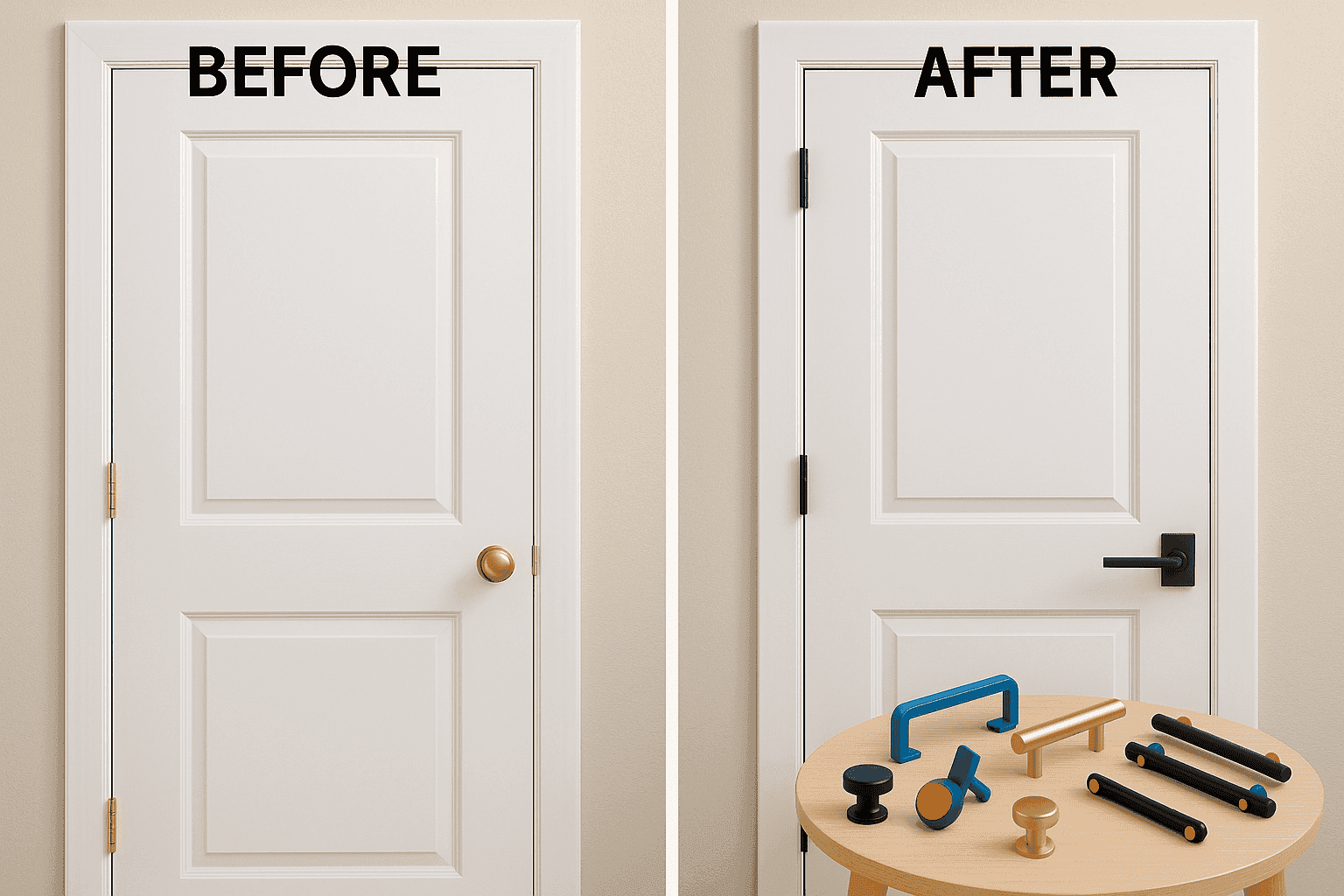
Hardware is often called the jewelry of a home—small details that make a significant impact on overall appearance. Updating outdated or builder-grade door knobs, hinges, and cabinet hardware is one of the most cost-effective ways to modernize your space without major renovation. This simple weekend project requires minimal tools and technical skill but delivers dramatic results that instantly elevate your home's style while improving functionality.
Materials & Considerations
| • Door Hardware: Knobs, levers, deadbolts, handles |
| • Hinges: Standard, decorative, or concealed |
| • Cabinet Hardware: Knobs, pulls, handles |
| • Finish Options: Matte black, brushed nickel, brass, bronze |
| • Tools: Screwdrivers, drill, measuring tape |
| • Templates: Hardware installation guides |
| • Backplates: Optional covers for existing holes |
| • Wood Filler: For patching old screw holes |
| • Touch-up Paint: To cover patched areas |
Installation Process
- Choose a cohesive look. Select hardware with consistent finishes throughout your home for a coordinated appearance. Contemporary trends include matte black, brushed brass, and satin nickel, but choose what complements your overall design style.
- Take inventory and measure. Count all doors, cabinets, and drawers requiring new hardware. For cabinet pulls, measure the existing "center-to-center" distance between screw holes to ensure new hardware fits the same footprint.
- Purchase appropriate hardware. For doors, note whether you need privacy locks (bedrooms, bathrooms), passage knobs (closets), or keyed entry locks (exterior doors). For cabinets, decide between knobs or pulls based on functionality and style preference.
- Start with interior doors. Remove one door knob by unscrewing the two screws on the interior plate. The knob assembly should pull apart easily. For hinges, remove one screw at a time, supporting the door as you work.
- Install new door hardware. Insert the latch mechanism first, ensuring the angled side faces the direction the door closes. Align the exterior and interior knobs, then secure with provided screws. For hinges, replace one at a time to keep the door aligned.
- Address cabinets systematically. Work one section at a time—all upper cabinets, then all lowers. Remove existing hardware and determine if new pieces will cover the same holes. For pulls with different spacing, use a cabinet hardware template to ensure proper alignment.
- Fill old holes if necessary. If new hardware doesn't align with existing holes, fill old holes with wood filler, sand smooth, and touch up with matching paint or stain before drilling new holes.
- Address special situations. For bi-fold doors, replace both knobs and hinges for a complete update. For French doors, consider upgrading to coordinating lever handles and dummy knobs for a sophisticated look.
- Tackle exterior doors last. These require more precision due to security concerns. Ensure deadbolts align perfectly with strike plates, and consider upgrading to smart locks or keyless entry systems for modern convenience.
When updating cabinet hardware, consider the rule of mixed metals: limit your palette to no more than three metal finishes throughout your home to maintain a cohesive look. For an upscale designer touch in kitchens, try combining two complementary hardware styles—perhaps knobs for upper cabinets and longer pulls for lower cabinets and drawers. This creates visual interest while maintaining a unified theme. For larger cabinet doors like pantries, oversized pulls or appliance handles make a dramatic statement and improve functionality for these heavily used areas.