Hang On: Wrap Wooden Hangers in Velvet for $2 Each
Three yards of velvet ribbon and a hot glue gun turns a basic wooden hanger into something that looks like it came from a boutique closet organizer
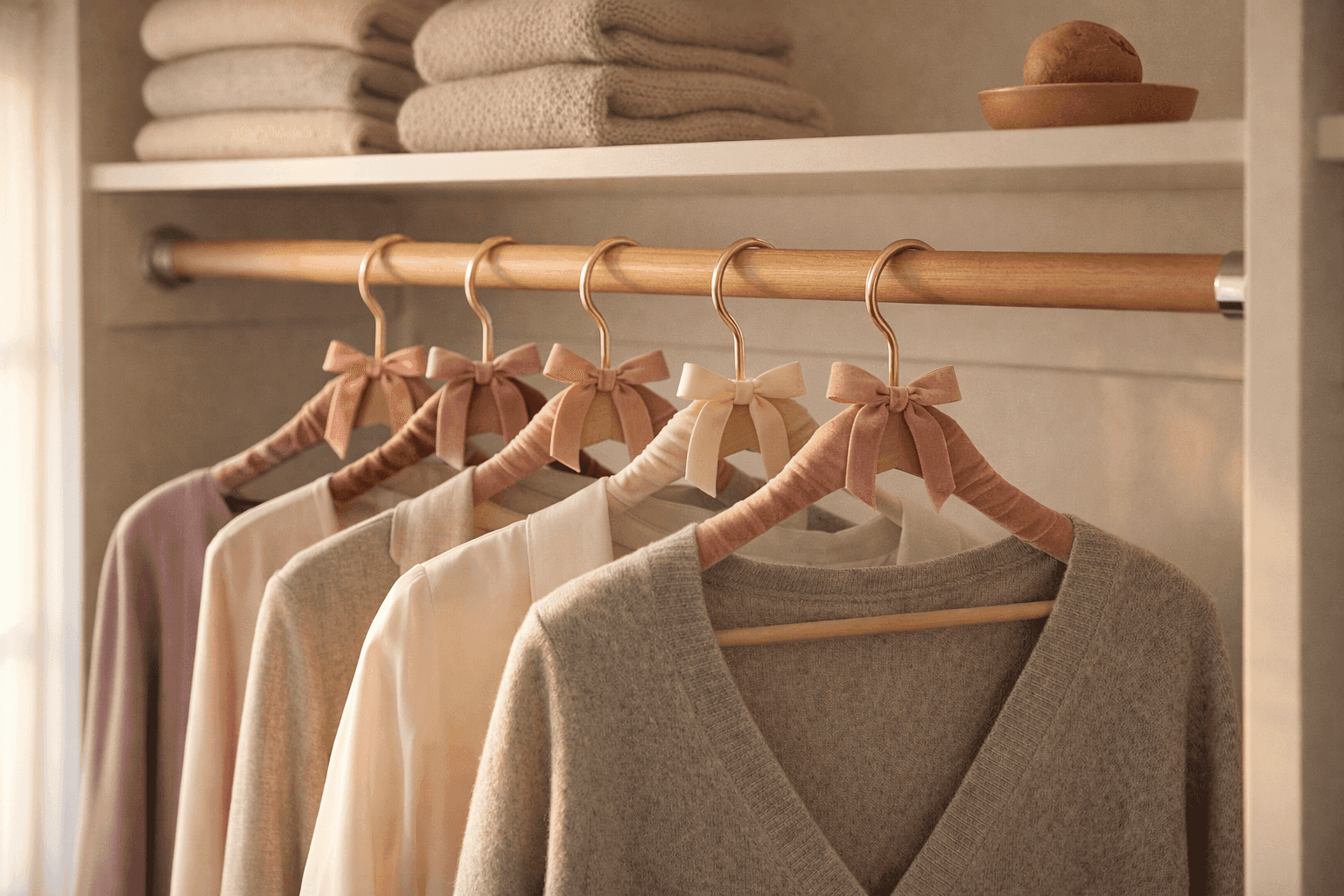
Store-bought velvet hangers run $6–$10 each, which means outfitting a closet of twenty hangers costs you somewhere north of $150 before you've changed a single thing about the actual clothes hanging on them. The DIY version costs about $2 per hanger, takes roughly five minutes of wrapping per hanger while watching something on TV, and produces a result that is genuinely indistinguishable from the boutique versions — except that you get to choose the exact color, which means blush pink to match your bedroom palette, emerald green because you love it, or a coordinated set in three tones that makes opening your closet feel like a small, private luxury every single morning. The velvet texture works functionally too — it grips fabric so clothes stay exactly where you hung them instead of sliding to the floor at 2am for mysterious reasons. This is the Makeover Monday project that transforms the most overlooked room upgrade into a genuinely satisfying afternoon that costs almost nothing and lasts for years.
What You'll Need
- The Hangers
- Wooden hangers in your preferred style — standard flat wooden hangers with a center notch work best for this technique, as the flat surface wraps cleanly and the shoulder curve is gentle enough that ribbon lies smooth without bunching — ~$15–$25 for a pack of 10 at a hardware store or home goods store
- Sand any rough spots or splinters on new wooden hangers before wrapping — a rough surface causes ribbon tension inconsistencies that show as lumpy or uneven sections in the finished wrap
- Repurpose plain wooden hangers you already own for a zero-cost base — even ones with minor scuffs or stains wrap beautifully since the velvet covers the wood completely
- The Velvet Ribbon
- Single-faced velvet ribbon in ½-inch or 5/8-inch width — this range wraps quickly, covers the hanger in smooth overlapping rows, and produces a tight, professional-looking result. Wider ribbon creates fewer wrapping rows but is harder to keep smooth around the shoulder curves; narrower ribbon takes significantly longer — ~$1.50–$2.50 per 3-yard length depending on fiber content and store
- You need approximately 3 yards per standard wooden hanger — buy a spool rather than cut lengths if you're making 10 or more, which is dramatically more economical at ~$4–$8 for a 10-yard spool
- Polyester velvet ribbon is the most widely available and most budget-friendly option; rayon velvet has a richer sheen and softer hand but costs slightly more and is less forgiving of hot glue heat
- Color options that work especially well: blush pink, dusty rose, emerald green, sage, navy, black, ivory, and deep burgundy — choose one for a coordinated set or two to three for a curated mixed palette
- Adhesive & Tools
- Hot glue gun — a low-temperature gun is preferred for velvet ribbon because high-temp glue can melt or flatten the velvet pile at contact points, leaving shiny compressed spots that show through the wrap — ~$8–$12 if you don't already own one
- Low-temp glue sticks — one stick per two to three hangers is a reasonable estimate — ~$3–$5 for a pack
- Sharp fabric scissors for cutting ribbon cleanly at the start and finish of each hanger — a clean cut prevents fraying that unravels the wrap end over time
- Binder clips or clothespins for holding the ribbon start in place while the first glue dot sets — optional but genuinely helpful for keeping consistent tension from the very first wrap
- Finishing Options
- A small bow or knot of coordinating ribbon at the center meeting point for a finished, intentional look — adds 30 seconds per hanger and elevates the result significantly
- Clear-drying fabric glue as an alternative to hot glue for anyone concerned about heat near delicate ribbon fibers — takes longer to set but produces invisible joins
- A dab of clear nail polish on cut ribbon ends to prevent fraying at the start and finish points
How to Make Them
- Prep your workspace by setting up your glue gun to warm fully before touching the first hanger — a glue gun that isn't fully heated produces stringy, inconsistent adhesive that creates lumps under the ribbon and doesn't hold cleanly at the start and finish points. Lay a silicone mat or parchment paper under your work area to catch glue drips, and have your scissors, ribbon spool, and a small bowl of water nearby — a damp fingertip pressed briefly over a glue point that's visible through the ribbon flattens it invisibly in about two seconds.
- Start at one end of the hanger by cutting a clean ribbon end, applying a small dot of hot glue to the very tip of one shoulder, and pressing the ribbon end firmly onto the glue for a full five seconds until it sets — this anchor point is what your entire wrap tension relies on, so give it the full cure time before beginning to wrap. A ribbon that starts with a weak anchor will gradually loosen tension as you work toward the center and produce a final result that looks tight at the end but sloppy at the start.
- Begin wrapping with consistent tension by pulling the ribbon slightly taut with each rotation — not so tight that it deforms the wood or causes the ribbon to ripple, but firm enough that each row sits flush against the previous one with no gaps showing the wood beneath. The slight overlap between each wrap row should be consistent at about ⅛ inch — this overlap is what produces that smooth, fully-covered surface rather than a spiraling barber-pole effect where the wood shows between rows.
- Navigate the shoulder curve by slightly increasing the overlap on the inside of the curve and slightly decreasing it on the outside, which keeps the ribbon lying flat rather than bunching on the inside edge or gapping on the outside. This is the one technique point that separates a neat wrap from a lumpy one — spend an extra 30 seconds paying attention to the curve on your first hanger and the adjustment becomes automatic on every subsequent one.
- Add a glue dot every 8–10 wraps to secure the ribbon against loosening over time — apply the dot to the wood surface rather than on top of a previous ribbon row, press the ribbon over it immediately, and hold for three seconds before continuing the wrap. These intermediate anchor points are invisible in the finished hanger and are what keeps the wrap looking tight and neat after months of regular use rather than gradually unwinding from the center outward.
- Work from both ends toward the center by completing the first shoulder arm fully, cutting the ribbon with a clean diagonal cut at the center point, then starting a fresh ribbon length from the opposite shoulder end and working inward to meet the first. This two-direction approach produces a symmetrical wrap that meets cleanly in the center — wrapping continuously from one end all the way across creates a diagonal seam at the center that looks unintentional rather than designed.
- Finish the center meeting point with a secure glue dot under each ribbon end, pressing both ends flat against the hanger, and covering the join with a small bow or knot of matching ribbon glued directly over it — this finishing touch transforms a functional join into a deliberate design detail that makes the hanger look boutique-finished rather than handmade. Trim any excess ribbon ends to clean diagonal points before the glue fully sets.
- Hang finished hangers vertically for at least 30 minutes before loading them with clothes so all glue points cure completely under the weight of the ribbon rather than under the additional weight of garments. Line them up in your closet in your chosen color order — all one color for a serene, unified look, or alternating shades for a curated collected feel — and take the 10 seconds to appreciate what a completely different space a closet full of coordinated velvet hangers creates compared to the mismatched plastic and wire situation you just replaced.
Professional closet designers who style high-end residential wardrobes use a specific color strategy for hanger sets that makes a closet feel significantly more curated than a single-color approach: choose one primary hanger color that coordinates with the dominant tone of your clothing, then use a second accent color on hangers designated for a specific clothing category — all your blazers on emerald, all your dresses on blush, all your everyday tops on navy. This visual coding system does double duty — it makes your closet look intentionally styled from the doorway, and it makes getting dressed faster because the category organization is visible at a glance without reading labels or pushing through a uniform row of identical hangers. The addition of cedar balls or small sachets of dried lavender looped onto the hooks of finished hangers is the last detail that takes a beautiful closet from well-organized to genuinely sensory — the kind of closet you open in the morning and feel, briefly but meaningfully, like everything is in order.