Grout Expectations: Add Glitter to Your Backsplash
Fine cosmetic glitter mixed into grout before application — the $15 backsplash upgrade that catches light beautifully and makes your kitchen genuinely impossible to forget
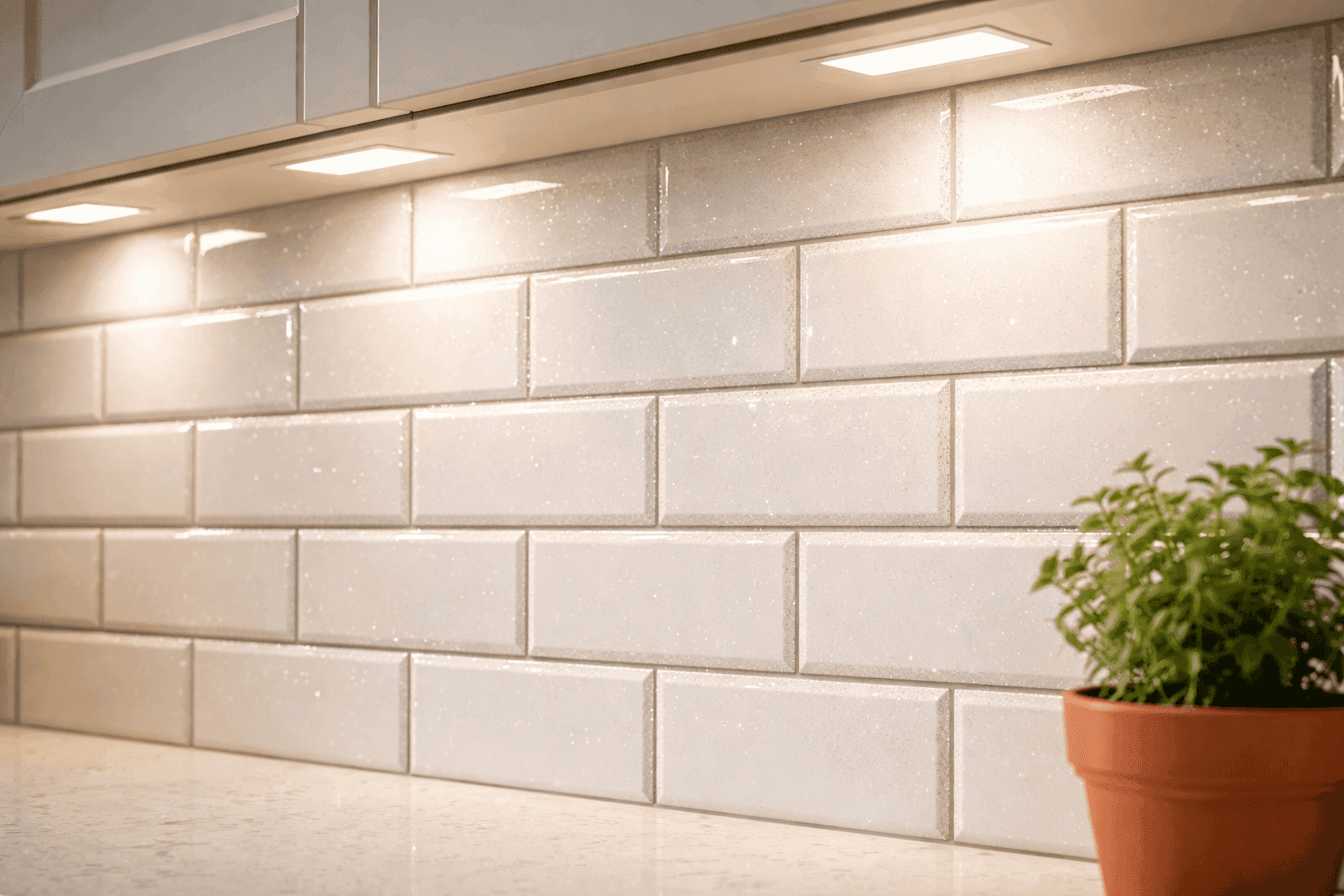
Grout is the detail that most people treat as purely functional — the filler between tiles that you choose in white or gray and then spend years trying to keep clean. Glitter grout reframes that entire relationship: the same lines that usually disappear into the background become the most interesting visual detail in the room, catching light from different angles throughout the day and creating a shimmer that reads as subtle and sophisticated rather than over-the-top. The technique couldn't be simpler — fine cosmetic-grade glitter mixed into standard grout before application, applied exactly as you would apply any grout, sealed to lock in the sparkle permanently. The upgrade costs $12–$18 in glitter and a bag of grout, takes the same amount of time as standard grouting, and produces a backsplash that everyone who sees it comments on without quite being able to explain why the space feels more elevated than a comparable kitchen. Silver with white subway tile, gold with warm cream tile, rose gold with gray tile — any of these combinations sits right at the line between unexpected and intentional that makes a design choice look like genuine taste rather than a DIY project. This is the Sassy Saturday upgrade for anyone whose backsplash has been doing its job quietly and invisibly for too long.
What You'll Need
- The Glitter — Most Important Choice
- Fine cosmetic-grade or craft glitter in the smallest available particle size — labeled "extra fine" or "ultrafine" with particles under 0.008 inches in diameter. Fine glitter distributes evenly through the grout, seats flush in the joint surface, and produces a refined shimmer rather than chunky sparkle — ~$5–$8 per tube or container at a craft store
- Chunky or standard-grade craft glitter is the one material to avoid absolutely — large glitter particles won't seat into the grout surface, create rough, uneven joint lines that catch dirt, and produce a look that reads as craft project rather than intentional design regardless of the tile quality around it
- Silver glitter with white, light gray, or cool-toned tiles for a modern, glamorous effect — the silver reads as a metallic highlight within the grout line rather than an added element
- Gold or champagne glitter with cream, beige, or warm-toned tiles for a warmer, more opulent quality that suits traditional and transitional kitchen styles
- Rose gold glitter with gray or white tiles for a contemporary, sophisticated combination that photographs exceptionally well in both natural and warm artificial light
- Iridescent or holographic glitter for the most dramatic, color-shifting effect — changes from silver to pink to green to blue depending on viewing angle and light source, best suited to a small accent section rather than the full backsplash
- The Grout
- Unsanded grout for joints under ⅛ inch wide — the standard for most subway tile and mosaic tile installations — ~$6–$10 per bag
- Sanded grout for joints ⅛ inch or wider — the glitter particles distribute more evenly through sanded grout's coarser base texture, making it slightly more forgiving of glitter particle size variation
- White or light gray grout as the base — darker grout colors reduce the visibility of the glitter shimmer by absorbing rather than reflecting the light that makes the glitter visible. The lighter the grout base, the more the glitter reads as a luminous highlight
- Epoxy grout as a premium alternative — more durable, more stain-resistant, and holds glitter particles more securely than cement-based grout, though it requires faster working time and more precise application technique — ~$25–$40 per kit
- Application Tools
- A rubber grout float for pressing the glitter grout into the tile joints — the same tool used for standard grouting, with no modification required for the glitter application
- A large cellulose sponge and two buckets — one for mixing reference, one for clean rinse water during the cleanup passes
- Painter's tape for masking the edges of any accent section if you're applying glitter grout to only part of the backsplash rather than the full surface
- Gloves — grout is alkaline and causes skin irritation with extended contact, and glitter-contaminated grout on bare hands is particularly difficult to remove completely
- Sealing
- A penetrating grout sealer — non-negotiable for glitter grout, which needs the sealer to lock the surface glitter particles permanently into the cured grout rather than allowing them to slowly dislodge with regular cleaning and water exposure — ~$8–$12 per bottle
- A second sealer coat applied 30 days after the first — glitter grout benefits from a double seal more than standard grout because the glitter particles at the surface create microscopic irregularities that benefit from the additional protection of a second penetrating coat
How to Apply It
- Test your glitter-to-grout ratio before committing to the full backsplash — mix a small test batch of 2 tablespoons of glitter per cup of grout, apply it to a scrap piece of tile or a hidden corner of the installation, let it cure fully, and assess the shimmer level in the actual lighting conditions of the room before mixing the full batch. The correct ratio produces visible, attractive shimmer when light hits it; too little glitter is invisible once the grout dries; too much glitter produces an uneven joint surface and reduces the grout's structural integrity. Adjust the ratio based on what the test patch shows rather than working from any written guideline.
- Mix the dry glitter into the dry grout powder before adding any water — combining the glitter with the dry powder distributes it evenly throughout the batch so the shimmer is consistent across the full application rather than concentrated in some areas and absent in others. Mix thoroughly with a stir stick until the glitter is fully incorporated with no visible concentrations before adding water a little at a time to reach the smooth peanut butter consistency that indicates correctly mixed grout.
- Work in small sections of about two square feet at a time — glitter grout behaves identically to standard grout in terms of working time, and glitter doesn't extend that window. Apply the grout to the tile surface with the rubber float held at a 45-degree diagonal angle, pressing firmly to pack the joints completely, and begin the cleanup process within the same working window you'd use for standard grout in the same temperature conditions.
- Clean the tile faces carefully with a well-wrung damp cellulose sponge in gentle diagonal passes — the glitter particles on the tile surface are slightly more stubborn to remove than standard grout haze because they're flat and reflective rather than matte, and they show more clearly on the tile face if any residue remains after cleaning. Use very light pressure during the cleaning passes and rinse the sponge frequently — heavy scrubbing redistributes glitter from the tile face back into the joint rather than removing it cleanly.
- Buff the grout haze from the tile faces with a dry microfiber cloth once the grout has firmed up but before it has fully hardened — typically 30–60 minutes after the cleaning passes. The buffing step is more important with glitter grout than standard grout because any residual haze on the tile surface contains glitter particles that, once the grout is fully cured, become a permanent sparkly film on the tile face that no amount of cleaning removes. A thorough buff at this stage prevents that outcome completely.
- Allow full 24-hour cure before any water exposure or traffic on the grouted surface — glitter grout needs the same cure time as standard grout, and exposing it to moisture during the cure period weakens the bond between the grout matrix and the glitter particles, increasing the chance of surface glitter loss during the first few cleaning sessions. Cover the grouted area loosely with plastic sheeting if the backsplash is near a sink that will be used during the cure period.
- Apply grout sealer in two coats starting 48–72 hours after grouting once the grout is fully cured — run the sealer applicator along every joint line in one continuous motion, allow it to penetrate for the manufacturer's specified dwell time, and wipe off any excess from the tile faces before it dries. The sealer locks the surface glitter particles into the cured grout matrix and is the step that determines whether the finished effect maintains its shimmer through years of backsplash cleaning or slowly loses glitter particles with each wipe-down.
- Assess the effect in different lighting conditions before declaring the project complete — the glitter grout shimmer changes dramatically between direct natural daylight, afternoon sun at a low angle, overhead artificial light, and undercabinet lighting, and the full range of the effect isn't visible until you've seen the backsplash in all the lighting conditions that actually occur in the space. Stand at different positions in the room and observe the backsplash at different times of day before deciding whether you want additional glitter density or a different accent approach — and enjoy the fact that your backsplash now does something that no standard grout installation anywhere has ever done in that kitchen.
Interior designers who work with specialty finishes use a technique called accent grouting that produces a dramatically more sophisticated result than applying glitter grout uniformly across an entire backsplash — and it works for both new tile installations and existing grout refreshes using grout renew products. Rather than glittering every grout line, they apply the glitter grout only to the horizontal joints while leaving the vertical joints in standard matching grout. The horizontal lines catch raking light from above — the primary light direction in most kitchens from overhead fixtures and window light — while the vertical joints remain matte and grounded. The result is a backsplash that shimmers in a structured, linear pattern rather than a uniform all-over sparkle, which reads as an intentional design detail rather than a uniform glitter application. A second technique worth considering before applying glitter grout to a full backsplash: use it only on a single focal-point section — the area directly behind the range, a niche accent wall in the shower, or the backsplash area between two windows — while leaving the rest of the tile installation in standard grout. A concentrated application creates a genuine focal point that draws the eye intentionally; a full-surface application can read as overwhelming in a small kitchen where the backsplash occupies a significant percentage of the total wall area.