Glow Up: Furniture Transformations That Cost Almost Nothing
The thrift store find you almost passed on could be your best piece of furniture
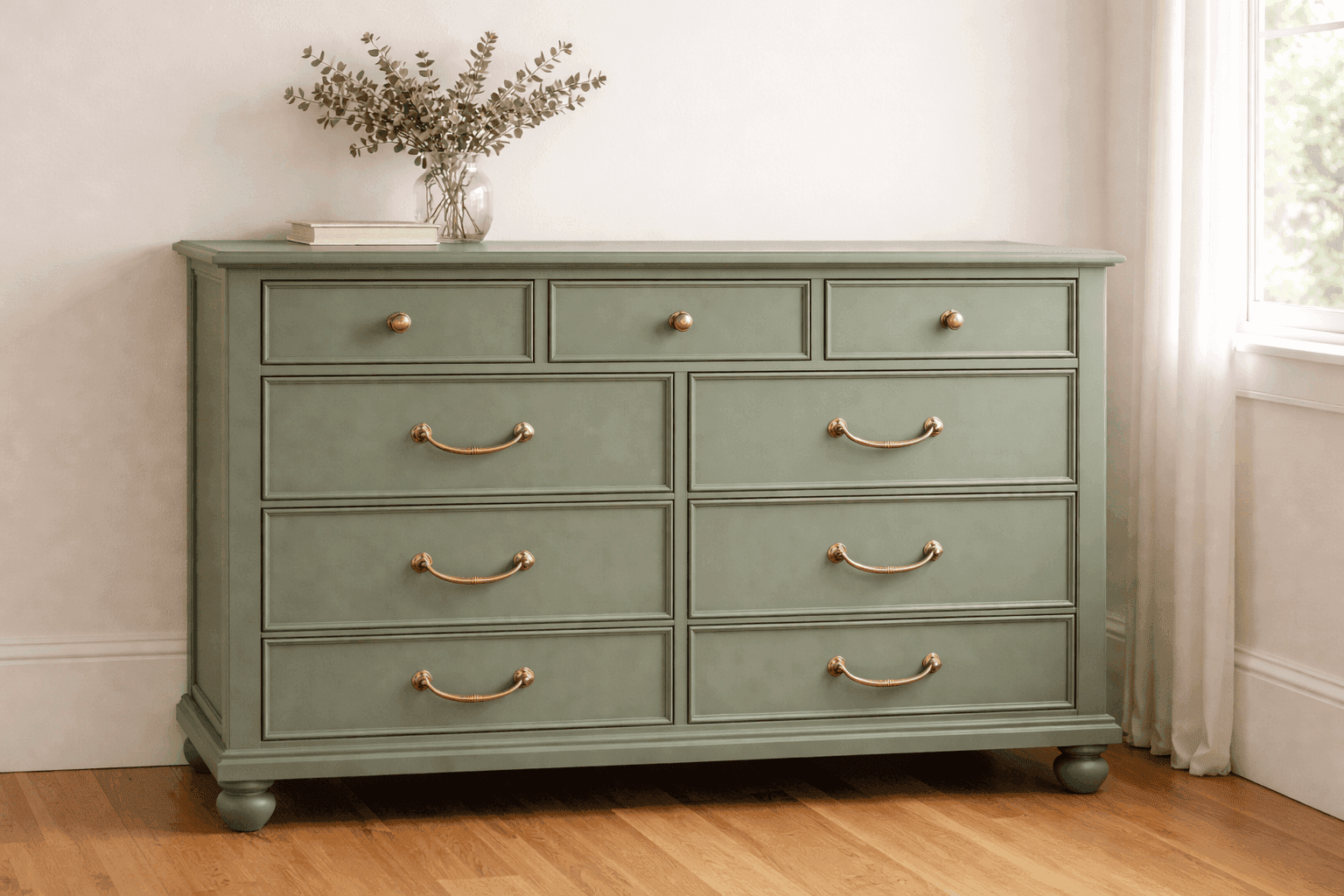
Solid wood furniture from 20–30 years ago is often genuinely better made than comparable new furniture today — thicker stock, dovetail joints, real wood throughout. The problem is usually just cosmetic: dark stain, dated hardware, or a finish that's seen better days. The upcycle opportunity is enormous. A $40 thrift store dresser with new paint and hardware can look like a $600 piece. Here's how to approach the most common furniture transformations.
Painting Furniture: Choosing the Right Product
The paint product matters enormously. Chalk paint (Annie Sloan, Rust-Oleum Chalked, etc.) has become popular because it requires minimal prep — it adheres to most surfaces without sanding or priming and dries to a matte, velvety finish. It's genuinely more forgiving for beginners. The tradeoff: it needs a wax or poly topcoat for durability, and it can look chalky if applied too thickly.
Cabinet and furniture paint (Benjamin Moore Advance, Sherwin-Williams Emerald Urethane) requires more prep — cleaning, light sanding, and a primer coat — but produces a harder, more durable finish that levels beautifully. This is the better choice for high-use pieces like dressers and dining tables. Regardless of product: clean the piece thoroughly first, fill any holes or gouges with wood filler, and apply in thin coats rather than one thick one.
Hardware Swaps: The Fastest Transformation
New hardware is the highest-ROI single step in any furniture makeover. Brass drawer pulls on a freshly painted dresser, matte black knobs on white kitchen cabinets, ceramic pulls on a bathroom vanity — hardware selection makes or breaks the final look. The practical consideration: check existing hole spacing before ordering online. Most hardware is available in common center-to-center measurements (3", 3.75", 5", and 128mm are the most common), and matching existing holes saves having to fill and re-drill. If you do need new holes, a simple paper template — fold a piece of paper around the drawer front, mark the holes with a pencil through the existing holes, then use it to mark new holes — keeps everything aligned.
Stain vs. Paint: Which Should You Choose?
Paint covers grain — it's forgiving of imperfections and gives you a clean, fresh look. Stain enhances grain — it's the right choice for pieces with genuinely beautiful wood underneath and wrong for pieces with veneer damage, repairs, or mismatched wood tones that would show through. To determine if a piece is worth staining: sand a small inconspicuous area and see what's underneath. Solid wood with an interesting grain? Stain is beautiful. Thin veneer with bubbles or damaged spots? Paint is your friend. Refinishing to a new stain color requires stripping the old finish with chemical stripper or a random orbital sander before applying the new stain — it's more work but produces results that look genuinely high-end on the right piece.
The items worth upcycling are solid wood pieces with good bones — dovetail joints, mortise-and-tenon construction, thick panels. The items not worth the effort are particle board or MDF pieces, which don't hold paint well, swell when wet, and often have laminate surfaces that are difficult to refinish. A quick tap test: solid wood sounds dull and full; particle board sounds hollow and flat. The best hunting grounds for upcycle candidates are estate sales (better quality than thrift stores, often), Facebook Marketplace, and curbside on trash day — people throw out genuinely beautiful furniture because it looks dated, not because it's damaged.