Get Your Garden Shed Season-Ready for $20
Two to three hours now means zero frustration every time you reach for a tool this season
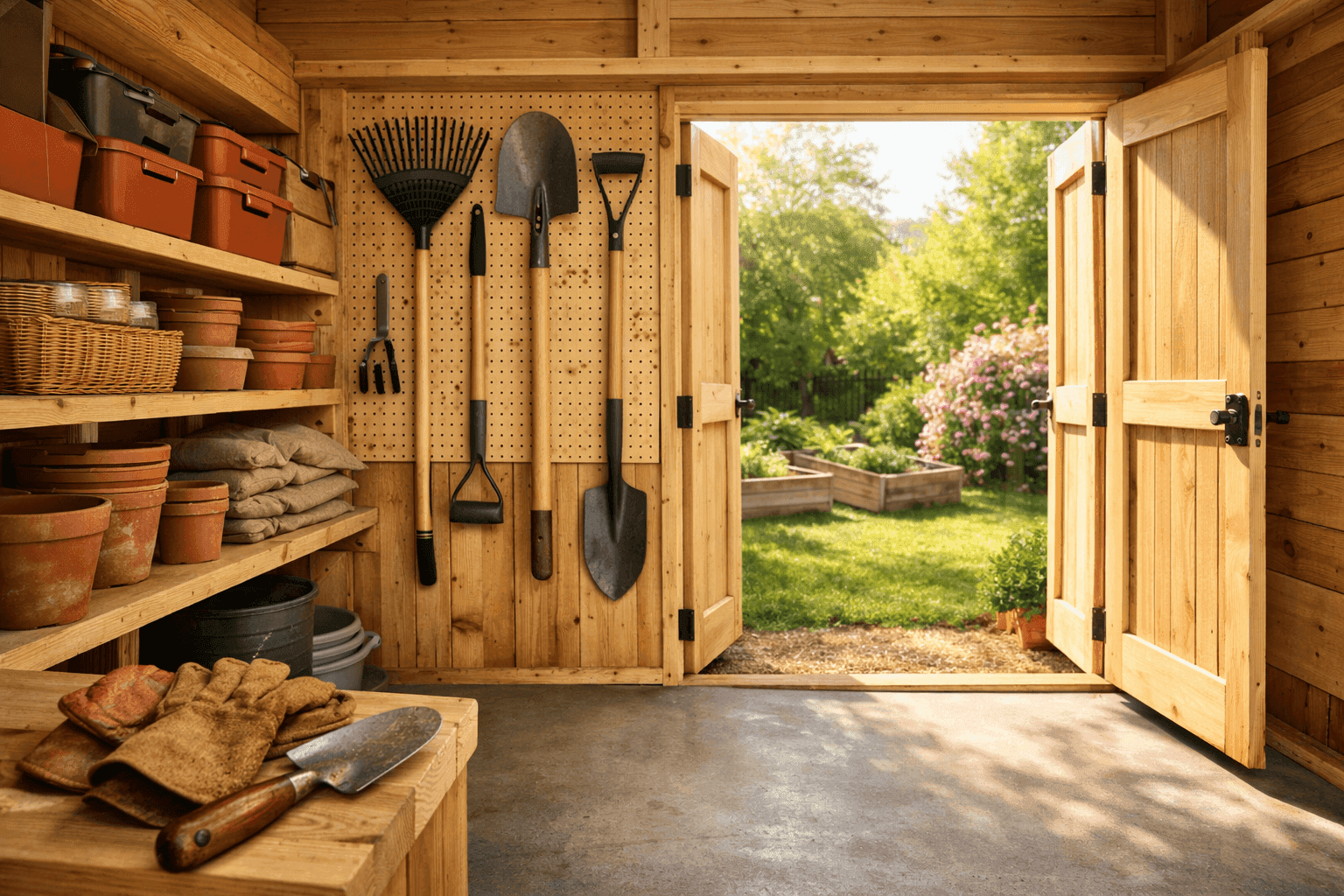
There's something uniquely defeating about walking into your garden shed on the first warm day of the season and immediately losing five minutes to hunting for your trowel under a collapsed bag of potting mix. The shed that worked fine in October has somehow spent the winter rearranging itself into a completely different chaos, and now planting season is here and you don't even know where your gloves are. A two-to-three hour cleanout before the season kicks off changes everything — not just for day one, but for every single trip out there between now and fall. You end up with a space where you can grab what you need and get back to actually gardening, which is the whole point. For $15–25 in hooks, bins, and basic supplies, you can turn a frustrating storage pile into a genuinely functional workspace that makes you want to spend more time in the garden.
What You'll Need
- Cleaning Supplies
- Stiff-bristle push broom for sweeping out dirt, debris, and any wintered-over critters
- Bucket with warm soapy water and a scrub brush for shelves and surfaces
- Old rags or a roll of paper towels
- Trash bags – at least two large ones for tossing and donating
- Organization Hardware (~$10–18)
- Heavy-duty adhesive hooks or a small pegboard section for hanging long-handled tools (~$6–10)
- 3–4 stackable plastic bins or mesh baskets for grouping smaller supplies (~$4–8 at dollar stores)
- Bungee cords or zip ties for bundling rakes, shovels, and hoes together
- Optional Upgrades (~$5–7)
- Adhesive label maker tape or a pack of chalkboard stickers for bin labeling
- Small plastic shelf liner strips to keep bins from sliding
- A hanging pocket organizer for seed packets and small hand tools
- Total Cost
- $15–25 depending on how much organization hardware you need; free if you improvise with what you already own
How to Do It
- Empty the shed completely — yes, completely. Pull everything out onto the lawn or driveway so you can see exactly what you own and clean the space from scratch. This step feels excessive until you realize you've been storing three broken trowels and an empty fertilizer bag for two years.
- Sort everything into four piles as you pull it out: keep, toss, donate, and "needs repair." Be ruthless — cracked pots, rusted tools beyond saving, and mystery hardware with no purpose should go straight into the toss bag without a second look.
- Sweep the floor thoroughly from back to front, then scrub the shelves with warm soapy water and let them dry fully before putting anything back. Check corners for spider nests, wasp starts, and any signs of rodents that may have moved in over winter.
- Inspect your keep pile before anything goes back in — sharpen dull hoe and trowel edges with a flat file if needed, wipe soil off handles, and check that your hose and any power tools are in working order now rather than mid-project in June.
- Plan your layout before loading anything back. Long-handled tools like rakes, shovels, and brooms belong on hooks or leaned in a designated corner near the door. Frequently used hand tools go at eye level. Seasonal items and bulk supplies go on lower shelves or in the back.
- Group items by category as you return them: planting supplies together, pest and fertilizer products together, hand tools together, and pots and seed trays stacked in one area. Use your bins and baskets to contain the smaller loose items — gloves, plant markers, twine, and ties are notorious for disappearing into shed chaos.
- Label every bin, even if it feels obvious right now. "Gloves + Ties" and "Seeds – Current Season" take ten seconds to write and save five minutes of hunting every single time you're out there in the middle of a project with dirty hands.
- Do a final walk-through with fresh eyes — step back, look at the full space, and make sure there's a clear path to move around comfortably. If something feels awkward to reach or the layout doesn't flow naturally, adjust it now before the season gets busy.
Professional garden designers and nursery managers organize their tool storage by frequency of use rather than by tool type — the things you reach for every single week live at arm's reach near the door, while seasonal items like bulb planters and frost cloth get stored deeper in the shed or up high. It sounds obvious until you realize most people do the opposite, storing their most-used trowel behind the bag of winter mulch they only touch twice a year. While you're setting up, take five minutes to mentally run through a typical week in your garden and let those habits — not categories — decide where everything lands.