Garden Gold: Turn Soup Cans Into Perfect Seedling Planters
Free planters that work better than expensive store-bought options
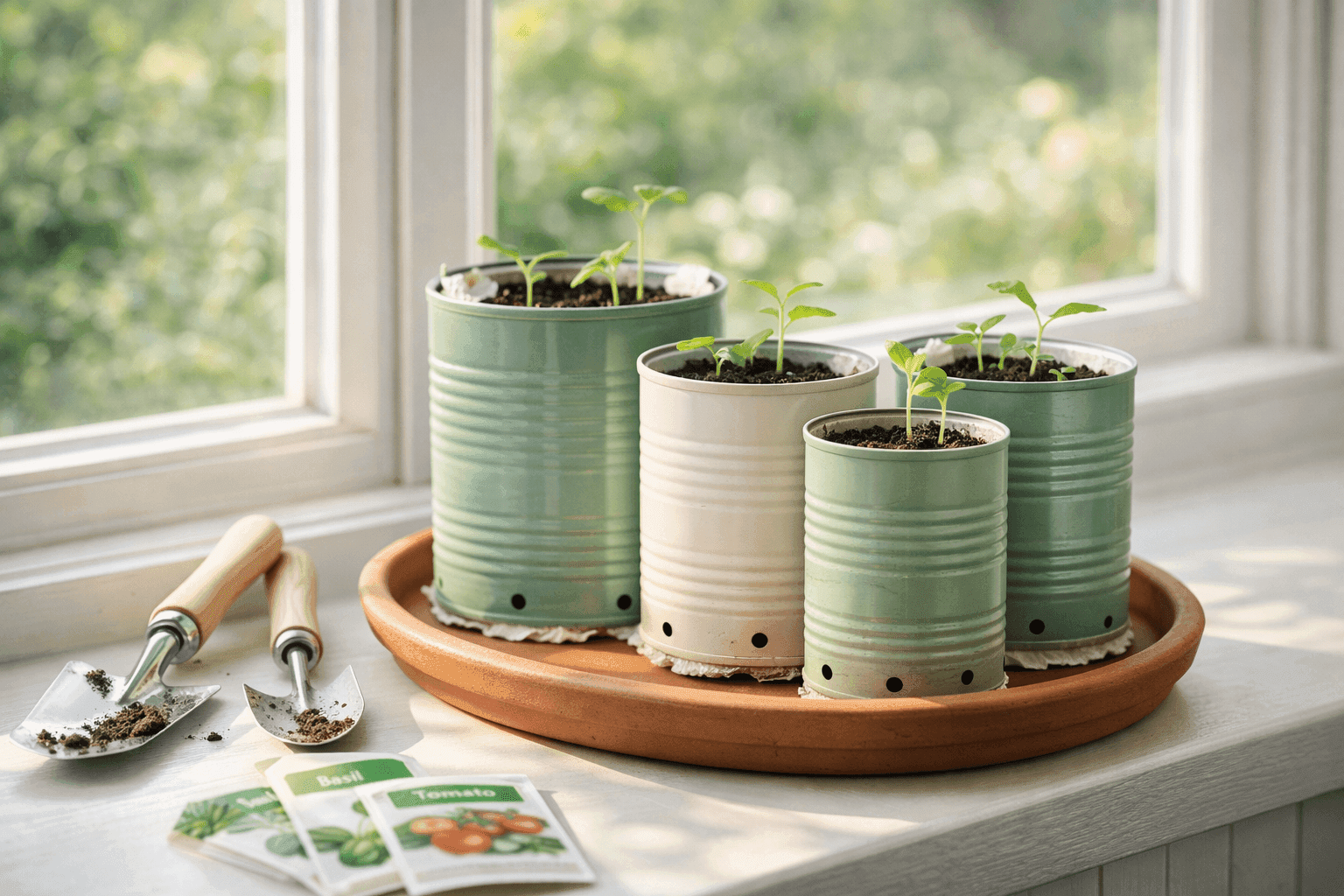
Those empty soup and vegetable cans sitting in your recycling bin are actually perfect seedling containers disguised as trash. While garden centers charge $3-5 per plastic starter pot, you can create superior planters for absolutely free using materials you already have at home. Tin cans offer excellent drainage when properly prepared, provide the perfect depth for developing root systems, and their metal construction actually helps regulate soil temperature better than thin plastic alternatives. The coffee filter trick prevents soil from washing out while still allowing water to drain freely, solving the biggest problem most DIY planters face. Whether you're starting tomatoes for summer harvest or getting herbs ready for spring planting, these upcycled beauties work just as well as expensive containers while keeping waste out of landfills and money in your pocket.
What You'll Need
- Containers:
- Clean soup cans (15-16 oz size works best)
- Vegetable cans with labels removed
- Any cylindrical metal food cans
- Tools:
- Hammer and nail (for drainage holes)
- Can opener (church key style is perfect)
- Sandpaper or metal file for sharp edges
- Finishing Supplies:
- Spray paint or acrylic paint (outdoor formula)
- Coffee filters (basket or cone style)
- Potting soil and seeds
- Clear sealant spray (optional, for longevity)
Create Your Planters
- Prepare your cans by removing all labels and adhesive residue using hot soapy water and a scrub brush, then dry completely to prevent rust from forming during the painting process.
- Punch 4-6 drainage holes in the bottom of each can using a hammer and nail, spacing them evenly around the base—this prevents water from pooling and causing root rot that kills seedlings.
- Sand the top rim and any sharp edges around drainage holes with sandpaper or a metal file, because safe handling matters when you're working with these planters daily throughout the growing season.
- Paint the exterior with outdoor-rated spray paint or acrylic paint in colors that complement your space, applying 2-3 light coats rather than one heavy coat to prevent drips and ensure even coverage.
- Line the bottom interior with a coffee filter, which allows water to drain freely while preventing soil from washing out through your drainage holes—this simple trick makes all the difference.
- Fill each can with quality potting soil to about one inch from the top, leaving room for watering without overflow while giving roots plenty of space to establish.
- Plant your seeds according to packet directions, or transplant small seedlings, then water gently until moisture appears at the drainage holes to confirm your system is working properly.
- Position your new planters on a sunny windowsill or outdoor table with a tray underneath to catch drainage water, and watch your free containers perform just as well as expensive alternatives.
Professional gardeners often prefer metal containers over plastic for seedlings because metal conducts temperature more efficiently, helping soil warm up faster in spring while preventing overheating on hot days. To extend the life of your tin can planters, spray the interior with clear sealant before adding the coffee filter—this prevents rust from developing when soil stays damp. For an elevated presentation, group planters of varying heights together using a tiered plant stand, or attach them to a wooden pallet for a vertical garden that maximizes limited space. The beauty of this project is you can make as many as you need without any financial investment, so experiment freely with different sizes for everything from lettuce to peppers.