Gallery Wall Done Right: From Blank Wall to Curated Display
Plan it on the floor before you put a single nail in the wall
A gallery wall can look effortlessly curated or like controlled chaos — and the difference is planning. The good news is the planning happens on the floor, not the wall, so no commitment required until you're actually happy with the arrangement. Here's the process that produces a gallery wall you'll love for years.
Choose a Unifying Element
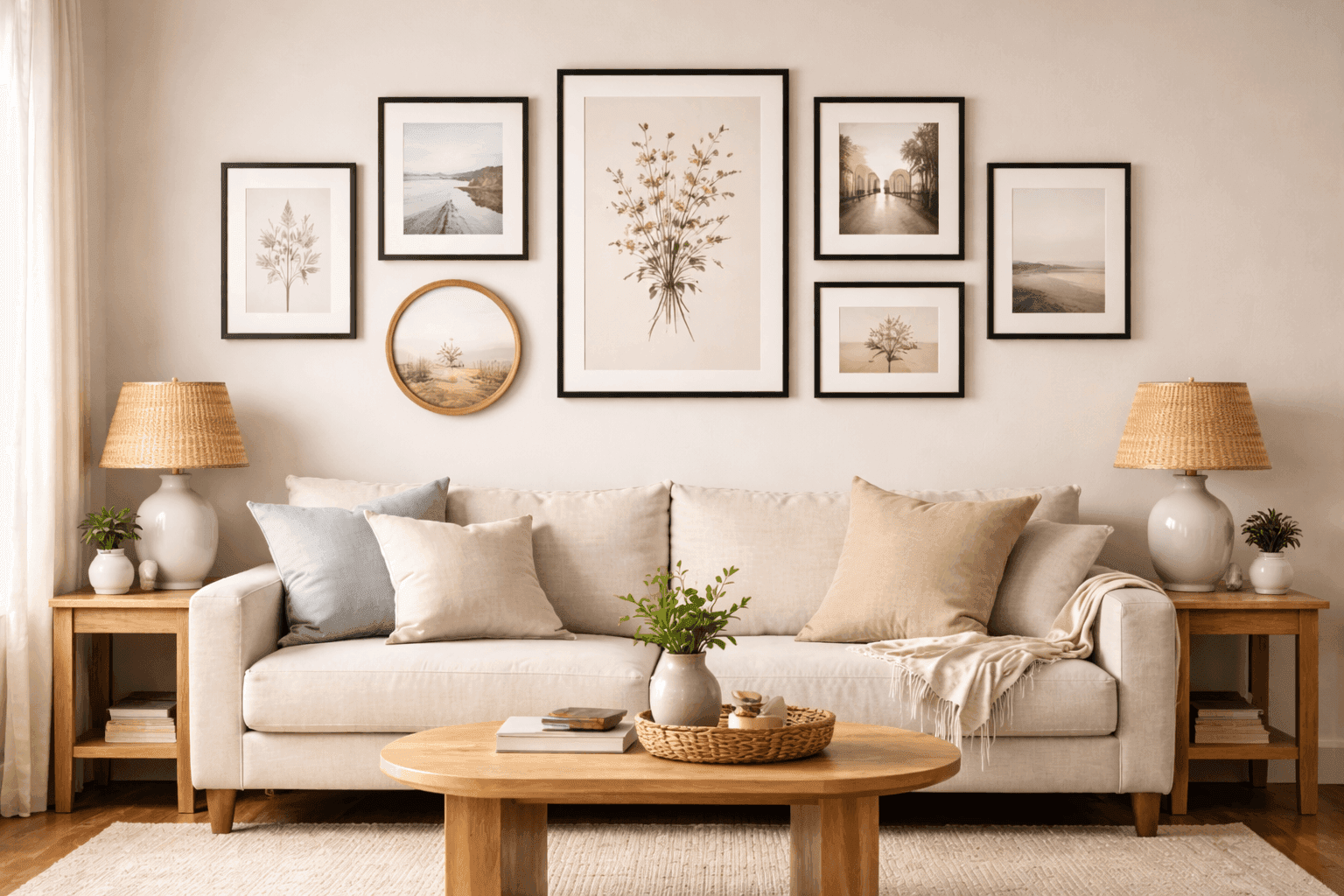
Gallery walls that look intentional share at least one common thread: matching frame color (all black, all natural wood, all white), consistent matting, a unified color palette across the art, or a common subject matter. Mixing everything — different frame colors, different styles, different subjects — creates visual chaos rather than curated interest. Pick your common thread first, then select pieces within that constraint. You don't have to match everything; you just have to match something.
Mix Sizes Intentionally
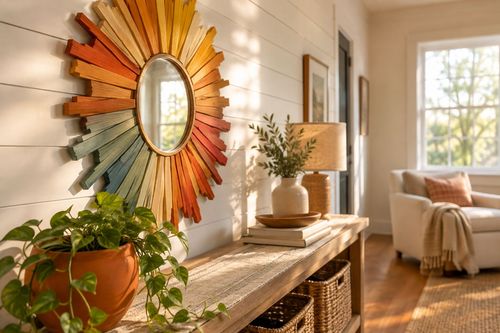
A gallery wall with all same-size frames looks rigid. One with random sizes looks chaotic. The sweet spot: one or two anchor pieces (larger format, 16x20 or bigger) surrounded by smaller pieces (5x7, 8x10) that complement rather than compete. Place the largest piece slightly off-center and build around it. Include at least one non-rectangular element — a round mirror, an oval frame, a sculptural object — to break the grid and add visual interest.
The Floor Layout Method
Lay all your frames on the floor in approximately the space they'll occupy on the wall. Move them around until you like the arrangement — this step can take 20 minutes or an hour, and it's time well spent. Aim for roughly 2–3 inches of consistent spacing between frames. Once happy, trace each frame on paper (or use the paper templates that come with many frames), cut them out, and tape the paper templates to the wall with painter's tape. Step back, adjust, and only when you're satisfied, put the nails through the paper templates. The templates come off cleanly when you're done.
Height and Placement
The center of a gallery wall should sit at approximately 57–60 inches from the floor — eye level for the average standing adult. If the gallery wall is above a sofa or console table, the bottom of the arrangement should be 8–10 inches above the furniture top. These measurements keep art in a natural viewing zone rather than floating uncomfortably high (the most common mistake) or sitting too low on the wall.
You don't have to spend a lot on art. Some of the best gallery walls combine a few meaningful personal photos (printed and framed), some inexpensive prints from sites like Society6 or Desenio, and a few thrift store frames spray-painted to match. What matters is the curation and the arrangement — a thoughtfully arranged collection of modestly priced pieces always looks better than expensive pieces hung carelessly. The frame is often as important as the art: a simple black frame elevates almost anything.