Frame the View: Window Treatments That Make the Room
The finishing touch most rooms are missing — and it's easier than you think.
Window treatments are the design element that elevates a room from "furnished" to "finished." A room without curtains looks incomplete no matter how thoughtful the rest of the decor is. The right window treatment adds softness, frames the windows architecturally, controls light, and adds texture and color. The wrong treatment — or one installed incorrectly — can make a room look smaller, dated, and unintentional. Here's how to get it right.
Hang High, Hang Wide
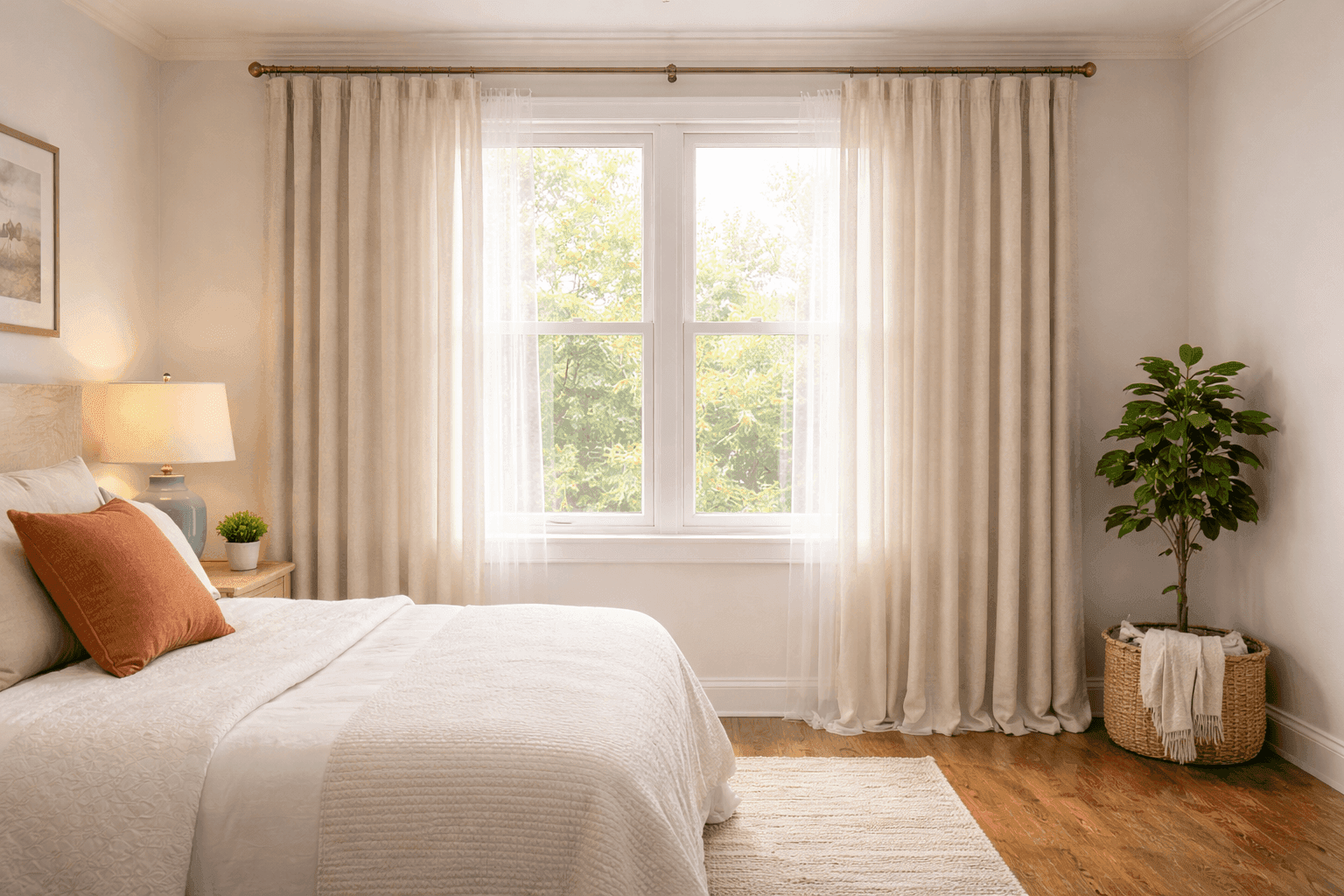
The single most transformative curtain tip: hang the rod as close to the ceiling as possible (3–6 inches below the ceiling, or right at the crown molding if you have it) and extend the rod 6–12 inches beyond the window frame on each side. This elongates the room visually, makes the windows appear much larger than they actually are, and makes the ceiling feel taller. A curtain hung just above the window frame — the default approach most people take — shortens the room and makes windows look small. Curtain length: panels should puddle slightly on the floor (1–2 inches) for a luxurious look, or break just at the floor for a cleaner appearance. Never hang curtains that stop above the floor — it looks like they were cut wrong.
Fabric and Opacity
Sheer curtains filter light beautifully and add softness without blocking views or much light — good for spaces where privacy isn't the primary concern. Linen and cotton blends are the most versatile — they work in nearly every room style, launder easily, and hang well. Blackout curtains are essential for bedrooms (and children's rooms especially) where light control matters more than aesthetics. Layering sheers under heavier panels gives you both: pull the sheers for diffused daytime light, close the panels for evening privacy. The layered look also reads as intentional and designed in a way that single panels often don't.
Roman Shades and Blinds
Roman shades are a clean, tailored alternative to curtains — they fold into horizontal pleats as they're raised and sit flat when lowered. They work particularly well in kitchens, bathrooms, and small spaces where curtain panels would feel overwhelming. Cellular shades provide excellent insulation alongside light control. For a designer look on a budget, purchase inexpensive roller shades in a neutral color for the functional light control layer, then add curtain panels on a separate rod in front for the decorative element — you get the practicality of a shade with the softness of drapery.
Buy more fabric than you think you need for curtains. A full, generously gathered curtain panel reads as luxurious; a skimpy panel that barely covers the window reads as cheap regardless of the fabric quality. For a full look, each panel should be at least 1.5–2x the width of the area it covers — so for a 60-inch-wide window, each panel should be 45–60 inches wide before gathering. Most ready-made curtain panels are sized generously enough to work, but for custom or IKEA panels, order extra width.