Flutter By: Build a Butterfly Puddling Station
A shallow dish, a handful of sand, and 15 minutes is all it takes to bring butterflies gathering to your garden all season long
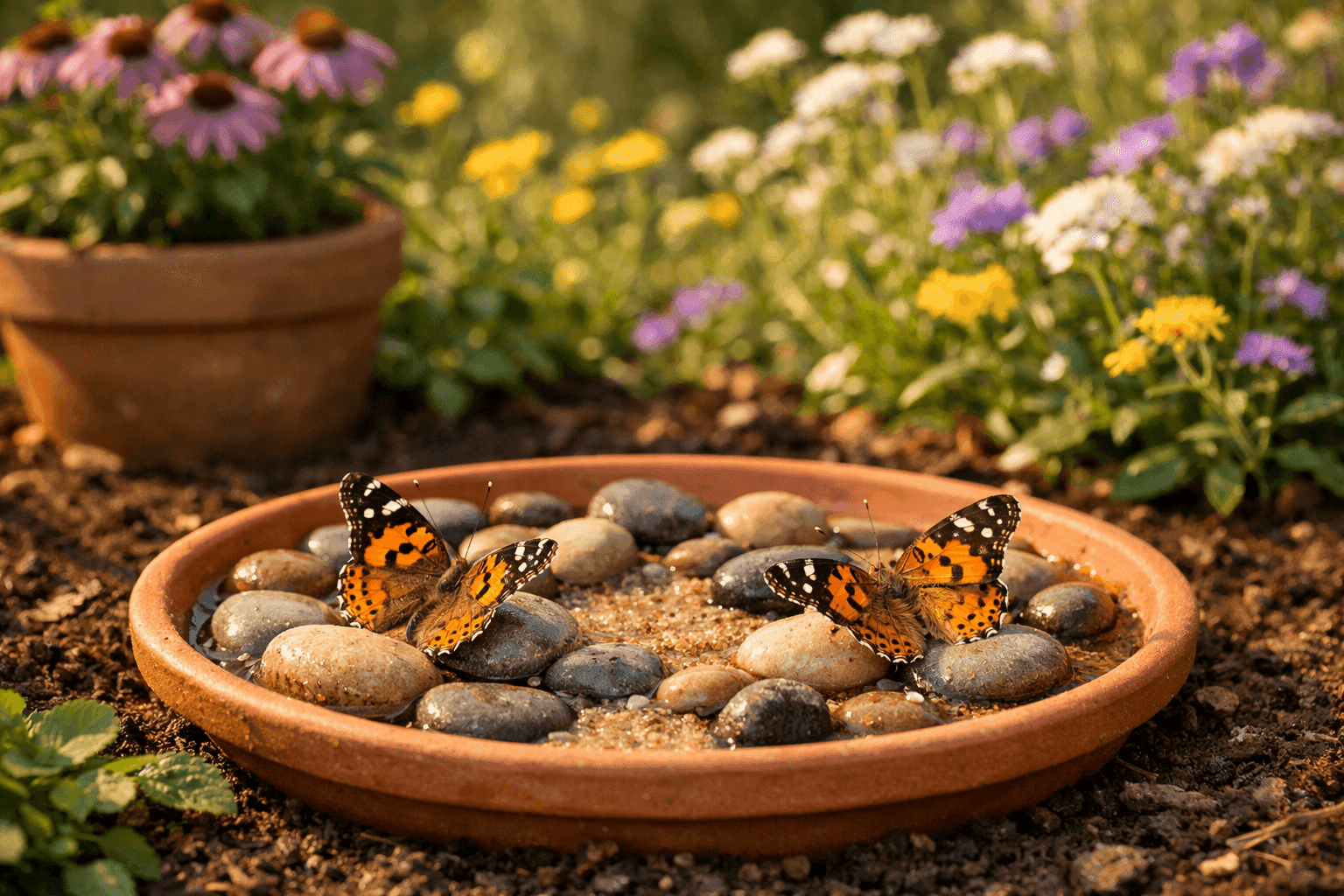
Most gardeners focus all their pollinator energy on planting the right flowers — and that absolutely matters — but there's a second thing butterflies need that almost no one thinks to provide, and it's the reason some gardens attract dramatically more butterfly activity than others. Butterflies puddle. They gather at shallow wet patches of soil to drink and absorb the sodium, minerals, and amino acids that nectar alone can't supply, and in a typical suburban garden those patches simply don't exist. A puddling station gives them exactly what they're looking for: a shallow dish of damp sand, soil, and a pinch of salt that mimics the muddy creek banks and sun-warmed puddles butterflies seek out in the wild. The whole setup takes 15 minutes, costs under $10, and once the local butterfly population discovers it you'll see species visiting your garden that never stopped before. This is genuinely one of the highest-impact, lowest-effort things you can add to a pollinator garden.
What You'll Need
- The Dish
- A shallow dish, saucer, or tray with a rim — terra cotta pot saucers work perfectly and cost $2–$4, or repurpose a pie dish, plant tray, or old ceramic plate you already have
- Aim for at least 10–12 inches in diameter and no deeper than 1–2 inches — butterflies need very shallow water access, not a birdbath
- Unglazed terra cotta is ideal because it stays naturally damp through evaporation, self-regulating moisture better than glazed ceramic or plastic
- The Filling
- Coarse builder's sand or play sand — enough to fill your dish about ¾ full — a small bag from a hardware or garden store costs ~$4–$6 and fills many stations
- A small handful of garden soil or compost mixed into the sand — this adds trace minerals and organic matter that butterflies actively seek
- A pinch of plain table salt or sea salt — about ¼ teaspoon per dish — which provides the sodium that is the primary reason butterflies puddle in the first place
- Clean water for moistening — rainwater or tap water both work fine
- Perching Surfaces
- Small flat stones, pebbles, or gravel to place on the sand surface — these give butterflies dry landing spots above the water level so they can drink without getting their wings wet
- A mix of stone sizes adds visual texture and gives different butterfly species appropriately sized perches
- Broken pottery pieces, sea glass, or small crystals are beautiful alternatives that add personality to the finished station
- Optional Enhancements
- Overripe fruit pieces — banana, watermelon, or orange slices — set beside the station attract additional butterfly species that feed on fermenting fruit sugars
- A flat rock positioned nearby in full sun gives butterflies a warming perch — they're cold-blooded and need to raise their body temperature before flying
- A decorative base or plant stand to elevate the station to 6–12 inches off the ground — keeps it visible and reduces disturbance from ground-level foot traffic
How to Set It Up
- Choose your location before filling anything — a puddling station needs to be in a spot that gets at least 4–6 hours of direct sun daily, because butterflies are cold-blooded and actively avoid shaded puddling sites where they can't warm their wings between drinks. Position it near existing flowering plants if possible, since butterflies already visiting those plants will discover the station quickly rather than you waiting for them to find it from scratch.
- Mix your sand and soil in a separate container before filling the dish — combine about 3 parts coarse sand to 1 part garden soil or compost, mixing thoroughly so the mineral-rich soil is evenly distributed throughout rather than sitting in a layer. This ratio gives the filling the right texture to stay damp without becoming muddy, which is the consistency that attracts the most butterfly activity.
- Add the salt by sprinkling approximately ¼ teaspoon of plain table salt evenly over the dry sand mixture and stirring it in before adding any water — sodium is the primary mineral butterflies come to puddles to collect, and distributing it through the mix rather than leaving it on the surface means it stays available as butterflies drink from different areas of the dish. Do not use more than a small pinch — too much salt will repel rather than attract.
- Fill the dish with your sand mixture to about ¾ of the dish depth, pressing it down gently so it's lightly compacted rather than loose — a lightly packed surface holds moisture more evenly and gives butterflies a stable landing platform that doesn't shift under their feet when they land. Leave the top ¼ inch of the dish rim clear so water doesn't spill over the edges during topping up.
- Add water slowly until the sand is thoroughly moistened but not waterlogged — you're aiming for the consistency of a damp sandcastle, where the sand holds its shape when pressed but isn't soupy or pooling with standing water at the surface. Too much standing water is actually a deterrent for most butterfly species, which prefer barely-moist puddling sites over anything resembling a shallow pool.
- Arrange your stones and pebbles across the damp sand surface so that their tops sit just above the waterline — these dry perching surfaces are what make the station genuinely functional rather than decorative, since butterflies need a dry spot to land and stand while they extend their proboscis into the damp sand below. Group a few stones together and scatter others individually to accommodate multiple butterflies visiting at the same time.
- Position the finished station in your chosen sunny spot directly on the ground, on a flat stone, or elevated on a low plant stand — ground level works well for species like swallowtails that naturally puddle on creek banks, while a slight elevation of 6–12 inches makes the station more visible to passing butterflies and reduces disturbance from curious cats, dogs, and toddlers. Place it with the most photogenic face toward your main garden viewing angle, because you're going to want to watch this one.
- Maintain the station by topping up with plain water every day or two in dry weather to keep the sand consistently damp — this is a 10-second daily task that makes the difference between a station that attracts butterflies reliably and one they visit once and abandon. Add a fresh pinch of salt every two to three weeks as it leaches out with watering, and rinse and refresh the entire filling once a month to prevent algae buildup and keep the station clean and appealing.
Butterfly garden designers who specialize in habitat restoration use a technique called a puddling cluster — instead of a single station, they place three to five shallow dishes of varying sizes within a two to three foot radius, filling each with slightly different substrates: one with pure sand, one with sand and compost, one with fine gravel and soil. Different butterfly species have strong preferences for specific mineral profiles, and a cluster with substrate variation attracts a dramatically wider range of species than any single dish can. Position the cluster near a mass planting of nectar flowers rather than isolated in open space, and add a flat dark-colored stone in the center of the grouping that absorbs heat and gives newly arrived butterflies a warming perch before they move to the dishes. The combination of warmth, minerals, and nectar in close proximity creates what habitat specialists call a butterfly hot spot — a location that becomes a reliable, repeated destination rather than an occasional stop.