Floral Abundance: The Art of Decorating with Fresh Spring Flowers
Transform your home with simple yet stunning arrangements that capture the season's beauty
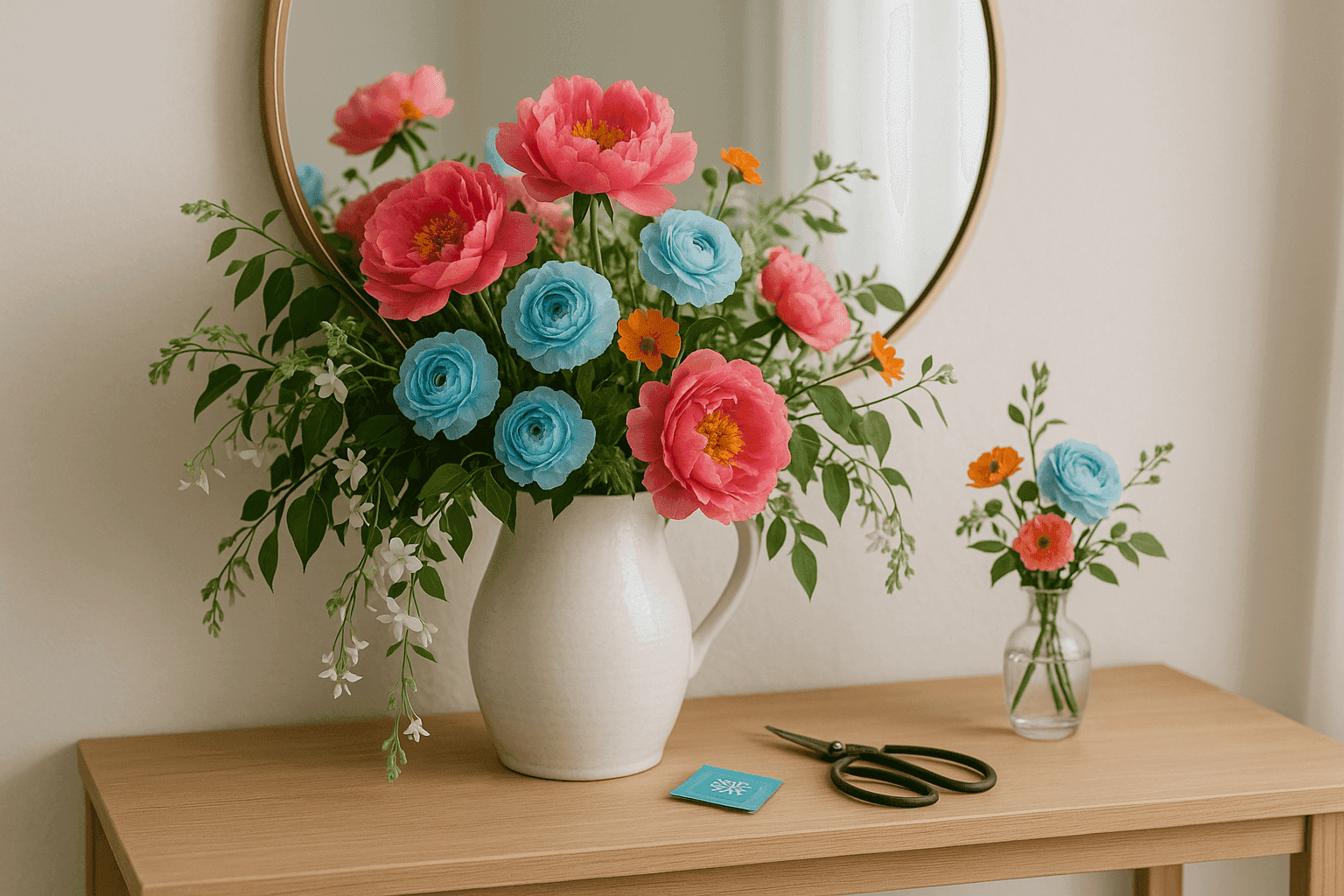
Fresh flowers are spring's most generous gift—bringing color, fragrance, and life into our homes after winter's dormancy. Even the simplest arrangement can elevate a space, boost mood, and create an instant connection to the renewing world outside. By understanding a few key principles of floral design and care, you can create beautiful displays that look professional yet maintain a natural, effortless charm that perfectly captures the essence of the season.
What You'll Need
| Spring Flower Options: |
| • Tulips (single or parrot varieties) |
| • Daffodils and narcissus |
| • Ranunculus |
| • Peonies (late spring) |
| • Cherry or apple blossoms |
| • Hyacinths |
| • Sweet peas |
| • Lilacs |
| • Hellebores |
| Foliage and Fillers: |
| • Eucalyptus (silver dollar or seeded) |
| • Ferns (maidenhair or sword) |
| • Fresh mint or herb stems |
| • Flowering branches |
| • Jasmine vine |
| Vessels: |
| • Clear glass vases (various heights) |
| • Ceramic pitchers or jugs |
| • Mason jars or vintage bottles |
| • Footed compotes or bowls |
| • Small bud vases (for single stems) |
| Tools and Supplies: |
| • Sharp floral scissors or pruners |
| • Floral tape |
| • Chicken wire or floral frog (for stabilizing stems) |
| • Flower food packets |
| • Clean bucket for conditioning flowers |
How To Do It
- Select your flowers thoughtfully: When shopping for flowers, look for:
- Closed or partially open buds that will continue to develop
- Firm, sturdy stems without bending or browning
- Fresh, crisp leaves without yellow edges or spots
- Complementary colors that work with your home's palette
- Condition your flowers properly: Maximize vase life by:
- Filling a clean bucket with room temperature water
- Removing any foliage that would sit below the water line
- Cutting stems at a 45-degree angle under running water
- Placing in deep water for 2-4 hours before arranging
- For woody stems (lilac, branches), split ends or crush with a hammer
- Choose the right vessel: Match your container to both flowers and setting:
- Tall, straight-sided vases for long-stemmed tulips and daffodils
- Wide-mouthed bowls for peonies and ranunculus
- Narrow necked bottles for single statement blooms
- Clear glass to show delicate stems, colored vessels to complement blooms
- Create stability in your arrangement: For professional-looking results:
- Make a grid with clear tape across the vessel opening
- Place chicken wire shaped into a ball inside the vase
- Use a floral frog (pin holder) at the bottom of shallow containers
- For hand-tied bouquets, secure stems with twine or raffia
- Follow a simple arrangement formula: Build your display in layers:
- Start with greenery/foliage: Create a base that extends 1.5× the height of your vessel
- Add focal flowers: Place largest blooms at different heights, focusing on odd numbers
- Fill with secondary flowers: Add medium-sized blooms to create fullness
- Finish with delicate accents: Small blooms and textures for movement and detail
- Embrace asymmetry: For a natural, garden-inspired look:
- Allow some stems to extend further than others
- Create a gently cascading effect on one side
- Position focal flowers at different heights and angles
- Rotate the arrangement as you work to ensure it looks good from all sides
- Consider scale and placement: Different spaces need different arrangements:
- Dining tables: Low arrangements (under 12") that don't block conversation
- Coffee tables: Small, compact displays that won't be knocked over
- Entry tables/mantels: Taller, statement arrangements visible from a distance
- Bedside tables: Small, fragrant groupings in bud vases
- Try unexpected combinations: Mix different flower types for interest:
- Combine structured flowers (tulips) with wild elements (jasmine vine)
- Mix textures—fluffy peonies with spiky allium or fritillaria
- Blend fragrant and non-fragrant varieties for sensory appeal
- Include interesting foliage like ferns or eucalyptus for texture
- Create a collection of small arrangements: Instead of one large display:
- Group 3-5 small vessels of varying heights
- Use simple combinations of 1-3 stems per vessel
- Arrange in a line down a dining table or clustered on a coffee table
- Keep each mini arrangement focused on one flower type
- Maintain your arrangements: Extend the life of your flowers:
- Change water every other day
- Remove any spent blooms or browning leaves
- Recut stems when refreshing water
- Keep arrangements away from direct sunlight, heat sources, and fruit
- Add a drop of bleach to prevent bacterial growth
For truly elevated floral styling, professional designers often follow the "thriller, filler, spiller" principle adapted from garden design. Choose one dramatic "thriller" flower as your focal point (like a large peony or branch of cherry blossoms), surround it with "filler" blooms that add volume and interest (such as spray roses or ranunculus), then incorporate "spiller" elements that cascade over the edge of your vessel (jasmine vine, trailing eucalyptus, or ivy). This three-part formula creates dynamic arrangements with professional balance. Another designer secret is the power of monochromatic arrangements—selecting different flower varieties all in the same color family creates sophisticated depth while remaining cohesive. Try an all-white display with varying textures for elegant simplicity, or a gradient arrangement that transitions from pale to deep within one color family for subtle drama. Finally, don't overlook foraged elements from your own garden—flowering herbs, interesting leaves, or even pretty weeds can add personality and unique character no store-bought arrangement can match.