Floor Show: Paint a Custom Geometric Mat That Stops Traffic
Create a statement floor piece with bold patterns and unexpected color combos that rivals designer versions
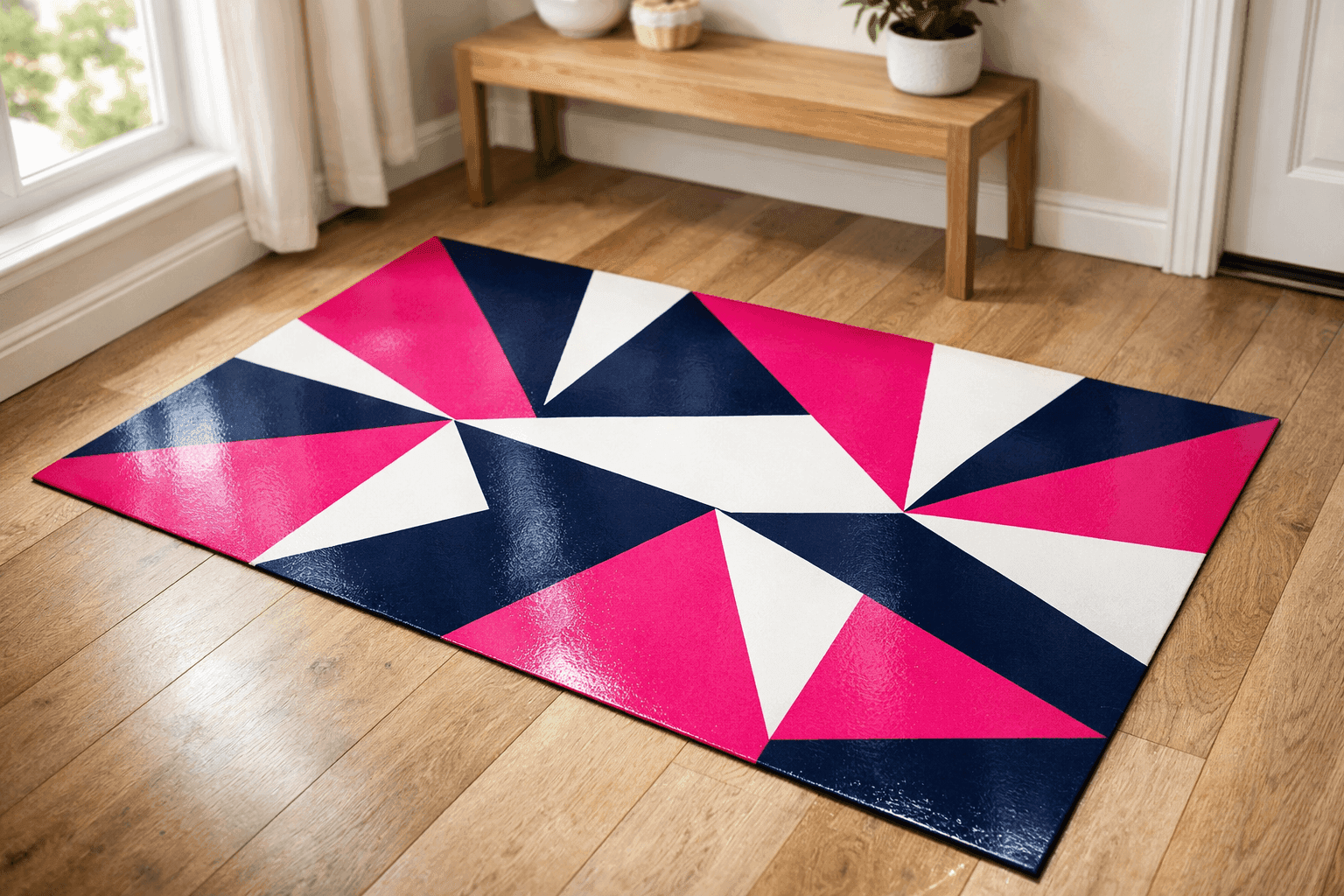
Designer floor mats with bold geometric patterns cost $80-150 at boutique home stores, and honestly they're just painted canvas or treated coir with some tape work and polyurethane—nothing you can't replicate in your own home for about $10-15 in supplies. The secret to making these statement pieces look expensive instead of DIY-tragic is committing fully to bold color combinations and crisp geometric patterns rather than playing it safe with beige and timid shapes. This project takes about three hours spread over a day or two for drying time, but it transforms your entryway or kitchen into a space with serious personality that makes guests stop and actually look at the floor. Creating a custom painted mat isn't just about saving money; it's about having a completely unique piece that matches your exact color scheme and aesthetic rather than settling for whatever mass-produced option happens to be available in stores.
What You'll Need
- Base Material: Plain coir doormat or canvas drop cloth cut to size ($5-8)
- Paint: Outdoor acrylic or floor paint in 2-3 bold colors ($8-12 for small bottles)
- Tape: Painter's tape in various widths for creating geometric shapes ($3-5)
- Sealer: Clear polyurethane for durability and protection ($8-10)
- Application Tools: Foam brushes or small paint rollers, painter's palette or disposable plates
- Planning Tools: Pencil, ruler, or measuring tape for marking patterns
- Time Investment: 3 hours total spread over 1-2 days for drying between coats
Step-by-Step Method
- Plan your geometric pattern on paper first—triangles, chevrons, hexagons, or abstract color blocks all work beautifully when executed with confidence
- Sketch your design lightly on the mat using pencil, measuring and marking to ensure geometric shapes are actually geometric rather than wonky approximations
- Tape off your first color section using painter's tape, pressing edges firmly to prevent paint bleed that ruins those crisp lines you're aiming for
- Apply your first color in 2-3 thin coats rather than one thick coat, letting each layer dry completely before adding the next for even coverage
- Remove tape while the final coat is slightly tacky—not wet, not fully dry—which gives you the crispest possible lines without pulling up dried paint
- Repeat the taping and painting process for each additional color section, working methodically to avoid smudging completed areas
- Seal the entire finished mat with 2-3 coats of polyurethane once all paint is completely dry, protecting your artwork from foot traffic and dirt
- Cure for 24-48 hours before placing in high-traffic area, giving sealer time to fully harden so it doesn't stick to shoes or collect debris
Professional textile designers recommend choosing color combinations that feel unexpected rather than safe—pair hot pink with navy instead of predictable pink and white, combine chartreuse and black for modern edge, or go bold with turquoise and coral for tropical energy. The most expensive-looking DIY projects embrace confidence in color choices rather than playing it safe with neutrals. Also, consider the viewing angle when designing your pattern—entryway mats are typically seen from above as you walk in, so patterns that read clearly from overhead work better than designs requiring straight-on viewing. For canvas drop cloth mats, wash and dry the fabric before painting to remove sizing that can interfere with paint adhesion, and use fabric medium mixed with your paint for extra flexibility that prevents cracking. The key to making a painted mat last isn't complicated—it's simply using proper outdoor/floor paint instead of craft acrylics, sealing thoroughly with polyurethane, and accepting that even the best-sealed mat will need touch-ups after heavy use.