Flip the Season: Create a Reversible Table Runner
One simple flip transforms your table from summer florals to autumn leaves
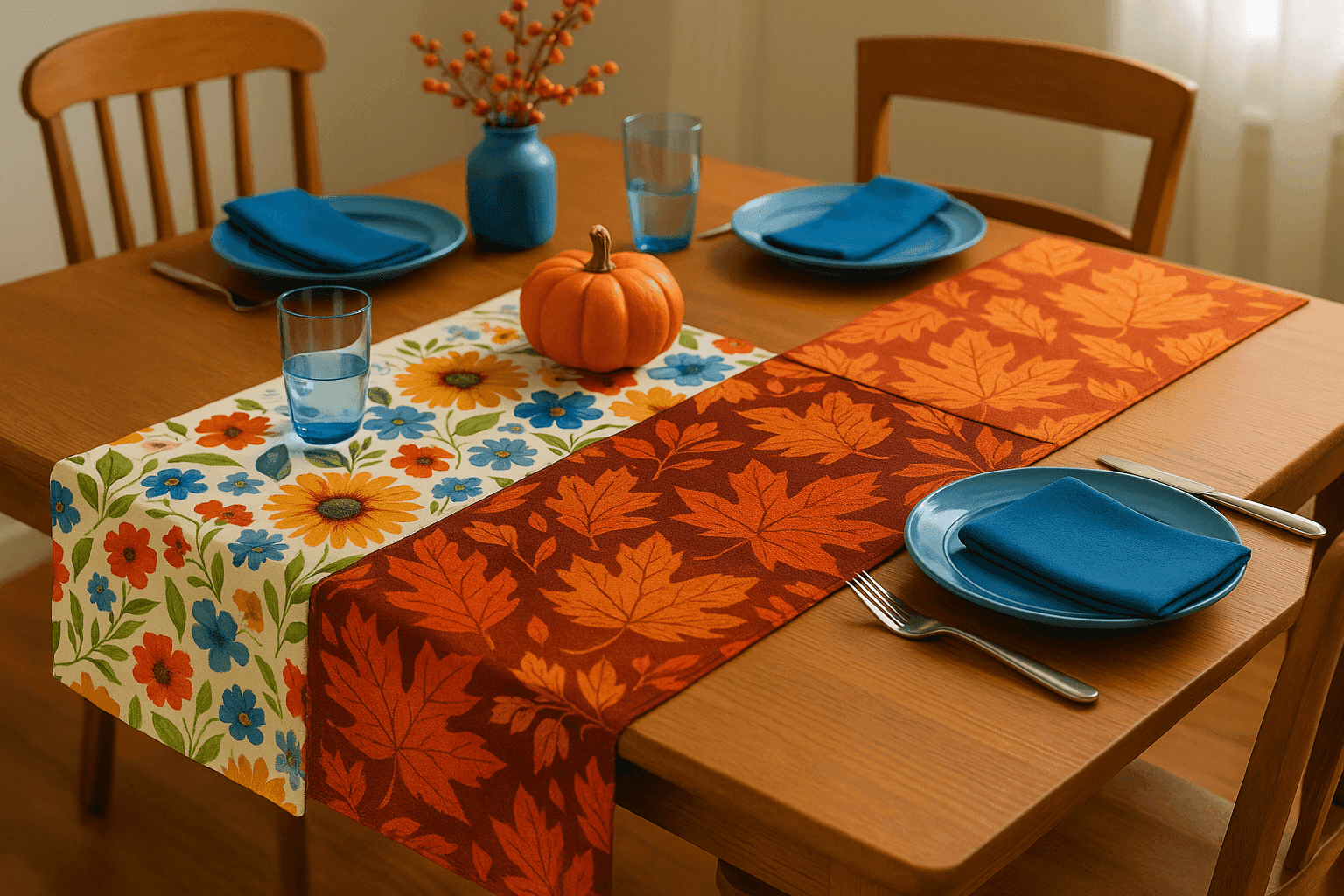
I stumbled onto this brilliant idea completely by accident when I couldn't decide between two gorgeous fabrics at the store – and it has become my absolute favorite decorating hack! There's something so clever and satisfying about having one piece that instantly transforms your dining room's entire mood with just a simple flip. This reversible table runner is like having two completely different seasonal looks without any storage hassles or extra expense. The best part is how it bridges that awkward transition period when you're not quite ready to pack away summer but you're craving those cozy autumn vibes. I love watching my guests' faces when I casually mention that the runner they're admiring has a completely different design on the other side – it never fails to spark conversation about clever decorating solutions!
Fabric & Supplies
- Summer Fabric: Light floral cotton or linen in bright, cheerful patterns (1 yard, $12-20)
- Autumn Fabric: Rich leaf prints or warm-toned patterns in coordinating weight (1 yard, $12-20)
- Interfacing: Medium-weight fusible interfacing for body and structure (½ yard, $8-12)
- Thread: Coordinating colors for both fabrics, or neutral that works with both ($5-8)
- Trim Options: Coordinating bias tape, rickrack, or decorative edging ($8-15)
- Tools: Sewing machine, iron, measuring tape, fabric scissors, pins
- Total Cost: Under $50 for a custom runner that serves double duty all year
Sewing Steps
- Measure table length and add 12-20 inches for overhang, cut both fabrics to size
- Cut interfacing slightly smaller than fabric pieces to reduce bulk at edges
- Fuse interfacing to wrong side of one fabric following manufacturer's instructions
- Layer fabrics right sides together, pin carefully around all edges
- Sew around perimeter with ½ inch seam allowance, leaving 6-inch opening for turning
- Trim corners and turn right side out, pushing corners crisp with point turner
- Press edges flat and topstitch around entire perimeter for professional finish
- Test both sides on your table, adjusting length or styling as needed
Professional interior stylists know that the secret to a successful reversible piece is choosing fabrics that share at least one common color – this creates visual cohesion even when patterns are completely different. Here's my favorite technique: select one fabric with multiple colors, then choose the second fabric that picks up just one of those colors as its dominant shade. For example, a bright floral with coral, yellow, and green pairs beautifully with a rich autumn print in deep coral and gold. Pro tip: add subtle quilting lines down the length of the runner – they prevent shifting and create beautiful texture that looks intentional from either side!