Festive Feasting: Create a Holiday Tablescape That Dazzles
Design an unforgettable dining experience with seasonal colors and natural elements
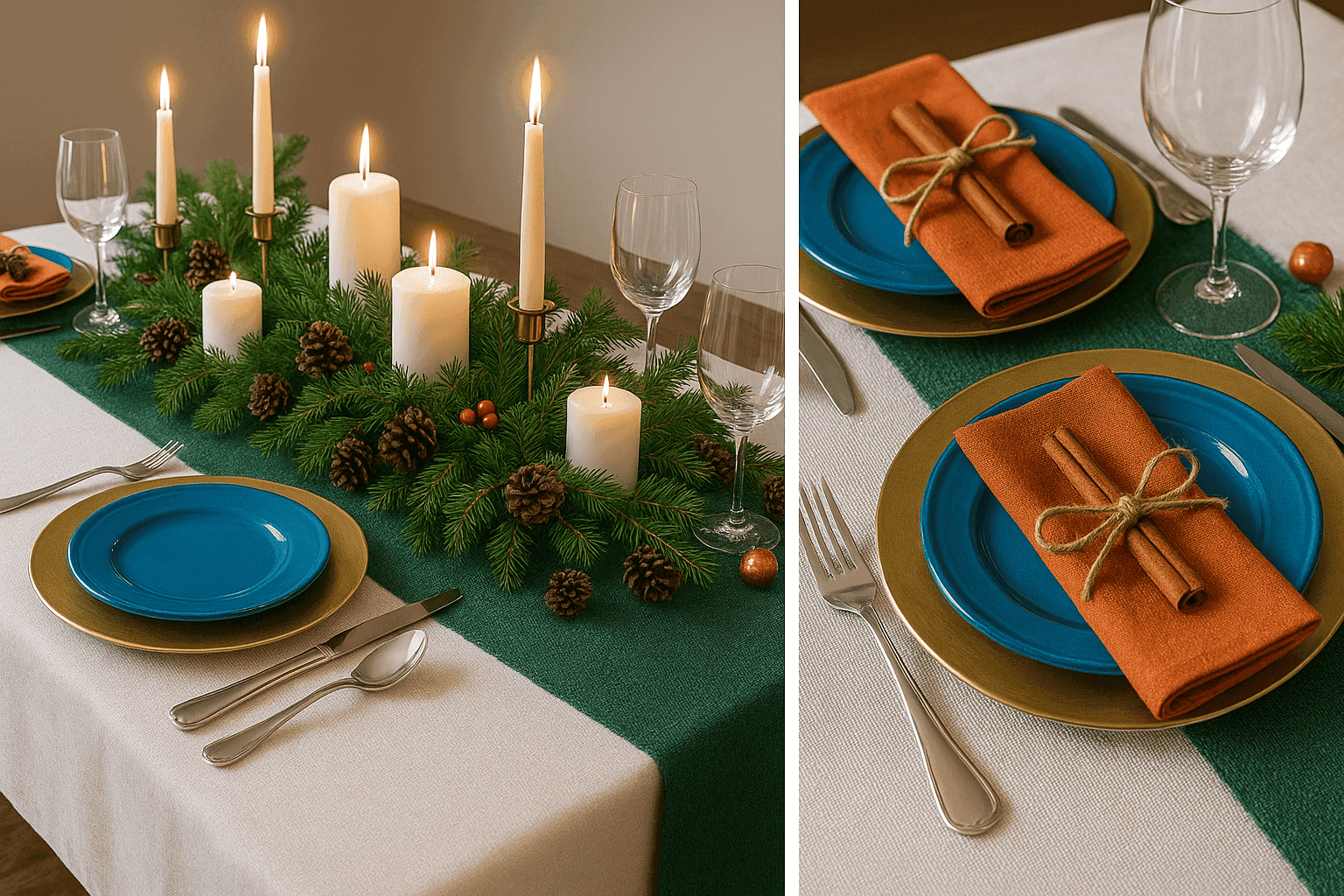
The holiday table serves as the heart of your seasonal celebrations—a place where memories are made and traditions honored. Creating a thoughtfully designed tablescape elevates everyday dining into a magical experience your guests will remember long after the season ends. With a harmonious blend of linens, candles, greenery, and carefully chosen tableware, you can craft a festive setting that's both beautiful and functional.
Tablescape Elements
| • Table linens (runner, tablecloth, napkins) |
| • Dinnerware (plates, chargers, serving pieces) |
| • Glassware (water glasses, wine glasses) |
| • Flatware (polished or vintage sets) |
| • Candles (tapers, pillars, votives) |
| • Candleholders or hurricane lamps |
| • Centerpiece elements (florals, greenery) |
| • Natural accents (pinecones, holly, etc.) |
| • Decorative napkin rings |
| • Place cards or menu cards |
Creating Your Tablescape
- Choose your palette: Select 2-3 colors that complement your holiday theme and existing dining room.
- Layer your linens: Start with a tablecloth or runner as your base, adding texture and dimension.
- Create a centerpiece: Arrange a focal point using greenery, candles, or florals that doesn't block conversation.
- Set your places: Position plates, flatware, and glassware according to proper etiquette.
- Add vertical elements: Include taper candles or tall decorative pieces for height variation.
- Incorporate natural elements: Scatter pinecones, holly sprigs, or cinnamon sticks along the runner.
- Personalize each setting: Add custom napkin rings, place cards, or small individual favors.
- Test functionality: Ensure guests have enough space and can see across the table comfortably.
Create depth in your holiday tablescape by styling in "zones" of varying heights. Position your tallest elements (taper candles, elevated florals) in the center, medium-height elements (pillar candles, folded napkins) in the middle zone, and lowest elements (scattered greenery, small ornaments) closest to place settings. This three-tier approach creates visual interest while maintaining proper sight lines for conversation and practical dining.