Drip No More: Fix That Leaky Faucet in Under an Hour
Stop the annoying drip, save gallons of water, and skip the plumber's $150+ service call
That persistent drip-drip-drip from your faucet isn't just annoying—it's literally pouring money down your drain, wasting up to 3,000 gallons of water per year from a single leaky faucet while adding unnecessary dollars to your utility bill every single month. Most people assume fixing a leaky faucet requires calling a plumber and spending $150-250 for a service call, but the truth is that 90% of faucet leaks are caused by worn washers, O-rings, or cartridges that cost $3-8 to replace and take 30-45 minutes to install yourself with basic tools you probably already own. I used to be intimidated by plumbing repairs until a friend walked me through my first faucet fix, and I was genuinely shocked by how straightforward the process is once you understand which type of faucet you have and what parts need replacing. The key is identifying your specific faucet mechanism—compression, cartridge, ball, or ceramic disc—because each type has slightly different repair procedures, but once you know your type, the actual repair follows a logical sequence of disassembly, part replacement, and reassembly that doesn't require specialized plumbing knowledge. This is one of those home repairs that dramatically boosts your confidence in your DIY abilities because you're solving a real problem that affects daily life, saving significant money on both the repair and ongoing water waste, and gaining skills that transfer to other household fixes.
What You'll Need
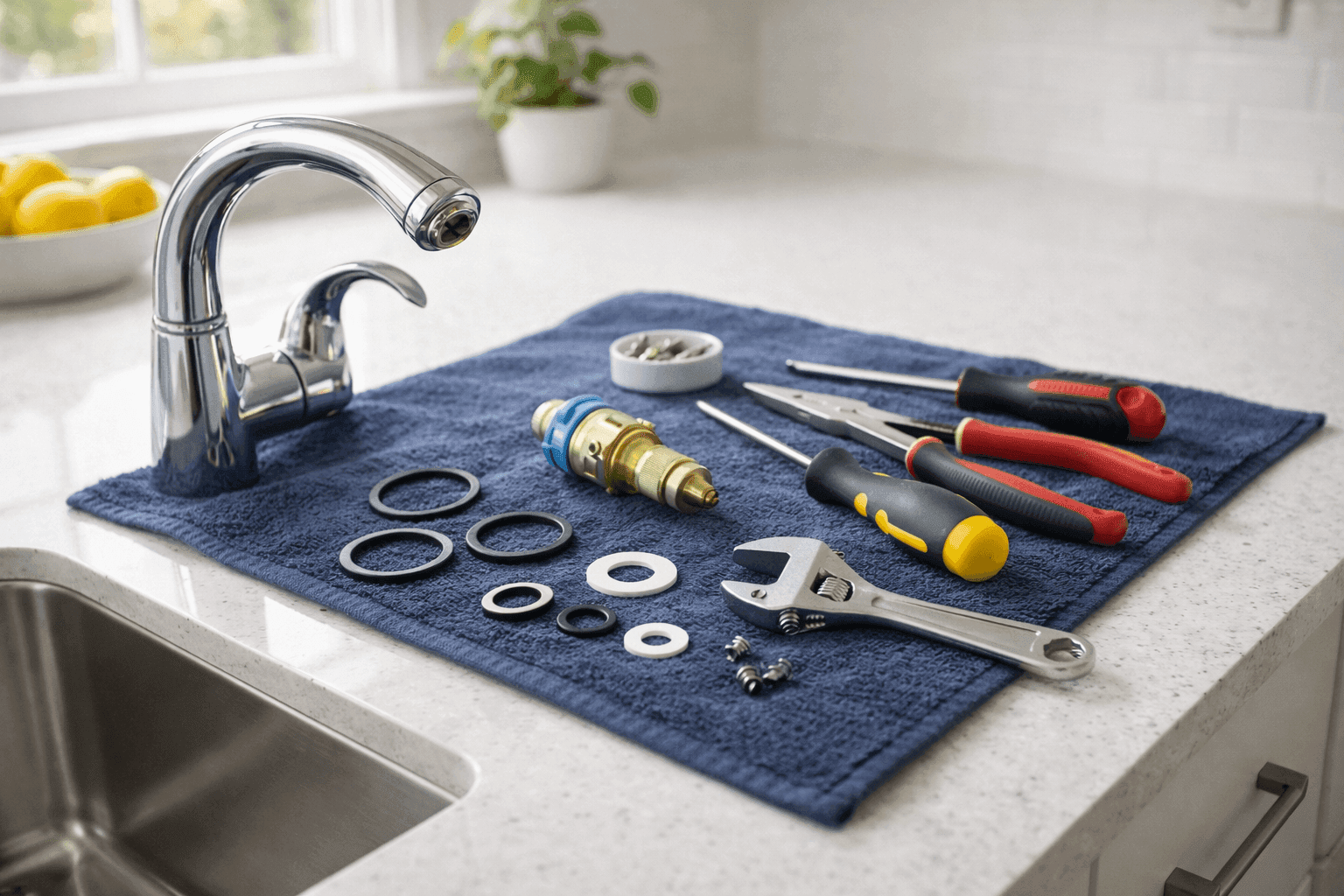
- Basic Tools: Adjustable wrench, Phillips and flathead screwdrivers, needle-nose pliers for small clips and rings
- Replacement Parts: Depends on faucet type—washers and O-rings for compression ($3-5 kit), cartridge for cartridge-style ($8-20), repair kit for ball or ceramic disc ($10-25)
- Allen Wrench Set: Many modern faucet handles use Allen screws hidden under decorative caps
- Sink Drain Plug: Rag or stopper to prevent small screws, washers, or clips from disappearing down the drain during disassembly
- Flashlight: For seeing clearly under sink and inside faucet mechanism
- Towels: For catching residual water and protecting countertop during repair
- White Vinegar: For cleaning mineral buildup on parts you're reusing
- Plumber's Grease: Small tube for lubricating O-rings and moving parts during reassembly ($3-5)
- Camera Phone: Take photos at each disassembly step to reference during reassembly—this simple habit prevents confusion
Step-by-Step Instructions
- Identify your faucet type before buying parts: compression faucets have separate hot and cold handles that turn multiple times, cartridge types move in one smooth motion, ball types have a single handle on a rounded cap, ceramic disc have a single lever on a wide cylindrical body.
- Turn off water supply using the shutoff valves under your sink—turn clockwise until tight, then open the faucet to release remaining water pressure and verify water is actually off before proceeding.
- Plug the drain with a rag or stopper because dropping a tiny screw or clip down the drain turns a simple repair into a frustrating drain disassembly project nobody wants.
- Remove the handle by prying off decorative caps to reveal screws underneath, unscrewing the handle attachment, and pulling straight up—take photos of orientation before removal so reassembly is obvious.
- For compression faucets, unscrew the packing nut, remove the stem, replace the rubber washer at the bottom and O-ring around the stem with exact-size replacements—worn washers are the most common leak cause.
- For cartridge faucets, remove the retaining clip with needle-nose pliers, pull out the entire cartridge (may require gentle rocking), take it to the hardware store for exact replacement matching brand and model.
- For ball or ceramic disc, replace the entire mechanism using manufacturer-specific repair kits—these assemblies aren't serviceable with individual parts and must be replaced as complete units.
- Clean all parts with white vinegar to remove mineral deposits, apply plumber's grease to O-rings and moving parts, then reassemble in reverse order using your reference photos to ensure correct orientation.
- Turn water back on slowly while watching for leaks at connections, tighten anything that drips, then run faucet and check that both the leak is fixed and operation is smooth without stiffness.
Here's the insider secret that separates successful DIY faucet repairs from frustrating failures: when you remove the old cartridge, washer, or other parts, take them with you to the hardware store rather than relying on verbal descriptions or online photos to identify what you need. Faucet parts look very similar but have subtle variations in size, thread pattern, and design that make exact matching critical—a washer that's 1/16 inch too small will still leak, a cartridge from the wrong manufacturer simply won't fit even if it looks identical. Professional plumbers know that the five minutes spent driving to the store with the actual old part in hand saves hours of frustration from buying wrong parts and making multiple trips. Even better, take a photo of your faucet's brand name and model number (usually stamped somewhere on the faucet body or listed on original packaging if you still have it) because hardware store staff can look up exact part numbers in their system, eliminating all guesswork. Many stores even have faucet part matching stations where you can compare your old part directly to new stock. This methodical approach to parts identification is what separates repairs that work perfectly the first time from those that require three trips to the store and a pile of wrong parts that can't be returned once opened.