Dresser Drawer Turned Floating Shelf for Under $10
One thrift store find, one afternoon, and a wall display nobody else has
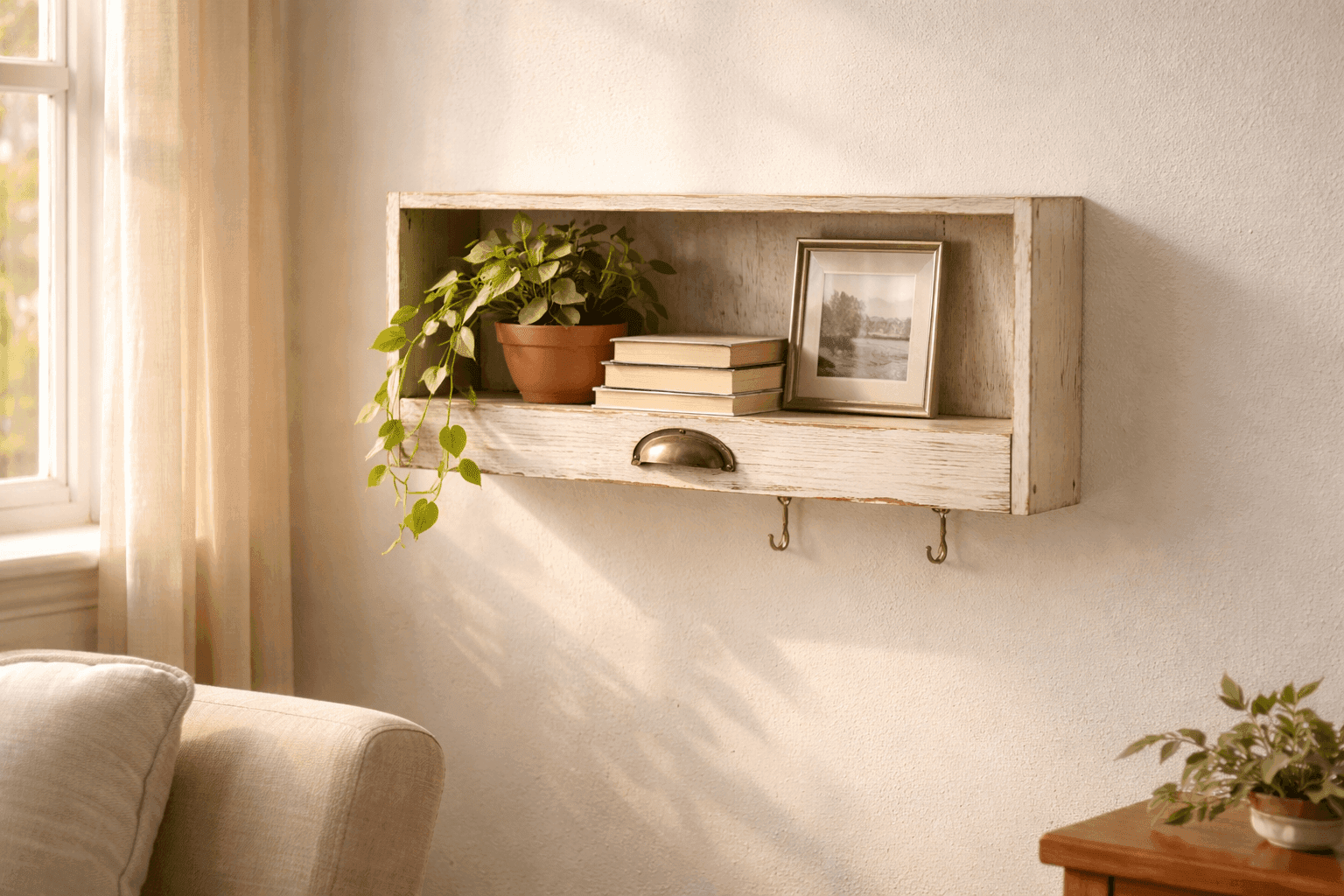
Most floating shelves are fine — flat, functional, forgettable. A dresser drawer mounted on the wall is something else entirely: a shadow box with depth, a built-in lip that keeps things from sliding off, and the kind of vintage character that flat boards simply cannot replicate. The best part is that the raw material costs next to nothing — a single drawer pulled from a curbside dresser or a thrift store find for a dollar or two is all you need, and the rest of the project runs under $10 in paint and hardware. The finished shelf reads as a deliberate design choice rather than a DIY project, which is exactly the kind of result that makes people stop mid-conversation and ask where you got it. Whether you go bold with a painted color, rustic with a distressed white finish, or natural with a simple wood stain, this is the upcycle that adds genuine architectural interest to a plain wall in an afternoon.
What You'll Need
- The Drawer
- One solid wood dresser drawer — check curbsides on bulk trash days, thrift stores, Facebook Marketplace, or estate sales; aim for dovetail-jointed corners over stapled construction for better long-term wall strength (free to ~$5)
- Avoid drawers with significant warping, split joints, or a rotten bottom panel — the structure needs to hold weight on the wall
- Prep Supplies
- Wood filler for filling the drawer pull hole — or leave the hole as a quirky hook point
- 80-grit sandpaper for surface prep, 120-grit for final smoothing
- Tack cloth or a damp rag to wipe sanding dust before painting
- Finishing Options (pick one direction)
- Chalk paint or interior latex in a bold color — teal, coral, sage, or deep navy for a statement piece (~$5–8 for a small sample pot)
- Flat white paint plus fine-grit sandpaper for a distressed, chippy farmhouse finish
- Wood stain in walnut or oak for a natural, warm look that shows off the wood grain
- Mounting Hardware
- Two heavy-duty L-brackets sized to fit inside the drawer depth — 3-inch brackets work for most standard drawers (~$4–6 for a two-pack)
- 1-inch wood screws for attaching brackets to the drawer's back panel
- 2.5-inch wall screws with drywall anchors, or lag screws if mounting into studs
- Optional Add-Ons
- Small cup hooks screwed into the bottom edge for hanging keys, jewelry, or small planters
- Picture rail hooks or removable adhesive strips if you prefer a no-drill mounting option for lighter drawers
- Total Cost
- Under $10 — often as little as $4–6 if you already own paint and basic hardware
How to Make It
- Source your drawer with an eye toward structural quality over cosmetic condition — you want solid joinery at the corners and a bottom panel that doesn't flex when pressed. Surface scratches, old paint, and water stains are all fine; they're getting sanded away anyway. A medium-sized drawer around 16–20 inches wide is the most versatile for wall display.
- Remove the drawer pull by unscrewing from the inside, then fill the hole with wood filler using a putty knife, smoothing it flush with the front face. Let it cure fully — usually 2–4 hours — before sanding. Alternatively, leave the hole and thread a small S-hook or piece of leather cord through it for a functional, intentional-looking detail.
- Sand the entire exterior starting with 80-grit to remove old finish, rough patches, and any filler ridges, then follow with 120-grit for a smooth final surface. Pay close attention to the front face — that's the focal point people see. Wipe away all dust with a tack cloth before moving on to finish.
- Apply your chosen finish in thin, even coats — two coats of chalk paint gives a matte, vintage-ready surface; two coats of latex in a bold color gives crisp modern results. For a distressed look, apply one coat of white paint, let it dry completely, then lightly sand edges and raised details back to bare wood. For stain, apply with a rag in the direction of the grain and wipe excess before it sets.
- Decide on dividers while the finish dries — original drawer dividers create built-in compartments perfect for organizing small items like remotes, mail, or plant cuttings. If you prefer open display space, pop them out with a flathead screwdriver; most are held in place by simple pressure fits or a single brad nail.
- Attach the L-brackets to the inside back panel of the drawer, positioning one bracket about 3 inches from each end. Drive 1-inch wood screws through the bracket holes into the back panel — short enough not to poke through to the outside face. The brackets will be completely hidden inside the drawer cavity once the shelf is on the wall.
- Locate your wall position and hold the drawer horizontally against the wall while a helper marks the bracket hole positions in pencil. Use a level across the top edge of the drawer before marking — a tilted shadow box shelf is immediately obvious once it's on the wall and loaded with objects.
- Mount and style by driving wall screws through the bracket holes into studs or drywall anchors, then set the drawer in place and attach. Add cup hooks to the bottom edge if desired, then style the interior with plants, books, photos, or collectibles — the built-in front lip keeps everything in place without any additional hardware.
Interior stylists who work with upcycled furniture pieces almost always treat the finish decision as a room conversation rather than an isolated project choice — the drawer shelf reads best when its color or tone either matches another painted element already in the room (a chair leg, a lamp base, a picture frame) or deliberately contrasts with the wall in a way that makes it read as intentional art rather than found furniture. If your walls are white or neutral, a single bold color on the drawer creates a focal point; if your walls are already colorful, a natural wood stain keeps the shelf from fighting for attention. The one finish to avoid on a piece with this much texture and detail is a high-gloss paint — it tends to highlight every small imperfection in old wood rather than letting the character of the piece do the work.