Drawer Rescue Mission: Tame That Junk Drawer in 30 Minutes
Turn chaos into calm with simple dividers and a foolproof organization system
Let's be honest – we all have that one drawer where random things go to die, and every time you open it, something falls out or you can't find what you desperately need! I used to spend more time digging through my junk drawer than actually using what was in it, until I finally decided to stage an intervention. The amazing thing is that this transformation literally takes just 30 minutes but delivers months of daily satisfaction every time you effortlessly grab exactly what you need. There's something incredibly therapeutic about seeing chaos become order, and this project gives you that instant gratification that bigger organizing projects sometimes lack. Once you experience the joy of an organized junk drawer, you'll wonder why you lived with the frustration for so long!
Organization Supplies
- Drawer Dividers: Adjustable bamboo or plastic organizers that fit your drawer size ($15-25)
- Small Boxes: Repurpose jewelry boxes, mint tins, or small containers you already have (free!)
- Labels: Simple adhesive labels or label maker for clear identification ($5-10)
- Cleaning Supplies: All-purpose cleaner and microfiber cloth for fresh start ($3-5)
- Storage Bags: Small ziplock bags for tiny items like screws or rubber bands ($3)
- Optional Upgrades: Velvet-lined dividers or custom-fit organizer inserts ($20-40)
- Total Investment: Under $30 using store-bought supplies, or nearly free with DIY approach
The 30-Minute Method
- Empty the entire drawer completely and give it a thorough cleaning inside and out
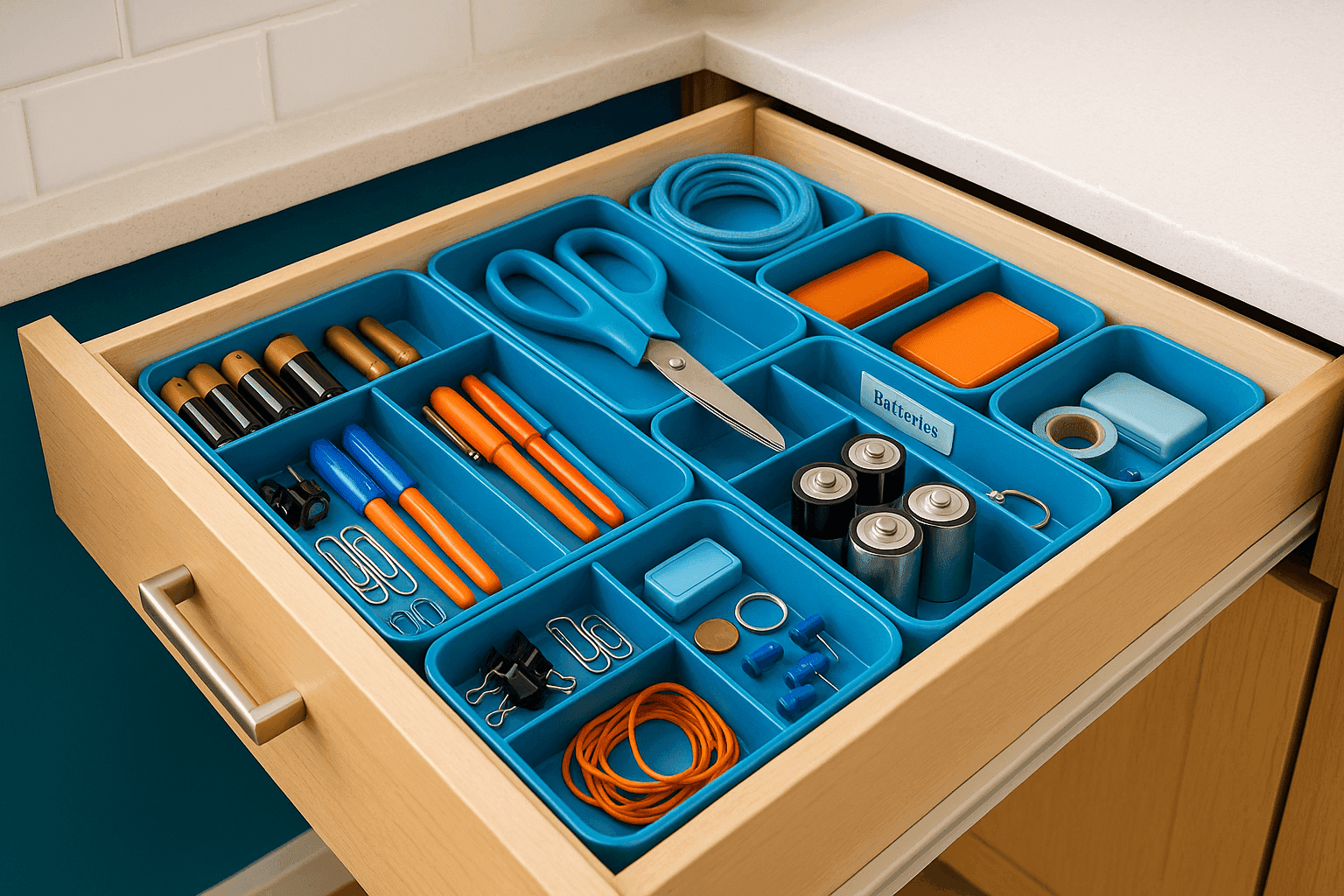
- Sort everything into categories: batteries, pens, tools, cords, miscellaneous items
- Purge ruthlessly – toss dried-out pens, expired items, and things you forgot you owned
- Measure your drawer dimensions and plan your divider layout for maximum efficiency
- Install dividers or place small boxes to create designated zones for each category
- Assign homes for everything, grouping frequently used items in easy-reach spots
- Label sections clearly so family members know exactly where things belong
- Test the system by using it for a week, then adjust placement for optimal workflow
Professional organizers know the secret to junk drawer success: the "one-touch rule." Every item should have such an obvious home that you can put it away without thinking. This means your most-used items like pens and scissors get prime real estate near the front, while seasonal items like birthday candles live in the back corners. Here's my game-changing trick: line the bottom of each section with a piece of pretty contact paper or fabric – it makes even the most utilitarian organizers look custom and expensive. Also, keep one small "landing zone" for truly random items that don't fit elsewhere, but limit it to just one small section!