Draft-Proof Your Home: Doors & Windows Done Right
Fix the gaps that are silently inflating your energy bills
According to the Department of Energy, drafts around doors and windows account for up to 30% of a home's heating and cooling costs. That's not a small number — that's potentially hundreds of dollars a year escaping through gaps you could seal in an afternoon for under $50. Before you consider new windows (a $5,000–$15,000 investment), make absolutely sure you've addressed the sealing and weather stripping situation. For the vast majority of homes, proper sealing makes a bigger practical difference than window replacement, and it's a job that's entirely within a weekend DIYer's reach.
Finding the Drafts First
On a cold, windy day, hold a lit incense stick or a thin strip of tissue paper near door and window frames, switch plates, and baseboards on exterior walls. Any movement tells you air is moving through. Pay special attention to the corners of window frames, where the casing meets the wall, around door thresholds, and at the top and bottom of window sashes. These are the highest-probability leak points in any home. You can also do a visual check in a darkened room — if you can see daylight around a door frame, you're definitely losing conditioned air there.
Replacing Weather Stripping
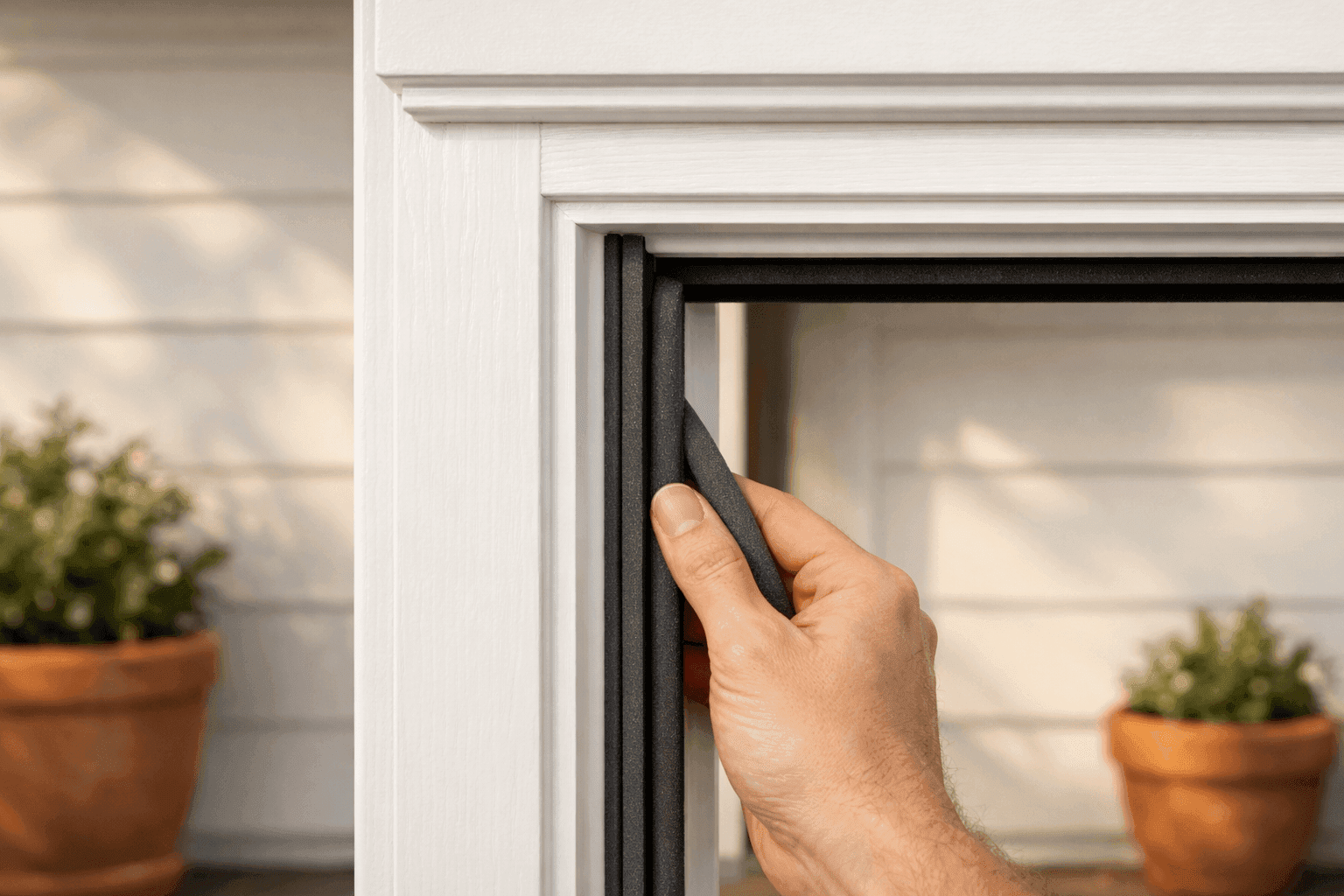
Weather stripping compresses and deteriorates over time — if yours is flattened, cracked, or has gaps, it's not doing its job. The type you need depends on where it goes. For the sides and top of door frames, self-adhesive foam or V-strip (tension seal) works well and is easy to apply. For the door bottom, a door sweep or automatic door bottom provides the best seal.
To install: remove the old weather stripping completely (clean the surface with rubbing alcohol first), measure and cut your new material to length, and press it firmly into place. For adhesive-backed types, stick it to the door stop — the part of the frame that the door presses against when closed. Test the seal by closing the door on a piece of paper: you should feel resistance when pulling it out. No resistance means the seal still isn't snug enough.
Caulking Windows
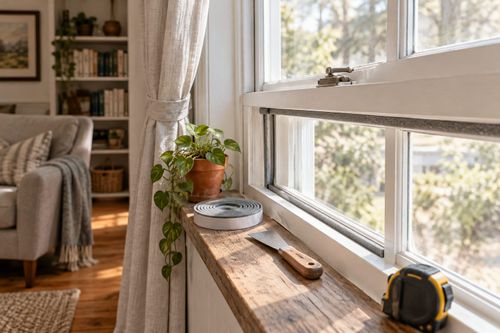
Caulk around window frames fills gaps between the frame and the surrounding wall — this is different from the window's operational sealing. Use a paintable latex caulk for interior applications and a silicone or siliconized latex caulk for exterior. Remove any old, cracked caulk with a putty knife or caulk remover tool first, clean the surface, and apply a smooth, continuous bead. The professional trick: apply the bead in one continuous pass, then run a wet finger along it to press it into the gap and smooth the surface. Wipe away excess immediately with a damp cloth before it skins over.
Fixing Sticking Doors
A door that sticks or won't latch properly is almost always caused by one of three things: loose hinge screws, seasonal wood expansion, or a shifted foundation. Start with the simplest fix: tighten every hinge screw on both the door and frame. If screws spin without gripping, remove them, insert wooden toothpicks with a dab of wood glue, let dry, and reinstall the screws — the toothpicks give the threads something to bite into. If the door swells in summer but fits fine in winter, the culprit is usually the top or latch-side edge — identify where it's rubbing with a strip of carbon paper, then plane or sand that specific spot. Avoid removing material from hinge-side edges where possible, as that's harder to fix if you take too much off.
Window insulation film is one of the most underrated cold-weather upgrades you can make. It's a thin shrink film applied with double-sided tape that creates a dead air space inside your window frame — essentially turning a single-pane window into a temporary double-pane for about $3 per window. It's invisible when applied correctly (you shrink it smooth with a hair dryer) and peels off cleanly in spring. For older homes with drafty single-pane windows, this single product can dramatically reduce cold-weather heat loss while you plan a longer-term solution.