Door More: Organize Your Pantry Door in 20 Minutes
An over-the-door rack, a few adhesive hooks, and 20 minutes — the pantry upgrade that turns completely wasted vertical space into your most organized storage zone
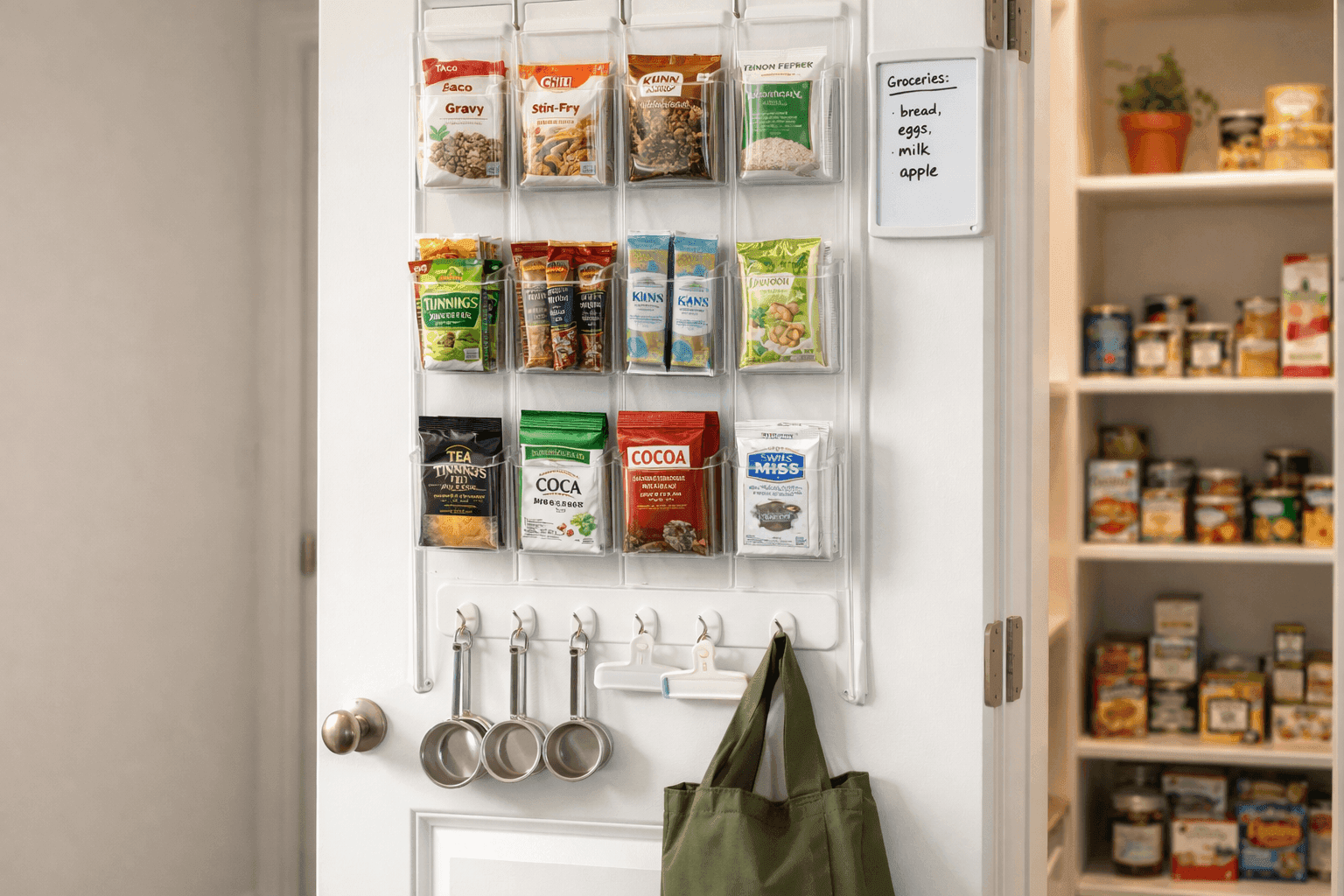
The back of your pantry door is probably the largest completely unused storage surface in your entire kitchen — a flat vertical expanse that closes against the door frame a hundred times a week while everything that could be stored on it stays buried on deep pantry shelves where it disappears the moment it gets pushed to the back. An over-the-door rack or pocket organizer that hooks over the door frame without drilling, a row of Command hooks, and twenty minutes of setup converts that surface into a dedicated home for all the small pantry items that cause the most daily frustration — spice packets, tea bags, hot cocoa mixes, snack bars, chip clips, measuring cups, reusable bags. Everything visible, everything accessible, everything in the same place every single time you reach for it. The whole setup costs $8–$15 and takes twenty minutes, and the functional improvement is immediate and significant enough that you'll wonder how you ever managed a pantry without it.
What You'll Need
- The Main Organizer — Choose Your Type
- Over-the-door pocket organizer — a fabric or clear plastic multi-pocket panel that hooks over the door top with no drilling required. Clear pockets allow immediate visual identification of contents without opening or moving anything — ~$8–$15 at Target, Amazon, or The Container Store. Measure your door height before buying to confirm the organizer length won't cause the bottom pockets to drag on the floor when the door is fully open
- Over-the-door wire rack with shelves — more rigid than fabric pockets and better suited to heavier items like jars, bottles, and boxed goods. Check the door clearance between the door face and the door frame when closed — a wire rack that protrudes too far prevents the door from closing fully — ~$12–$25
- Tiered spice rack designed for over-the-door mounting — specifically sized for spice jars and small packets, ideal if spice organization is the primary pantry problem — ~$10–$20
- Confirm the hook width of any over-the-door organizer fits your door's frame thickness — standard interior door frames are ¾ to 1½ inches thick and most over-the-door products fit this range, but hollow-core doors with thin panels occasionally have insufficient frame thickness for standard hooks
- Supplementary Hardware
- Command hooks in medium and large sizes for hanging measuring cups, oven mitts, pot holders, reusable shopping bags, and chip clips in a row below the main organizer — ~$5–$8 for a variety pack. Medium hooks hold up to 3 lbs each; large hooks hold up to 5 lbs — check the weight rating before hanging anything heavier than a single measuring cup set
- A small wire or mesh basket hung from two large Command hooks for storing onions, garlic, or shallots that need air circulation — a basket keeps them contained and visible while allowing the airflow that prevents premature spoiling — ~$5–$8 for a small wire basket
- Command strips (flat adhesive strips rather than hooks) for mounting a small dry-erase board or notepad for grocery lists and meal planning notes — ~$4–$6 for a pack. A 5x7 inch dry-erase board mounted at eye level on the inside of the pantry door becomes the most-used meal planning surface in the kitchen
- Organizing Supplies
- Small adhesive labels or a label maker for marking each pocket or shelf zone — labeled zones are what keeps the system functioning as organized storage rather than gradually becoming a random assortment of things that got stuffed in whatever space was available
- Small zip-lock bags for grouping loose items in the same category within a single pocket — all taco seasoning packets together, all hot cocoa packets together — so the pocket contents stay organized rather than mixing into a jumble with every use
- A tape measure for confirming door clearance and organizer dimensions before installation — measuring once before buying eliminates the frustrating discovery that the organizer doesn't fit after the packaging is open
- What to Store on the Door
- Best candidates for door storage: spice and seasoning packets, tea bags and hot cocoa packets, snack bars and granola bars, small boxed items like ramen and instant oatmeal, chip clips, twist ties, rubber bands, measuring cups and spoons, reusable shopping bags, grocery lists and pens
- Items that don't work well on door organizers: heavy canned goods, glass jars that could fall and shatter if the door is closed forcefully, anything over 5 lbs per hook or shelf position, items needed so frequently that opening the pantry door every access would be inconvenient
How to Set It Up
- Measure the door and check clearance before buying anything — measure the door height from top to bottom to confirm the organizer won't drag on the floor, measure the door frame thickness to confirm the over-the-door hooks will fit, and close the door to measure the gap between the door face and the adjacent cabinet or wall to confirm the organizer depth won't prevent the door from closing fully. A wire rack that protrudes 2 inches from the door face needs at least 2 inches of clearance when the door is closed — measure this gap before the organizer is purchased rather than after.
- Empty the relevant pantry shelf sections before installing anything — pull out everything that's a candidate for door storage and lay it on the counter so you can see the full inventory and plan which items go in which pockets or zones. This emptying step also reveals the items that have been lost at the back of deep shelves for months, the expired products that can be discarded, and the duplicates that accumulated because nobody could see what was already there — the door organization setup is a natural moment to do a light pantry audit that makes the whole system function better from the first day.
- Install the over-the-door organizer by lifting the hook bracket over the top edge of the door frame and confirming it sits level and stable before loading any items. Most over-the-door organizers have adjustable hooks that can be tightened against the door frame to prevent rocking — tighten these adjustment points so the organizer sits flush against the door without swaying when items are added or removed. Open and close the door several times with the empty organizer in place to confirm it clears the door frame and doesn't catch on adjacent cabinetry before adding anything to it.
- Plan the pocket assignments before loading — place the heaviest items in the bottom pockets where their weight is closest to the door hinges and doesn't cause the organizer to pull forward at the top, put the most frequently accessed items at eye level where they can be grabbed without bending or reaching overhead, and group related items in adjacent pockets rather than distributing them across the full organizer. A pocket plan that matches how you actually cook and shop — taco night supplies together, baking supplies together, hot drink supplies together — reduces the mental load of using the system to essentially zero.
- Install Command hooks in a row below the organizer for hanging items — clean the door surface with rubbing alcohol and let it dry completely before pressing the Command strip backing onto the door, since the adhesive bond is significantly weaker on dusty or greasy surfaces than on clean ones. Press each hook firmly against the door for 30 seconds and wait the full one-hour cure time before hanging anything on them — Command hooks applied and loaded immediately don't develop the full adhesive bond strength and are significantly more likely to release under load within the first few days.
- Mount the dry-erase board at eye level in whatever remaining door space is available using Command strips — position it where you can write on it comfortably with the door open, which is typically in the upper third of the door where you don't have to bend. A grocery list that lives in the pantry gets updated in real time as items run out rather than requiring a separate mental note or phone entry — making the dry-erase board part of the pantry door system is the habit change that keeps the grocery list current without any deliberate effort beyond writing on it when you close the empty cereal box.
- Load and label every zone before closing the pantry for the first time — use small adhesive labels or masking tape and a marker to label each pocket or hook zone so anyone in the household can both find items and return them correctly without being told where things live. A labeled system trains itself — once every family member has used the labeled pantry door twice, the behavior of returning items to their designated zone becomes automatic without ongoing reminders or reorganization.
- Do a one-week check-in after the first week of use to confirm the system is working as intended — notice which pockets or zones are being used correctly, which items have migrated away from their designated locations, and whether any categories need to be split or combined based on how the door is actually being used rather than how it was planned. A one-week adjustment produces a door organization system that functions effortlessly from week two onward rather than one that gradually reverts to chaos because the initial setup didn't account for the household's actual use patterns.
Professional kitchen organizers who redesign pantries for maximum functional efficiency use a placement principle called frequency zoning that makes pantry door storage significantly more useful than a simple everything-on-the-door approach. They divide the door into three zones based on body ergonomics: the prime zone between shoulder and hip height where items can be grabbed and returned with a single natural arm movement, the secondary zone between hip and knee height that requires a slight bend, and the tertiary zone above shoulder height that requires reaching overhead. Items used multiple times per week — chip clips, measuring spoons, most-used spice packets — belong exclusively in the prime zone regardless of their size or weight. Items used once a week — specialty spice blends, baking additives, less-used tea varieties — go in the secondary zone. Items used monthly or seasonally — holiday spice packets, specialty baking supplies — go in the tertiary zone or stay on the pantry shelves where door real estate isn't wasted on infrequent access. This frequency-first placement approach is what separates a door organization system that actually saves time daily from one that looks organized but requires searching through every pocket to find the item you need because everything is arranged by category rather than by how often you actually reach for it.