DIY Fringe Lampshade: Boring Shade to Bold Statement Piece
Transform plain lampshades into dancing works of art that catch light and steal attention
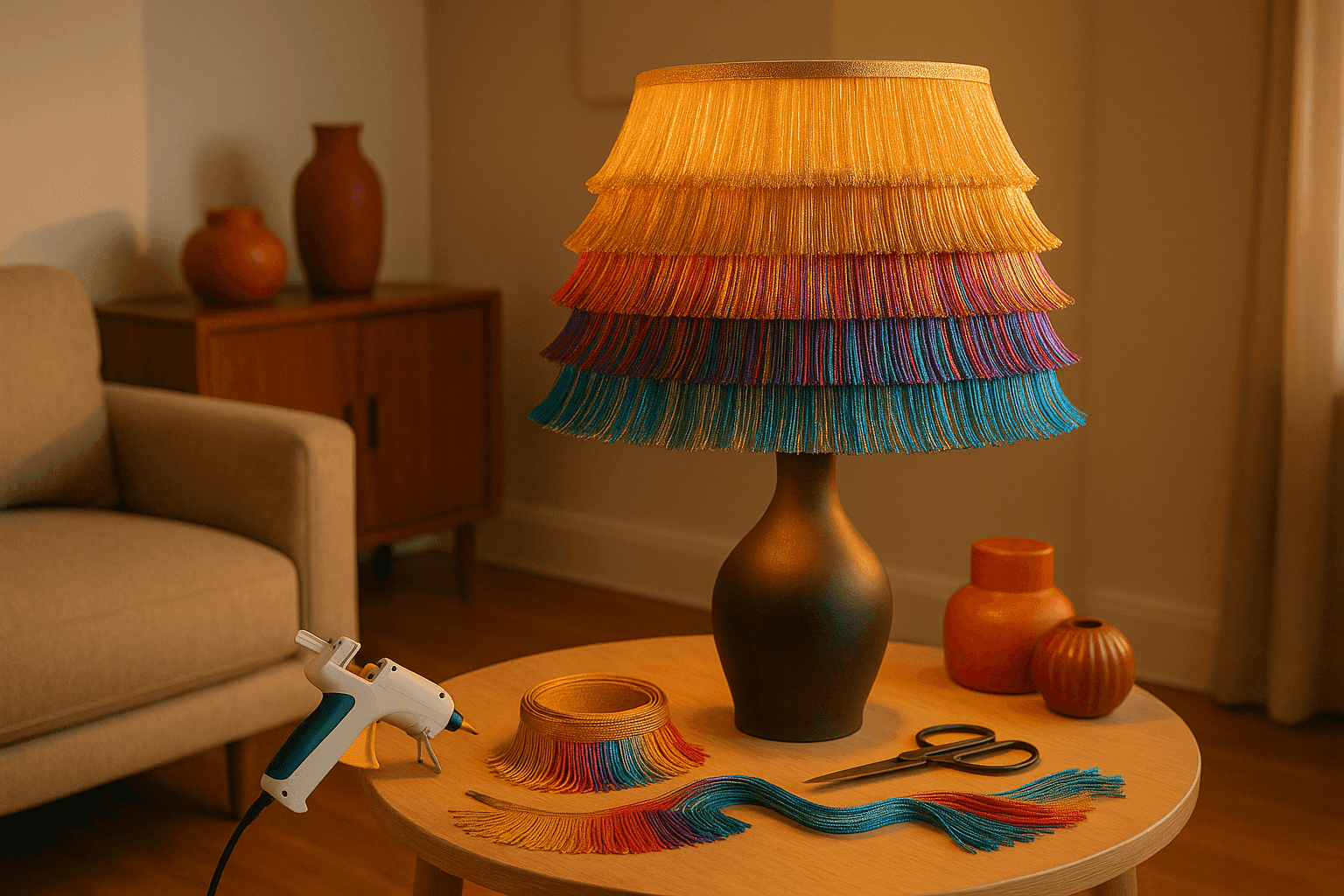
Some home decor whispers quietly in the background, and then there's the fringe lampshade that announces "I'm here and I'm fabulous!" every time someone walks past and sets it dancing with air currents. This isn't your grandmother's tasteful table lamp – it's a bold statement piece that transforms ordinary lighting into kinetic art that catches and reflects light with every gentle movement. Whether you choose sophisticated metallics for glamorous elegance, vibrant neons for playful energy, or full rainbow spectrum for maximum drama, layered fringe trim turns basic lampshades into conversation starters that guests can't stop touching and admiring. The best part is watching the fringe come alive when the light is on, creating mesmerizing shadow patterns that make your room feel like it's hosting its own private light show.
Fringe Transformation Supplies
- Base Lampshade: Plain drum or empire shade in neutral color, clean and structurally sound
- Fringe Selection: Decorative trim in chosen colors (metallic, neon, or rainbow), varying lengths for layered effect
- Attachment Materials: Hot glue gun with plenty of glue sticks, fabric glue for delicate trims, measuring tape
- Design Tools: Scissors for precise cutting, pins for temporary placement, ruler for even spacing
- Optional Enhancements: Beaded trim for extra sparkle, tassels for corner accents, metallic spray paint for base coordination
Application Process
- Plan your fringe layout by measuring shade circumference and determining how many layers you want
- Start at the bottom edge with your longest fringe, working around the shade in small sections
- Apply hot glue in short segments to prevent cooling before fringe attachment, working quickly but carefully
- Layer shorter fringe above the first row, slightly overlapping to create fullness and dimension
- Vary colors and textures as you work upward, creating visual interest through strategic placement
- Trim any uneven ends with sharp scissors for clean, professional-looking edges
- Add final details like beaded accents or tassels to enhance the overall dramatic effect
- Test the movement by gently blowing on the fringe to ensure proper flow and dancing motion
Professional interior designers know that successful fringe lampshades require strategic color graduation – start with your boldest or darkest colors at the bottom and work toward lighter or more metallic tones as you move up the shade. This creates visual weight at the base while allowing the upper fringe to catch and reflect light more dramatically. For maximum movement, choose lightweight fringe materials over heavy ones, and consider the lamp's location – fringe shades work best where there's natural air circulation from foot traffic or HVAC systems to keep them gently dancing throughout the day.