DIY Fabric-Wrapped Planters: Spring Style Refresh
Transform plain pots into custom designer pieces with this simple fabric makeover
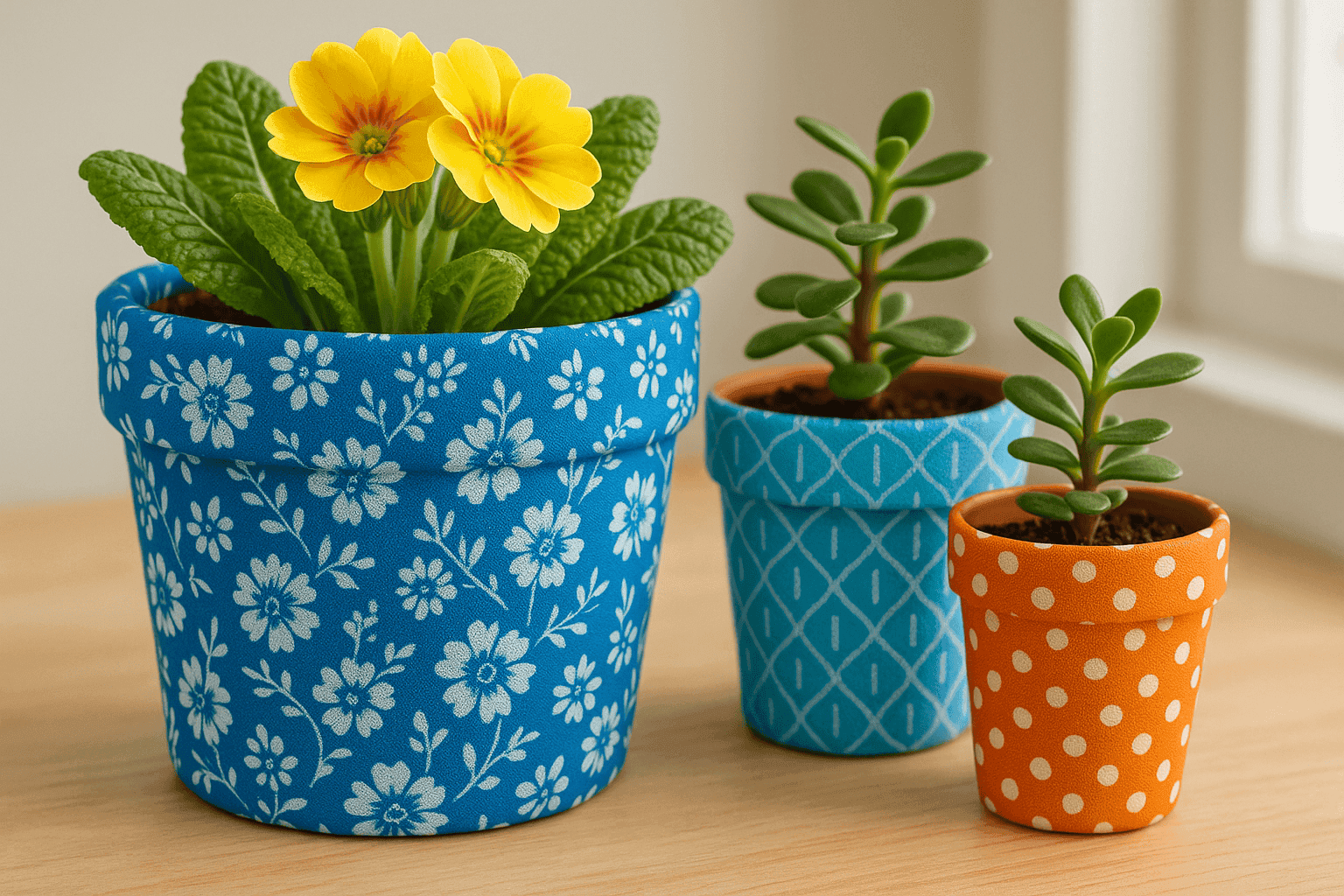
Plain terracotta or plastic pots get a stylish makeover with this simple fabric-wrapping technique. Perfect for spring decorating, this project lets you coordinate planters with your existing decor or create a fresh seasonal look. In just an afternoon, you can transform basic containers into custom designer pieces that look like they came from a boutique home store.
What You'll Need
| • Plain planters (terracotta, plastic, or ceramic) |
| • Fabric in spring patterns or colors |
| • Mod Podge or fabric glue |
| • Foam brush or paintbrush |
| • Scissors |
| • Clear acrylic sealer (optional) |
| • Measuring tape |
| • Pencil |
How To Do It
- Prepare your planters: Clean the outside surface thoroughly and let dry completely. For plastic pots, lightly sand the surface for better adhesion.
- Measure and cut fabric: Measure the height and circumference of your planter. Cut fabric with about 1/2 inch extra on all sides to allow for overlap.
- Apply adhesive: Working in sections, brush a thin layer of Mod Podge onto the planter. Start from the top and work your way down.
- Attach fabric: Carefully press the fabric onto the adhesive, smoothing out wrinkles as you go. For curved pots, make small snips at the top and bottom edges to help the fabric conform.
- Seal the fabric: Once the fabric is attached and dry (about 30 minutes), apply a coat of Mod Podge over the entire surface. This seals the fabric and gives a finished look.
- Let dry and add protection: Allow to dry completely (2-3 hours). For outdoor use, apply 1-2 coats of clear acrylic sealer for weather protection.
- Add plants: Place a plastic liner inside (if using a porous pot) or plant directly in your newly decorated planter.
For a cohesive look that design professionals love, create a collection of fabric-wrapped planters in varying heights but with coordinating fabrics. Mix patterns and solids that share a common color palette – try combining florals with geometrics or stripes for visual interest. For added dimension, consider adding trim details like jute rope, ribbon, or decorative buttons along the top edge. When arranging your collection, follow the designer's rule of odd numbers – groups of three or five planters create more visually appealing displays than even-numbered groupings.