Deep Clean Your Coffee Maker in 20 Minutes for Free
White vinegar, hot soapy water, and twenty minutes — the coffee maker you use every morning finally gets the clean it deserves
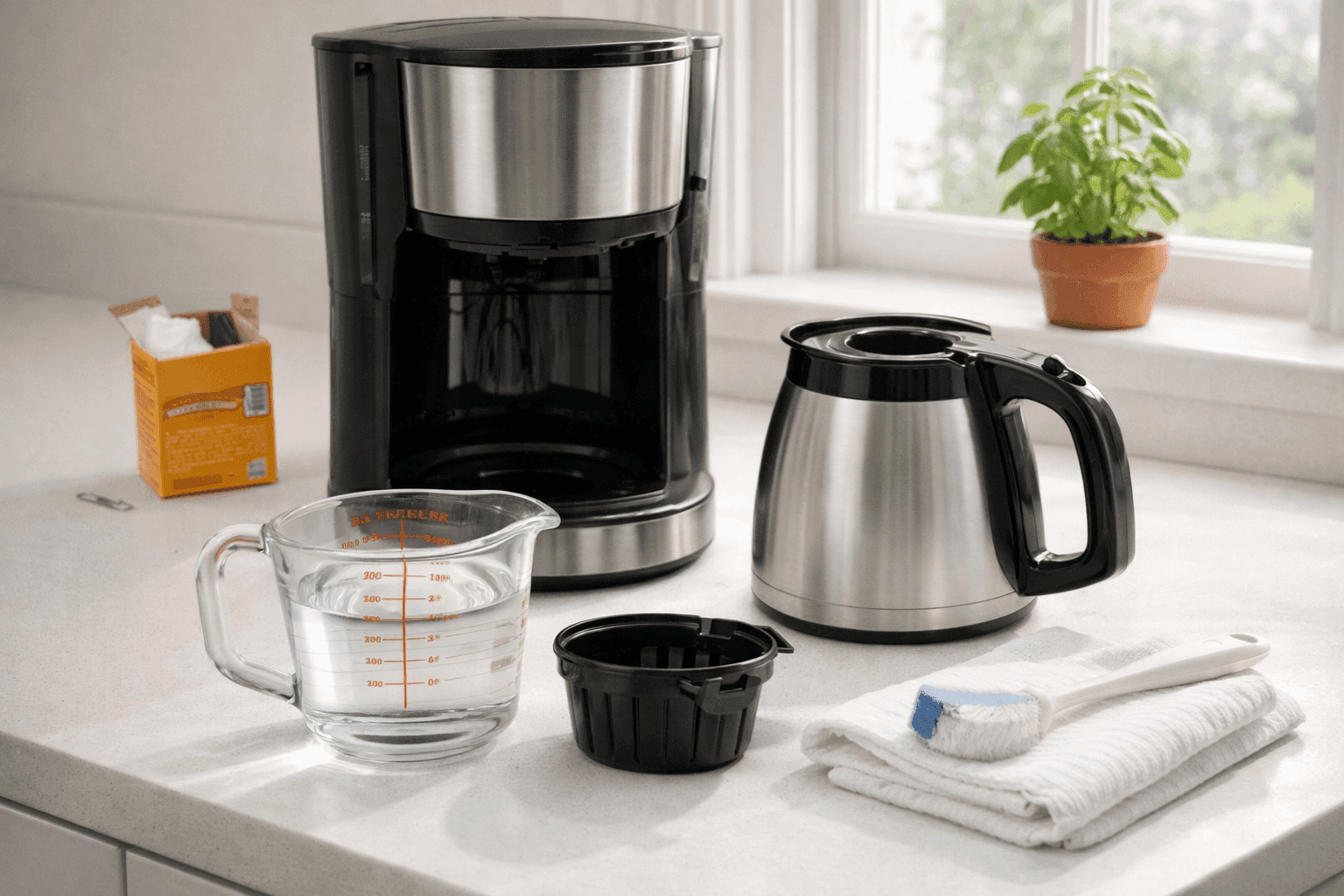
If your morning coffee has been tasting slightly flat, slightly bitter, or slightly off in a way you can't quite name, the most likely culprit is not your beans or your technique — it's the mineral scale and coffee oil buildup that has been accumulating inside your machine since the last time it was properly cleaned, which for most coffee makers is longer ago than anyone wants to admit. White vinegar run through a complete brew cycle dissolves the mineral deposits that restrict water flow and affect brew temperature, both of which directly degrade the flavor of every cup the machine produces. The whole process takes twenty minutes, uses nothing you don't already have in the kitchen, and produces noticeably better coffee from the very next brew. This is the monthly maintenance task that most coffee drinkers skip and then wonder why their machine started making mediocre coffee — and it is genuinely one of the easiest, highest-payoff things you can do in twenty Sunday morning minutes.
What You Need
- White distilled vinegar — the descaling agent; the acetic acid dissolves calcium and magnesium mineral deposits that accumulate on internal heating elements and water passages from regular tap water use; do not substitute apple cider vinegar, which leaves a persistent fruity residue in the machine (~$3 for a large bottle that handles many cleaning sessions)
- Fresh water — for the rinse cycles that follow the vinegar cycle; two to three full reservoir rinse cycles are the minimum needed to clear vinegar taste and smell from the machine's internal passages before the next brew
- Dish soap and hot water — for hand-washing all removable components; carafe, filter basket, lid, and any removable water reservoir panels all accumulate coffee oil residue that vinegar cycling doesn't address
- Soft brush or old toothbrush — for scrubbing the filter basket housing, the spray head above the filter basket, and any other internal areas accessible with the basket removed
- Baking soda — for French press users specifically; baking soda's mild abrasive quality removes the coffee oil film from glass and metal components that dish soap alone leaves behind
- Paperclip or thin needle — for Keurig users; clears mineral and grounds buildup from the needle that punctures pod tops, which is the most common cause of weak, slow-brewing, or incomplete Keurig cycles
- Damp microfiber cloth — for wiping down the exterior housing, warming plate, and drip tray area after the internal cleaning is complete
How to Do It
- Remove the filter and any coffee grounds from the basket before starting — running a vinegar cycle with grounds or a paper filter in place pushes vinegar through the grounds and into the carafe, which produces an unpleasant vinegar-coffee mixture that is difficult to rinse out fully and makes the subsequent rinse cycles less effective at clearing pure vinegar from the internal passages.
- Fill the water reservoir with a solution of equal parts white vinegar and fresh water — for a standard 12-cup machine, six cups of vinegar and six cups of water. Place the empty carafe in position under the brew basket and run a complete brew cycle without any coffee or filter in the basket, allowing the full vinegar solution to cycle through the machine's heating element, water passages, and showerhead.
- Pause the brew cycle halfway through if your machine allows it — turn the machine off after approximately half the reservoir has cycled through and allow the vinegar solution to sit in the internal passages for fifteen minutes before completing the cycle. This soak period gives the acetic acid additional time to dissolve stubborn mineral scale that a continuous flow cycle passes through too quickly to fully address, particularly in machines that haven't been cleaned in several months or longer.
- Complete the brew cycle and discard the vinegar solution from the carafe, then refill the reservoir with fresh clean water and run a complete water-only rinse cycle. The vinegar smell coming through during this first rinse cycle is normal and indicates the internal passages are clearing — run a second full rinse cycle, and a third if any vinegar smell persists in the brewed water. Inadequate rinsing is what produces the vinegar-tinted coffee taste that makes people reluctant to clean their machines; two to three full cycles is the minimum, not an optional extra step.
- Disassemble all removable components while the rinse cycles run — remove the carafe, lid, filter basket, and any removable drip tray or water reservoir panels and wash them in hot soapy water. The carafe requires particular attention to the interior base where coffee oils concentrate and oxidize into the slightly rancid flavor note that appears in coffee brewed in a visually clean but functionally dirty carafe.
- Clean the showerhead — the small perforated disc above the filter basket that distributes water evenly over the grounds — by removing it if your machine allows and soaking it in white vinegar for five minutes before scrubbing with a soft brush. Mineral-clogged showerhead holes distribute water unevenly across the grounds, which produces uneven extraction and the noticeably flat or thin coffee flavor that descaling the internal passages alone doesn't fully resolve.
- Address Keurig needle maintenance if you use a pod-style machine by lifting the handle to access the needle that punctures pod tops, inserting a straightened paperclip into each needle hole, and moving it in circular motions to dislodge grounds and scale buildup from inside the needle channel. A partially blocked Keurig needle is the single most common cause of weak, incomplete, or very slow brewing cycles in pod machines, and the paperclip clearing takes thirty seconds and restores full brew performance immediately.
- Wipe the full exterior of the machine with a damp microfiber cloth once all components are clean and the rinse cycles are complete — pay particular attention to the warming plate, which accumulates scorched coffee residue that a damp cloth alone won't remove. A paste of baking soda and water applied to the warming plate and allowed to sit for five minutes before wiping lifts the scorched residue without scratching the plate surface. Brew a test cup with your usual coffee and notice the difference in flavor clarity that a clean machine produces.
Specialty coffee professionals who maintain commercial brewing equipment always use filtered or bottled water in their machines rather than tap water — not for flavor reasons in the brew itself, but because the significantly reduced mineral content of filtered water slows the scale accumulation rate inside the machine by fifty percent or more compared to hard tap water, which means the descaling interval stretches from monthly to every two to three months without any degradation in brew quality or machine performance. A countertop pitcher filter like a Brita costs about $25 and pays for itself within a few months in extended machine life and reduced descaling frequency, while also producing noticeably cleaner-tasting coffee from every brew regardless of how recently the machine was cleaned.