Crystal Clear: Spring Styling with Versatile Glass Vessels
Create airy, light-filled displays using transparent containers for flowers, branches, and creative arrangements
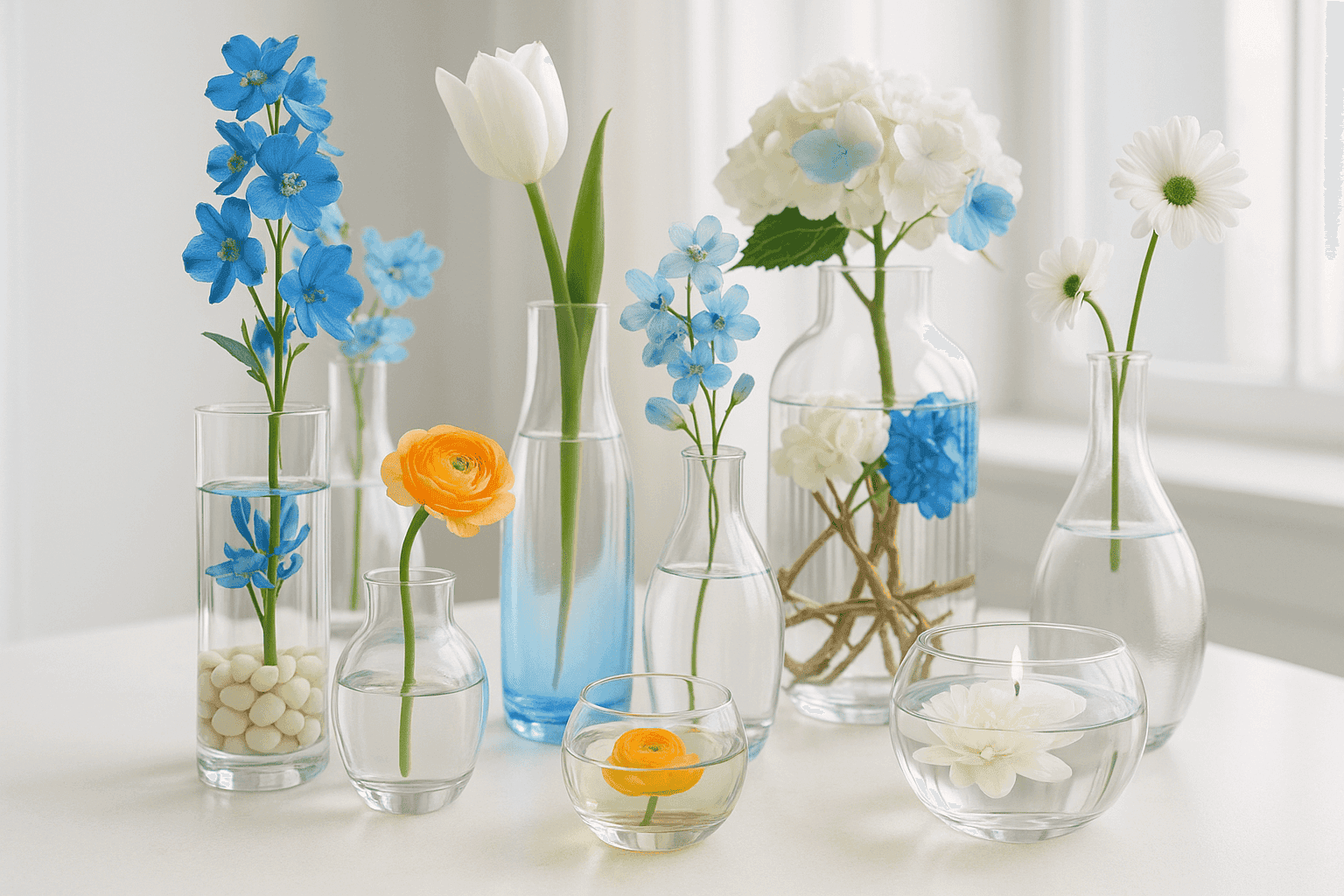
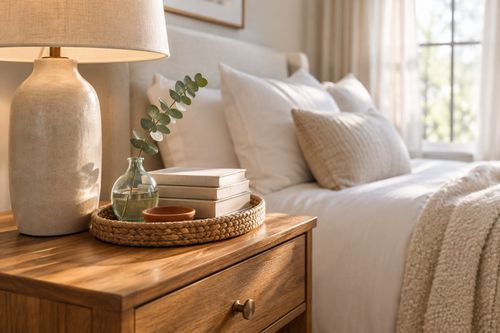
Clear glass vases offer the perfect minimalist backdrop for spring's botanical abundance, allowing the natural beauty of stems, blooms, and branches to take center stage. Unlike opaque containers that visually truncate flowers, transparent vessels reveal the complete structure of arrangements—from curving stems underwater to blooming heads above—creating a fully integrated visual experience. This approach celebrates the inherent architecture of plant materials while adding virtually weightless visual presence to your spaces. Beyond traditional flower arrangements, these versatile glass vessels invite creative experimentation with layered materials, floating elements, and unexpected contents. As light passes through both container and contents, it creates mesmerizing reflections and refractions that bring dynamic energy to any room.
What You'll Need
| Glass Container Types: |
| • Cylinder vases in varying heights |
| • Bulb or teardrop-shaped vases |
| • Wide-mouth bowls for floating arrangements |
| • Slender bud vases for single stems |
| • Apothecary jars with wider bases |
| Natural Elements: |
| • Spring flowers with interesting stems |
| • Flowering branches (cherry, forsythia, apple) |
| • Curly willow or decorative twigs |
| • Grasses or reeds with strong structure |
| • Interesting leaves or foliage |
| Decorative Fillers: |
| • Polished river stones or glass pebbles |
| • Colored sand or decorative soil |
| • Floating candles for water displays |
| • Citrus slices or seasonal fruits |
| • Decorative shells or sea glass |
| Arrangement Tools: |
| • Flower arranging shears or scissors |
| • Clear floral tape for grids |
| • Glass marbles for anchoring stems |
| • Flower food packets |
| • Small funnel for adding materials |
| Display Accessories: |
| • Decorative trays for grouping arrangements |
| • Small risers or stands for height variation |
| • LED submersible lights for evening glow |
| • Ribbon or twine for simple embellishment |
| • Mirror tiles for enhanced light reflection |
| Cleaning Supplies: |
| • Glass cleaner |
| • Microfiber cloths |
| • Bottle brushes for narrow vessels |
| • White vinegar for mineral deposits |
| • Rice or crushed eggshells for cleaning narrow vases |
How To Do It
- Prepare your glass vessels:
- Clean thoroughly inside and out for crystal clarity
- Use vinegar solution for hard water stains or cloudiness
- For narrow vases, add rice and warm soapy water, then shake
- Dry completely to prevent water spots
- Polish exterior with microfiber cloth for maximum shine
- Create classic floral arrangements:
- Cut stems at an angle for better water absorption
- Remove foliage that will sit below water level
- Create a support grid with clear tape for better stem positioning
- Add flower food to extend bloom life
- Arrange flowers allowing natural stem curves to show through glass
- Design minimalist single-stem displays:
- Select bud vases or slender cylinders for individual blooms
- Choose flowers with architectural interest (tulips, anemones, ranunculus)
- Allow ample empty space to highlight each stem's form
- Group multiple single-stem vases for collective impact
- Vary heights and flower types within grouped arrangements
- Create layered material arrangements:
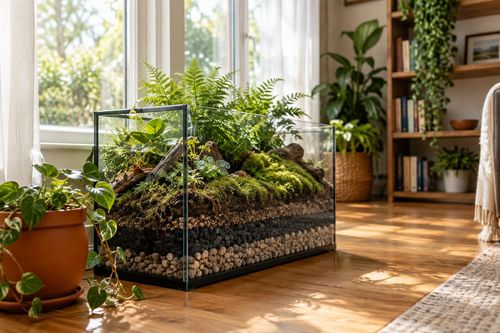
- Add 1-2 inches of decorative stones, sand, or glass pebbles
- Layer materials in contrasting colors for visual interest
- Create terrarium-like arrangements with small plants
- Use a funnel for precise placement of layered materials
- Consider ombré effects with graduated color materials
- Design floating arrangements:
- Fill wide, shallow bowls with water
- Float flower heads (gardenias, camellias, open roses)
- Add floating candles for evening ambiance
- Include small greenery or petals for additional interest
- Place arrangements where reflections will be visible
- Showcase branches and structural elements:
- Select tall cylindrical vases for dramatic height
- Choose branches with interesting forms or flowering buds
- Add clear glass marbles or river stones to stabilize tall branches
- Allow branches to extend 2-3 times the height of the container
- Consider spray-painting branches for unexpected color
- Create submerged arrangements:
- Select flowers that maintain form underwater (orchids, chrysanthemums)
- Weigh stems with decorative stones or transparent weights
- Add submersible LED lights for evening illumination
- Use distilled water for maximum clarity
- Change water regularly to maintain freshness
- Group vessels for collective impact:
- Arrange multiple vases in odd-numbered groupings (3, 5, 7)
- Vary heights and shapes while maintaining glass as common element
- Create a cohesive look with similar flower types or colors
- Position on trays or mirror tiles for unified presentation
- Consider the arrangement from all viewing angles
- Position for maximum light interaction:
- Place arrangements near windows for natural backlighting
- Consider how morning and evening light will interact differently
- Use mirror tiles beneath arrangements to multiply light reflection
- Position where sunlight will cast interesting shadows and refractions
- Add small votives nearby for evening enhancement
- Maintain your glass displays:
- Change water every 2-3 days to keep it clear
- Remove wilting flowers promptly
- Trim stems as needed for continued water absorption
- Clean glass surface regularly to maintain clarity
- Rotate arrangements away from direct sunshine to extend flower life
Professional floral designers employ a technique called "transparent contouring" when creating sophisticated glass vessel arrangements. This approach involves selecting and positioning stems specifically to create graceful underwater curves that are as visually important as the blooms themselves. For instance, slightly bending tulip stems creates elegant arcs that draw the eye through the water, while spiral-wrapped stems add dynamic movement. Another industry secret is what stylists call "reflective complementing"—considering not just the direct view of an arrangement, but also how it appears in nearby reflective surfaces like mirrors, windows, or metallic objects. This dimensional awareness transforms simple arrangements into multifaceted visual experiences. For the most elevated effect, top designers recommend against factory-perfect symmetry, instead creating what they term "balanced asymmetry"—arrangements that have visual weight distribution without mirror-image precision. This subtle distinction makes the difference between professional-looking displays and rigid, amateur symmetrical arrangements.