Craft Room Rescue: Organize Supplies So You Actually Use Them
Sort materials by project type and create systems that make crafting enjoyable instead of frustrating
Your craft supplies have taken over multiple rooms with fabric scraps in one closet, paints in the garage, scrapbook materials in a bedroom drawer, and yarn scattered across three different locations—making any creative project require a treasure hunt before you can even start. This chaos means you constantly buy duplicate supplies because you can't find what you already own, abandon half-finished projects because gathering materials feels overwhelming, and waste precious creative time searching instead of actually making things. Organizing craft supplies by project type takes about three hours initially and costs $20-40 for storage containers, but it transforms crafting from frustrating chaos into enjoyable creativity where you know exactly what you have and can start projects immediately. This isn't about creating Instagram-perfect craft rooms; it's about building functional systems that serve your actual creative habits rather than aspirational organization that looks pretty but doesn't match how you really work.
What You'll Need
- Storage Bins: Clear containers in various sizes for seeing contents at glance ($20-40)
- Labels: Label maker or printable labels for clear identification
- Sorting Surface: Large table or floor space for spreading everything out
- Trash Bags: For disposing of dried-up paints, unusable supplies, incomplete sets
- Inventory List: Notebook or spreadsheet for tracking what you actually own
- Donation Bags: For craft supplies you'll never use but others might
- Time Investment: 3-4 hours for complete craft supply overhaul
Step-by-Step Method
- Gather all craft supplies from every location throughout your home so you can see the full extent of what you've accumulated
- Sort by project type rather than material type—sewing supplies together, painting supplies together, scrapbooking together, knitting together
- Purge ruthlessly by discarding dried-up paints, crusty glue bottles, fabric too small for any project, and incomplete sets missing crucial pieces
- Donate supplies for crafts you've abandoned—if you haven't touched those embroidery supplies in three years, someone else should enjoy them
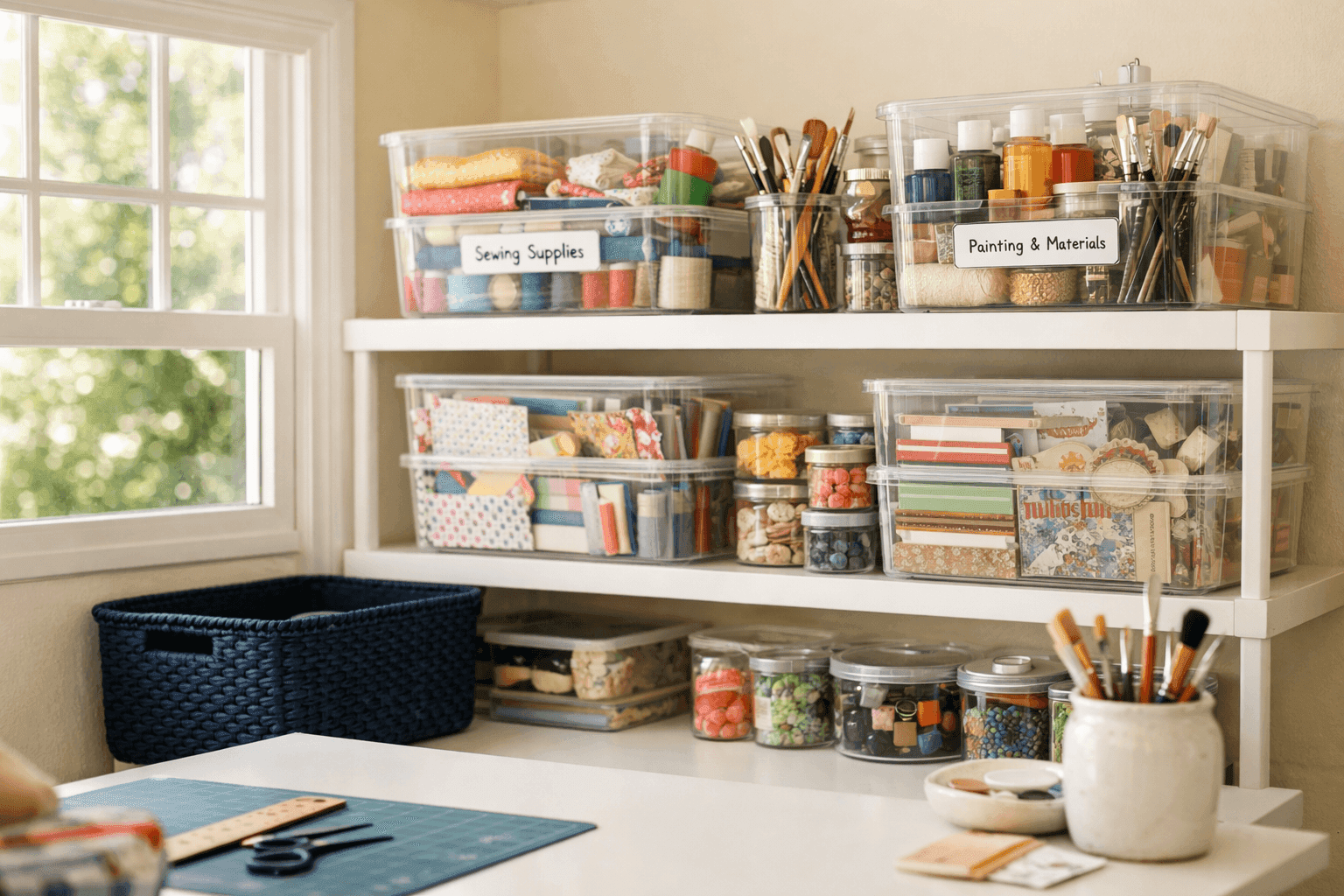
- Containerize each project type in dedicated clear bins so you can see contents without opening every container searching
- Label everything clearly and specifically—"Acrylic Paints & Brushes" is more useful than vague "Art Supplies"
- Create an inventory list noting what you have in each category to prevent buying duplicates during creative inspiration shopping sprees
- Store containers in one central location if possible, or at minimum group related project types together even if spread across rooms
Professional organizers who specialize in creative spaces recommend organizing by how you actually craft rather than theoretical perfect systems. If you always do mixed-media projects combining painting and collage, store those supplies together even though organizational purists might separate them. Also, create a "current projects" bin containing everything for works-in-progress so you're not constantly pulling from main storage—this dedicated space prevents abandoning projects when gathering materials becomes tedious. For supplies used across multiple crafts like scissors, glue, and rulers, designate a "general tools" container accessible from any project rather than buying duplicates for each category. Take photos of your organized system and keep them on your phone as references when you're at craft stores tempted to buy more supplies—seeing what you already own prevents impulse purchases of items collecting dust at home. The key to maintaining organized craft supplies isn't willpower; it's making the system match your creative workflow so returning items to proper containers requires less effort than just dumping everything in random piles.