Craft Natural Wood Slice Coasters With Preserved Fall Leaves
Cut branch slices, decoupage real leaves, and seal for functional seasonal coasters
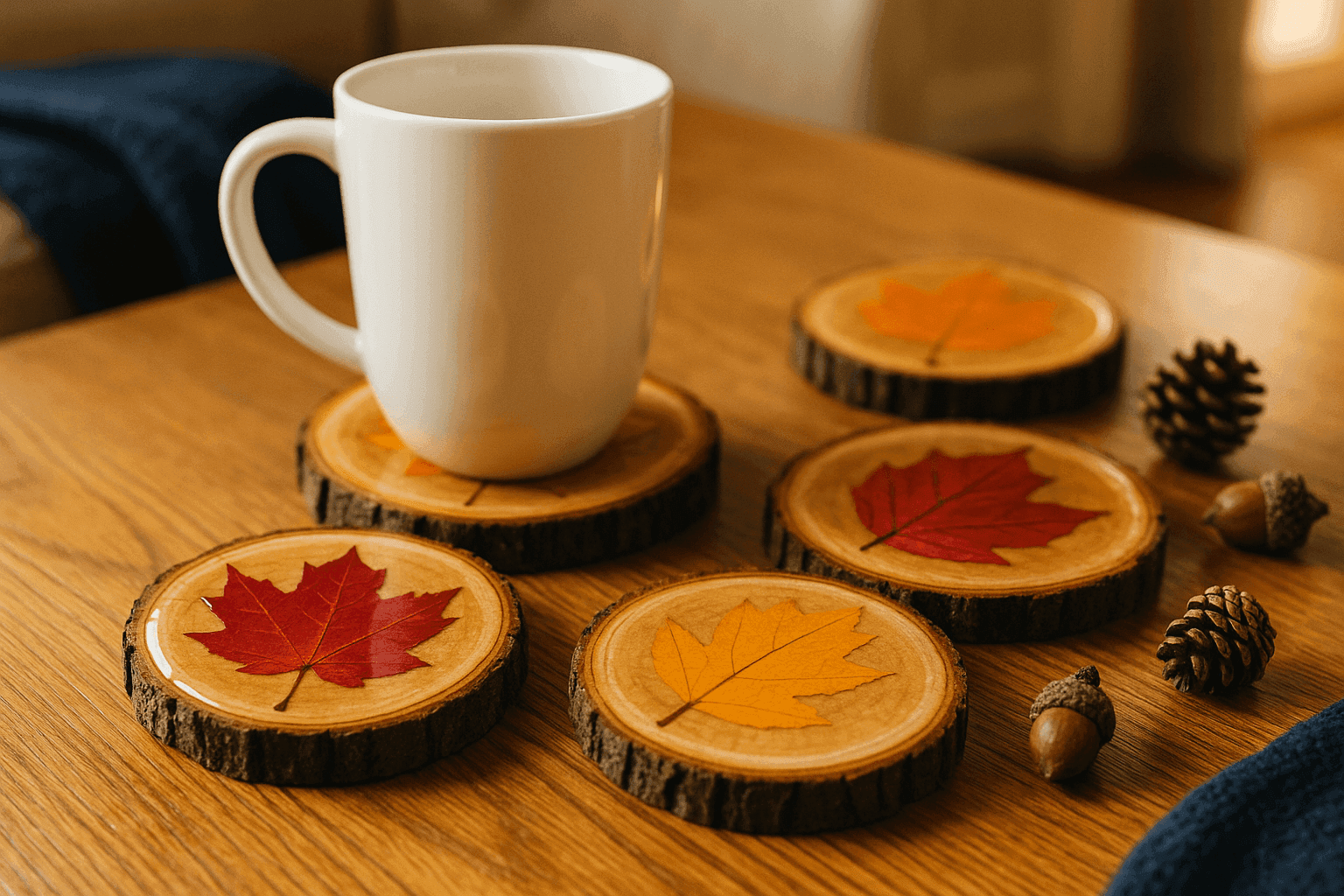
Real fall leaves preserved on natural wood slices create coasters that capture autumn's fleeting beauty in functional form, combining rustic woodworking with nature's artistry for seasonal decor that actually serves a practical purpose protecting your furniture from drink condensation. This project transforms foraged branches into custom coasters using simple handsaw cuts, mod podge decoupage technique to adhere collected leaves, and polyurethane sealing that creates waterproof surfaces durable enough for daily use throughout fall and beyond. The entire project costs under $20 for materials to create a set of 6-8 coasters if you're cutting branches yourself, takes about an afternoon including drying time, and produces unique pieces where no two are identical because each wood slice has its own grain pattern and each leaf its own shape and color variation. What makes these coasters so appealing is how they honor the ephemeral nature of fall foliage by preserving specific leaves you collected on memorable autumn walks, essentially capturing a moment in time under protective resin that keeps colors vibrant long after the original leaves would have crumbled. The woodworking component is genuinely accessible for beginners since you're making simple cross-cuts through branches rather than complex joinery, and the natural irregular shape of wood slices means imperfect cuts actually add to the rustic charm rather than looking like mistakes that need correction.
Coaster Materials
- Wood Branch Sections:
- Fallen branches 3-4 inches in diameter (foraged, free)
- Look for hardwoods like oak, maple, or birch
- Branches should be relatively straight and dry
- Avoid green wood which warps and cracks as it dries
- Fall Leaves:
- Fresh fallen leaves in peak color (free)
- Choose leaves slightly smaller than wood slice diameter
- Look for intact leaves without holes or excessive damage
- Variety of colors creates interesting set
- Adhesive and Sealant:
- Mod Podge or decoupage medium ($5-8)
- Clear polyurethane (water-based or oil-based, $10-15)
- Or epoxy resin for glass-like finish ($15-25)
- Foam brushes for applying sealant ($3-5 for pack)
- Tools Required:
- Handsaw or miter saw for cutting wood slices
- Sandpaper (80, 120, and 220 grit)
- Orbital sander (optional but helpful)
- Wax paper or plastic sheet for work surface
- Clean rags for wiping excess glue
- Optional Additions:
- Cork or felt pads for coaster bottoms ($3-5)
- Wood stain to enhance grain (optional, $5-8)
- Small saw horses or clamps for cutting ($10-20)
Creating Wood Coasters
- Cut Wood Slices: Using a handsaw or miter saw, cut your branch into 1/4 to 3/8-inch thick slices, making cuts as perpendicular to the branch as possible for level coasters—thinner cuts dry faster and use less branch length, but thicker slices provide more substantial coaster feel and stability under heavy drinks.
- Sand All Surfaces: Sand both faces and edges of each wood slice starting with 80-grit sandpaper to remove saw marks, progressing through 120-grit for smoothness, and finishing with 220-grit for silky texture—proper sanding is crucial because rough surfaces prevent good leaf adhesion and create uncomfortable coaster texture that catches on glass bottoms.
- Press Leaves Flat: Place collected fall leaves between heavy books for 24-48 hours to flatten them and remove excess moisture—flattened leaves lay smoothly against wood without air bubbles or wrinkles that compromise the decoupage bond and create gaps where moisture can seep under protective coating during use.
- Apply Base Coat: Brush a thin layer of Mod Podge over the top surface of your wood slice where the leaf will be positioned, working quickly before it dries—this base coat creates the adhesive foundation that bonds the leaf permanently to wood rather than just sitting on the surface vulnerable to peeling or lifting over time.
- Position Leaf Carefully: Place your pressed leaf onto the wet Mod Podge, gently pressing from center outward to eliminate air bubbles and ensure full contact with the wood surface—work slowly and deliberately because once the leaf touches the adhesive, repositioning risks tearing the delicate leaf tissue that becomes fragile when wet with glue medium.
- Seal Leaf Surface: Once the leaf is positioned and base coat has dried (30-60 minutes), apply another thin coat of Mod Podge over the top of the leaf, sealing it completely and creating a protective layer—brush gently to avoid disturbing or tearing the leaf, building up 2-3 thin coats rather than one thick coat that creates drips or clouding.
- Apply Polyurethane Finish: After Mod Podge is completely dry (at least 24 hours), apply 3-4 coats of clear polyurethane to entire coaster surface including sides and bottom, letting each coat dry fully before adding the next—this waterproof seal is what makes coasters functional rather than decorative, protecting wood and leaf from moisture damage during actual use with cold drinks.
- Add Protective Backing: Once final polyurethane coat is cured, attach small cork or felt pads to the bottom of each coaster to protect furniture surfaces from scratching—these pads also slightly elevate coasters allowing air circulation underneath that helps prevent moisture rings on tables even when coasters are heavily used with sweating cold beverages.
Professional woodworkers who create functional art pieces recommend the "bark edge preservation" technique that dramatically elevates these coasters from craft-fair quality to gallery-worthy. Instead of removing all the bark during sanding, carefully preserve a natural bark rim around the coaster edge by sanding only the top and bottom faces smooth while leaving the rough natural bark intact on the sides. This creates stunning contrast between the smooth finished coaster surface and rustic natural edge that emphasizes the organic origin of your materials. The extra step requires careful sanding technique to avoid accidentally knocking bark off, but the visual impact is worth the effort. The leaf selection strategy that creates the most professional-looking sets is choosing leaves with similar shapes but varying colors—six maple leaves in different autumn shades looks more cohesive than random assorted leaf types mixed together, even though the color variation provides visual interest. This "theme and variation" approach creates sets that clearly belong together rather than appearing randomly assembled. For maximum durability that allows these coasters to function daily for years rather than degrading within months, consider using bar-top epoxy resin as your final seal instead of polyurethane. Epoxy creates a thick glass-like coating that's virtually indestructible and completely waterproof, though it requires more careful application and longer curing time. The investment in materials pays off with coasters that maintain their appearance through countless uses rather than showing wear and cloudiness after one season of regular use. Store completed coaster sets in a dedicated basket or wrapped in cloth when not actively displayed, which protects polyurethane surfaces from scratches that would compromise the waterproof seal and potentially allow moisture to reach the preserved leaves underneath, causing discoloration or degradation that ruins the natural beauty you worked to capture and preserve.