Crack the Code: Fix Concrete Before Spring Rains Hit
Stop small cracks from turning into expensive replacements — this weekend fix costs less than a pizza
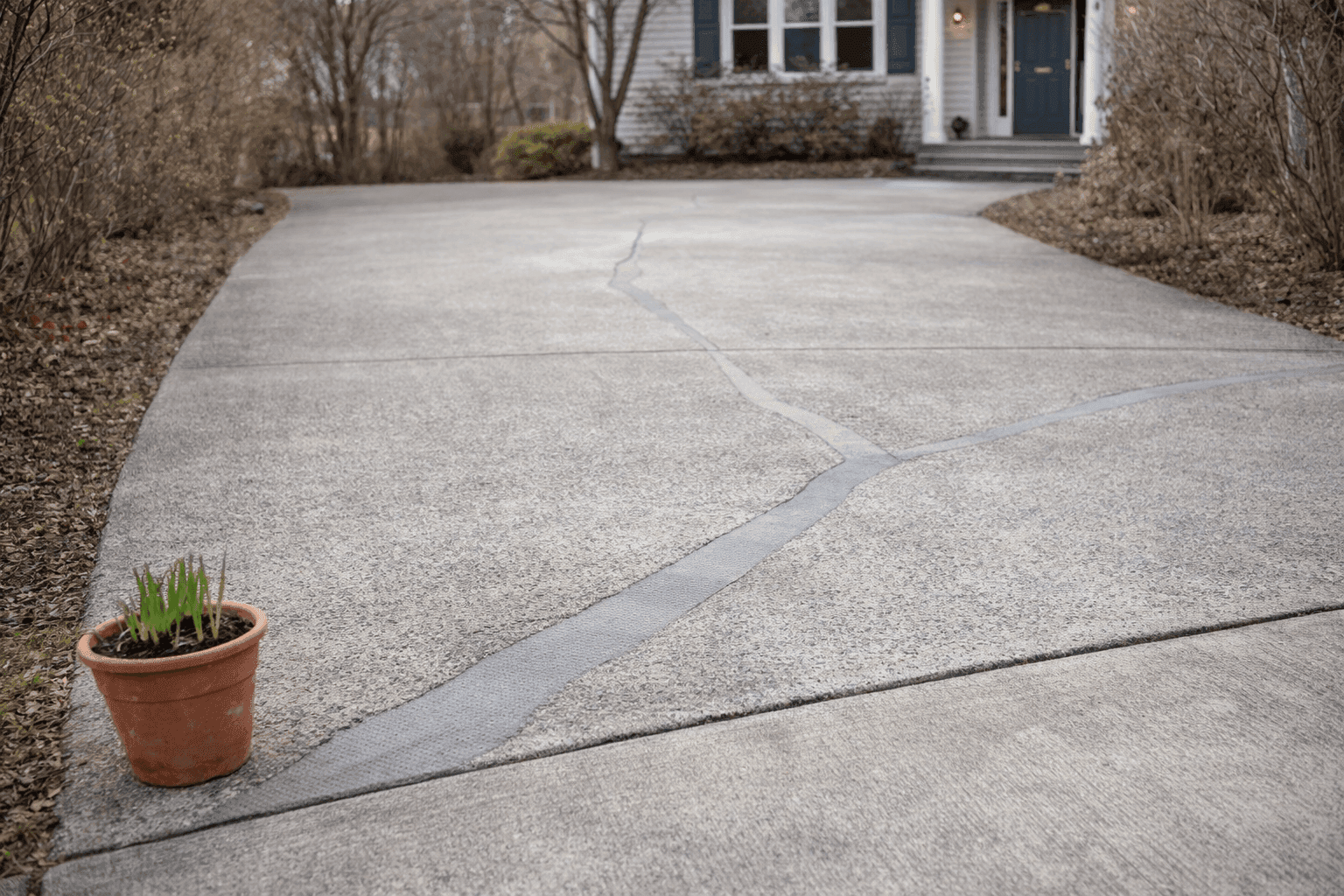
That spiderweb of cracks spreading across your driveway or sidewalk isn't just an eyesore — it's a countdown clock. Every freeze-thaw cycle this winter pushed water deeper into those gaps, and now that spring rains are coming, every downpour is going to make things worse fast. Here's the thing most people don't realize: catching cracks early is a $15–$30 Saturday morning fix. Ignore them until the concrete starts heaving, shifting, or crumbling, and you're looking at a $3,000–$8,000 slab replacement. I've patched my own driveway cracks three times over the years, and once you see how straightforward it is, you'll wonder why you ever put it off.
What You'll Need
- Crack Repair Product
- Concrete crack filler (self-leveling, for cracks under ½ inch) — ~$8–$12 per tube, such as Quikrete Concrete Crack Seal or similar
- OR concrete patching compound (for wider or deeper cracks) — ~$10–$15 per quart
- Prep Supplies
- Wire brush or old screwdriver (for cleaning crack edges)
- Shop vacuum or leaf blower (to clear debris)
- Garden hose with spray nozzle
- Backer rod foam rope for cracks wider than ½ inch — ~$4–$6
- Application Tools
- Caulk gun (if using tube-style filler)
- Putty knife or margin trowel (for patching compound)
- Stiff-bristle paintbrush (for feathering edges)
- Finishing
- Concrete sealer (optional but recommended) — ~$15–$20
- Painter's tape for clean edges on decorative concrete
- Safety
- Work gloves
- Safety glasses
- Knee pads (your future self will thank you)
How to Fix It
- Assess your cracks before you buy anything — cracks under ¼ inch wide need liquid filler, cracks from ¼ to ½ inch need self-leveling sealant, and anything wider needs patching compound plus backer rod. Knowing your crack type saves a wasted trip back to the hardware store.
- Clean the crack thoroughly by running a wire brush or old screwdriver along the entire length to knock out loose concrete, dirt, and vegetation. This step is non-negotiable — filler won't bond to a dirty crack no matter how good the product is.
- Blow out all the debris using a shop vac or leaf blower, then rinse the crack with your garden hose and let it dry for at least an hour. Slightly damp concrete is actually fine for most fillers, but standing water will cause adhesion failure.
- Install backer rod (if your crack is wider than ½ inch) by pressing the foam rope into the crack with a screwdriver until it sits about ¼ inch below the surface. This gives your filler something to bond against and prevents it from sinking into a bottomless gap.
- Apply your filler by slowly running the self-leveling sealant or patching compound into the crack, slightly overfilling to account for settling. Work in sections of 2–3 feet at a time so the material doesn't skin over before you're done feathering it.
- Smooth and feather the edges with your putty knife or trowel, blending the repair into the surrounding concrete so water can't pool at the seam. A slightly textured finish with a stiff brush will match the look of aged concrete much better than a glassy-smooth surface.
- Protect the repair from foot traffic for at least 4 hours and vehicles for a full 24 hours — put out a bucket or some lawn chairs as a reminder so nobody accidentally walks through it. Cure time varies by product and temperature, so cooler days mean longer waits.
- Seal the entire surface (not just the repair) with concrete sealer once fully cured, ideally 24–48 hours later. Sealing the whole slab is what professionals do because it blends the repair visually and protects everything from the next round of freeze-thaw damage.
Fresh concrete filler almost always cures lighter than the surrounding slab, which can make repairs look obvious for months. To minimize that contrast, pros mix a small amount of dry concrete pigment or fine sand into patching compound before applying it. Even better, apply a penetrating concrete sealer over the entire surface after the repair cures — it darkens and evens out the whole slab so the patch disappears into the background. If you're dealing with a stamped or decorative concrete surface, skip the DIY patching and invest in a color-matched repair caulk or call a concrete specialist, because mismatched color on decorative work is harder to hide than the original crack.