Corner Space Rescue: Three-Tier Floating Shelves That Actually Fit
Turn dead corner space into functional storage with custom triangular shelves
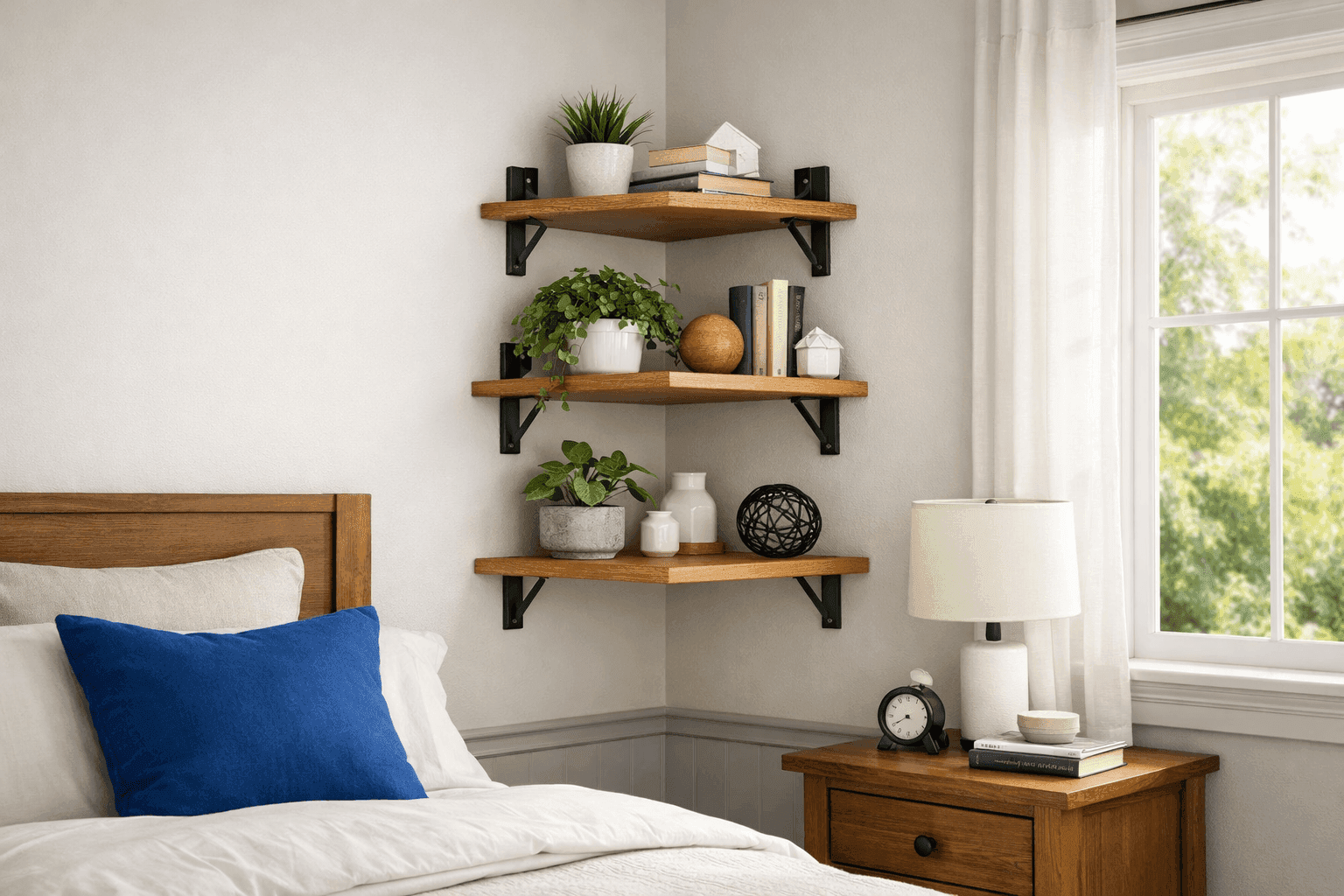
Room corners are probably the most underutilized real estate in your entire house—awkward angles where furniture doesn't fit and wall space just sits there doing absolutely nothing. Three-tier corner shelves transform that dead zone into functional vertical storage that's perfect for plants, books, decorative objects, or anything else you need to display but don't have surface space for. I built my first set for a tiny bedroom corner after realizing I was walking past wasted vertical space every single day, and the project was so satisfying and useful that I've since added corner shelves in three other rooms. The triangular shape fits perfectly into 90-degree corners, the staggered heights create visual interest and maximize storage capacity, and the whole build costs $30-50 depending on wood choice and takes just 2-3 hours including cutting, sanding, and mounting. Think of it as creating custom storage that actually works with your space instead of fighting against awkward architecture that standard rectangular shelves can't accommodate.
What You'll Need
- Wood boards: One 1x12 pine board, 6 feet long for three shelves (or nicer wood like poplar or oak—$15-35 depending on choice)
- Corner shelf brackets: Six matching brackets, two per shelf (metal or decorative—$12-25 for a set)
- Wood screws: 1.5-inch screws for attaching brackets to shelves, 2.5-inch for mounting to wall studs ($3-5)
- Wall anchors: Heavy-duty anchors if not hitting studs ($4-6)
- Sandpaper: 120 and 220 grit for smoothing edges ($3-5)
- Wood stain or paint (optional): For finishing shelves to match décor ($8-15)
- Polyurethane sealer (optional): For protection if staining ($10-12)
- Tools needed: Circular saw or handsaw, drill with bits, level, measuring tape, pencil, stud finder
Step-by-Step Instructions
- Measure your corner by determining how far out from the corner you want shelves to extend—10-14 inches works well for most spaces, creating useful surface area without protruding too far into the room
- Cut triangular shelves by marking right triangles on your board with two equal sides at your chosen length, then cutting along the hypotenuse to create corner-fitting triangles—you'll get three shelves from a 6-foot board
- Sand all surfaces starting with 120-grit to remove saw marks and rough spots, then finishing with 220-grit for smooth edges that won't snag clothing or scratch items placed on shelves
- Finish wood as desired by applying stain, paint, or leaving natural with just polyurethane sealer—let finish dry completely according to product instructions before mounting
- Attach brackets to shelves by positioning two brackets along the two straight edges of each triangle, drilling pilot holes, and screwing brackets securely to the underside of each shelf
- Mark wall positions by using your level to mark where each shelf will mount, spacing them 12-15 inches apart vertically for balanced visual weight and functional access
- Locate studs using your stud finder along both walls where brackets will mount—hitting at least one stud per bracket ensures weight-bearing capacity for books or heavy décor
- Mount shelves securely by holding each shelf-bracket assembly in position, checking level, drilling pilot holes into studs or installing wall anchors, then driving screws through bracket holes to secure—start with bottom shelf and work upward for easier access
Professional woodworkers recommend making your shelves progressively smaller as you go up—bottom shelf at 14 inches, middle at 12 inches, top at 10 inches—which creates more visual interest and better proportions than three identical sizes. For cleaner aesthetics, paint brackets the same color as your walls so they visually disappear and shelves appear to float. Consider the 45-degree rule when cutting: if you want shelves to extend 12 inches from the corner along each wall, cut triangles with 12-inch sides, creating approximately 17-inch diagonal fronts. Round or slightly ease the front corners of your triangular shelves to soften the look and prevent sharp points at eye level. These corner shelves work beautifully in bathrooms for toiletries, kitchens for spices or coffee stations, bedrooms for alarm clocks and books, or living rooms for plant displays. For extra stability on heavy-duty applications, add a third bracket underneath the center of each shelf or use L-brackets instead of decorative corner brackets. The biggest mistake beginners make is spacing shelves too close together—you need at least 10 inches of vertical clearance to comfortably place and retrieve items. Style your finished shelves in odd-numbered groupings of décor (three items per shelf looks more intentional than two or four), and vary heights to create visual flow up the corner rather than flat static displays on each level.