Corner Cabinet Rescue: Lazy Susan That Ends the Back-Reach Struggle
Transform dead corner space into fully accessible storage with one simple turntable
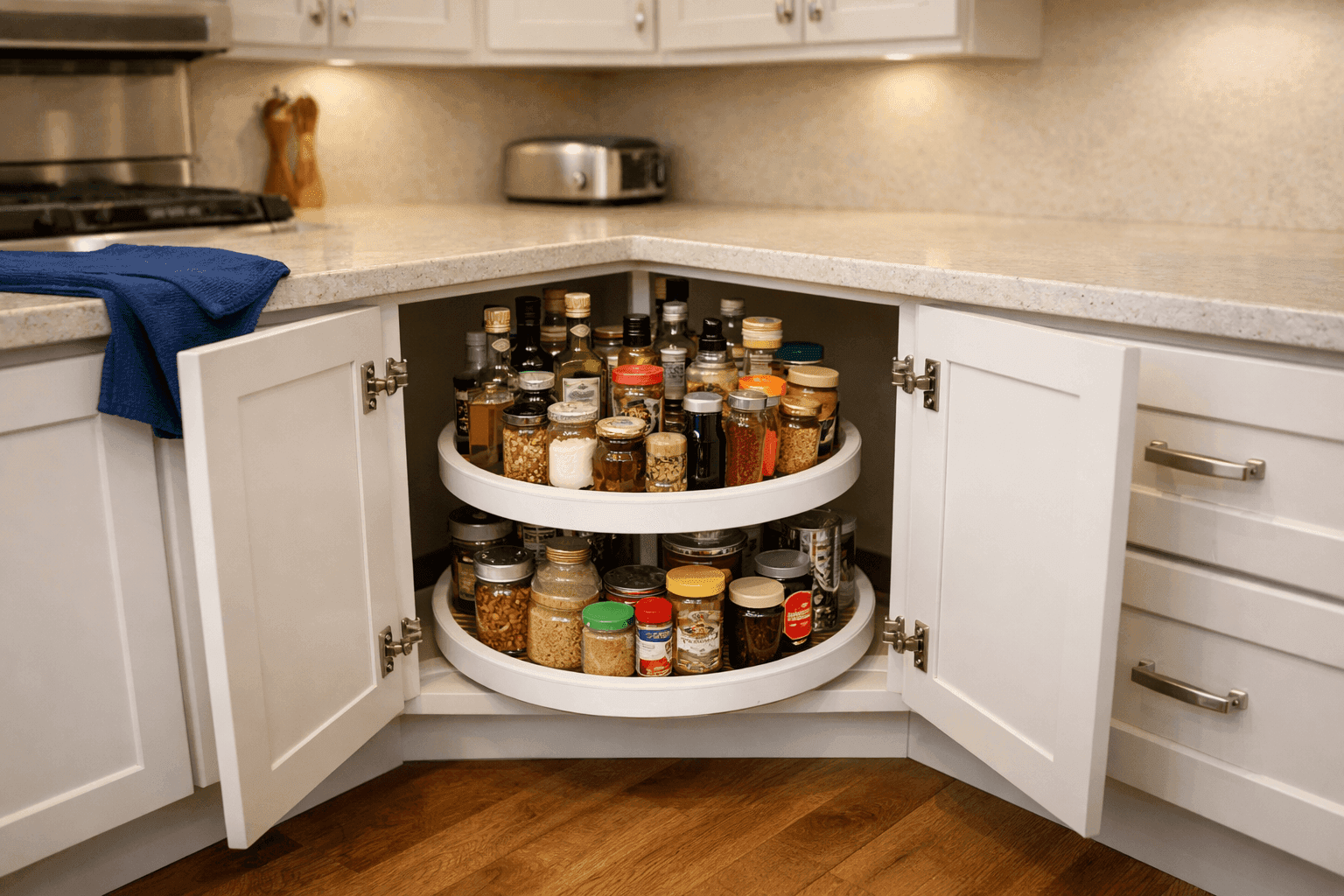
Deep corner cabinets are where kitchen items go to disappear forever, banished to dark recesses where you can't see them and can barely reach them without performing acrobatic contortions. That fancy oil you bought six months ago is probably back there somewhere, along with half your spice collection and who knows what else, but actually retrieving anything requires excavating through layers of other stuff like an archaeological dig. Installing a lazy susan turntable solves this frustration so completely you'll wonder why you tolerated the chaos for so long—one gentle spin brings everything within easy reach and clear view. I installed mine on a Sunday morning after spending ten minutes on my knees trying to fish out a baking pan from the abyss, and the transformation felt almost magical. The installation takes about 30 minutes with basic tools, costs $20-35 depending on size, and immediately makes that dead corner space as functional as your most accessible shelves.
What You'll Need
- Lazy susan turntable: Two-tiered or single-level, sized to fit your cabinet depth—typically 16-20 inches diameter ($20-35 depending on size and material)
- Measuring tape: For determining exact cabinet dimensions and clearances
- Pencil: For marking center point if mounting to cabinet floor
- Drill with bits (if mounting): Only needed if you choose to permanently secure the turntable—most are freestanding
- Screwdriver (if mounting): For attaching optional mounting hardware
- Level (optional): Ensures turntable sits flat for smooth rotation
- Damp cloth: For cleaning cabinet interior before installation
- Non-slip pad (optional): Prevents turntable from sliding on smooth cabinet floors ($3-5)
Step-by-Step Instructions
- Measure your corner cabinet by determining the depth from front to back and checking door clearance when fully opened—you need at least an inch of space around the turntable's edges for smooth rotation
- Empty the cabinet completely and wipe down all surfaces with a damp cloth, which gives you a fresh start and lets you evaluate what you're actually keeping versus what's just taking up space
- Check cabinet floor levelness by placing your level on the bottom shelf—if it's significantly uneven, you may need shims or a non-slip pad to prevent the turntable from tilting or sliding
- Position the turntable by centering it in your corner cabinet with equal clearance on all sides, making sure it doesn't interfere with door closing or any pipes or cabinet hardware
- Test rotation by spinning the empty turntable several complete revolutions to verify smooth operation and adequate clearance—this is your last chance to adjust position before loading
- Secure if desired by using the mounting hardware included with some models, drilling pilot holes and screwing the base to the cabinet floor—though most work perfectly well as freestanding units
- Organize items strategically by placing taller bottles and containers toward the center where they won't interfere with rotation, and smaller items toward the outer edge where they're most visible
- Load gradually and test by adding items in groups and spinning between additions to ensure weight is distributed evenly and nothing catches or tips during rotation
Professional kitchen designers often recommend using two single-tier turntables stacked at different heights rather than one double-decker model, which gives you more flexibility in organizing items by category and prevents the "tower of doom" effect where removing one item from the top tier risks avalanching everything below. For blind corner cabinets where you can't see the back even with rotation, add battery-operated LED puck lights to the cabinet ceiling—the improved visibility combined with easy access creates genuinely usable storage instead of a black hole. Consider dedicating your lazy susan to specific categories that benefit most from 360-degree access: oils and vinegars, spices and seasonings, baking supplies, or canned goods work beautifully. Use small bins or divided organizers on the turntable surface to corral tiny items like spice packets or seasoning blends that would otherwise slide around during rotation. The biggest mistake people make is overloading the outer edge with heavy items, which makes spinning difficult and can damage the bearing mechanism—keep heavy stuff toward the center and distribute weight evenly for years of smooth operation.