Cork Collection Magic: Wine Cork Trivets & Coasters
Transform saved wine corks into functional art that protects surfaces and sparks conversations
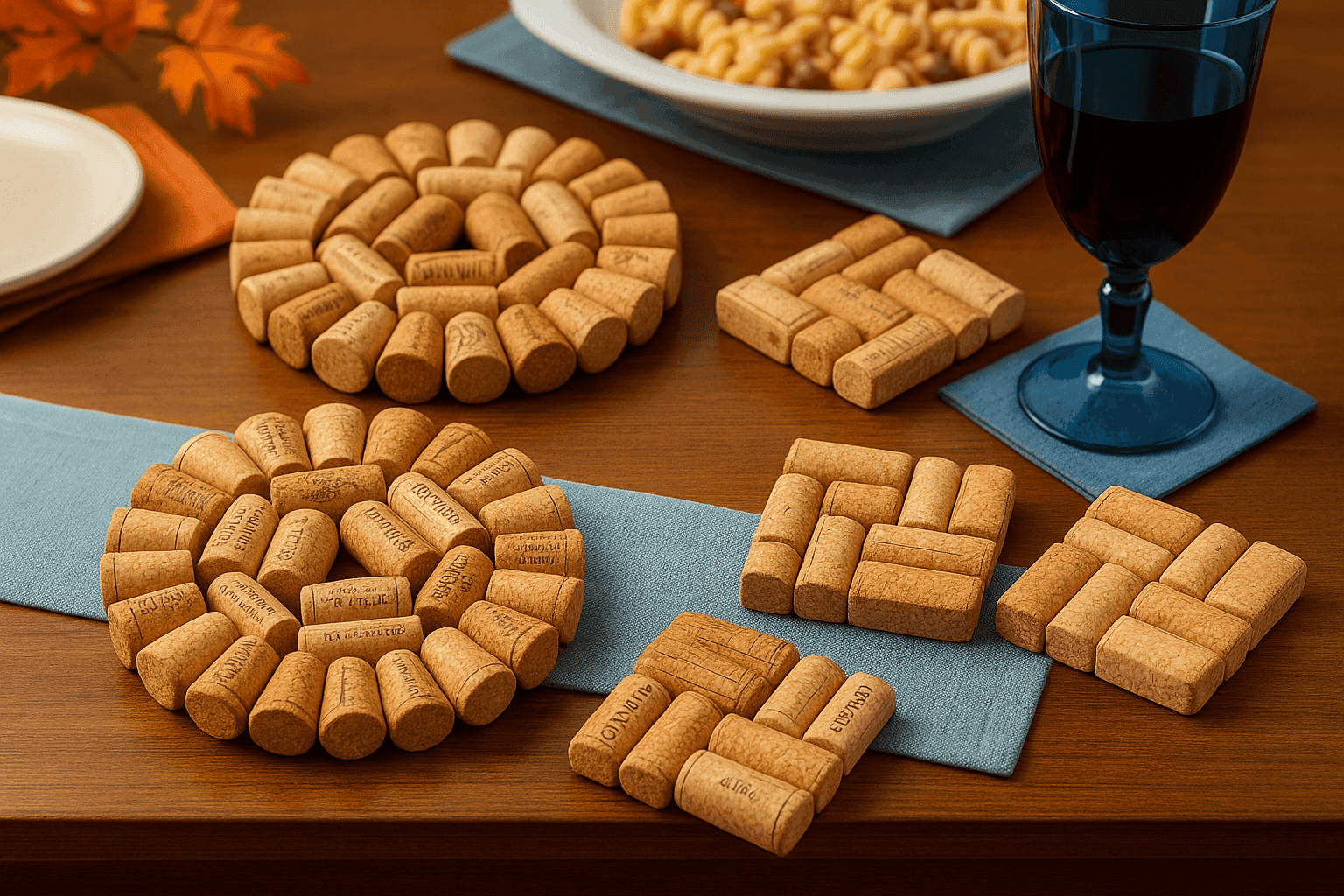
If you've been saving wine corks "just in case" but never knew what to do with them, this project transforms your collection into genuinely useful kitchen and dining accessories that guests always ask about. Wine cork trivets and coasters aren't just cute crafts—they're naturally heat-resistant, water-repellent, and surprisingly durable when properly sealed, making them perfect for protecting your surfaces from hot dishes and cold glasses. Creating a set costs virtually nothing if you've been collecting corks, compared to $25-40 for similar trivets at kitchen stores, and you get the satisfaction of turning your wine memories into functional pieces that spark conversations at every dinner party. The best part is that every piece tells a story, whether it's the cork from your anniversary dinner or that amazing bottle you shared with friends, turning practical kitchen accessories into a collection of happy memories.
Materials & Supplies
Cork Collection
- Wine corks (20-25 for large trivet, 4-6 for coasters)
- Mix of different wineries for visual interest
- Synthetic corks work fine alongside natural ones
- Clean corks free of mold or staining
Assembly Materials ($15-20)
- High-quality wood glue or E6000 adhesive
- Polyurethane sealant (water-based, clear)
- Fine-grit sandpaper (220 grit)
- Foam brushes for sealing
Tools
- Sharp craft knife
- Ruler or measuring tape
- Clamps or heavy books
- Drop cloth for workspace
Creating Your Cork Collection
- Plan your design by arranging corks in desired patterns—circular for trivets, square for coasters
- Trim corks to uniform length if needed using a sharp craft knife and steady pressure
- Test fit your arrangement, ensuring corks sit flush against each other with no gaps
- Apply wood glue sparingly to contact surfaces, working in small sections
- Assemble pattern carefully, pressing corks firmly together for strong bonds
- Clamp or weight down the assembly and let cure for 24 hours minimum
- Sand lightly to smooth any uneven surfaces or glue residue
- Seal with two thin coats of polyurethane, sanding lightly between coats for durability
Create visual interest by alternating cork orientations—some showing the branded ends, others showing the natural sides. For large trivets, cut corks lengthwise in half to create a flat, stable base while maintaining the cork pattern on top. Mix colors by including synthetic corks or corks from different wine regions. Always use water-based polyurethane to avoid yellowing over time, and apply felt pads to the bottom to protect your furniture surfaces.