Color Confidence: How to Choose Paint That Actually Works
Stop guessing at the paint store — here's how designers actually choose colors
Choosing paint color is the design decision that paralyzes more people than any other — and it's usually because they're approaching it the wrong way. Most people pick a color they like in isolation, buy a gallon, paint the room, and then discover it looks completely different on their walls than it did on the chip. Here's how to break that cycle and choose color with actual confidence.
Understand Undertones First
Every paint color has an undertone — a subtle underlying hue that becomes more visible once the color is on your walls. "White" can have pink, yellow, green, blue, or gray undertones. "Gray" can read purple, blue, or green depending on your light. This is why a "greige" that looked perfect on the chip turns lavender in your north-facing bedroom. To identify an undertone, look at the color next to a neutral white — the undertone becomes immediately visible by contrast. Then look at your fixed elements (flooring, countertops, tile) and identify their undertones. Undertones that harmonize create a cohesive feel; clashing undertones create visual tension that's hard to name but immediately noticeable.
Light Changes Everything
The same color looks fundamentally different depending on which direction your room faces. North-facing rooms receive cool, indirect light — warm undertones help balance this, while cool colors can read cold and flat. South-facing rooms get warm, bright light all day — both warm and cool colors work, though saturated colors may look intense. East-facing rooms are bright in the morning, dimmer in the afternoon. West-facing rooms are dim in the morning, warm and golden in the evening. Paint sample boards (not chips — actual 12"x12" boards from a sample pot) and move them around the room at different times of day. What you see at 8am will be different from what you see at 6pm, and both matter.
The Accent Wall: When It Works and When It Doesn't
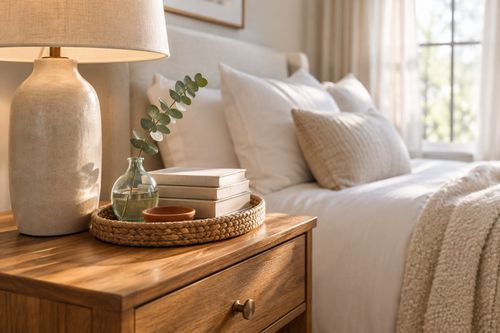
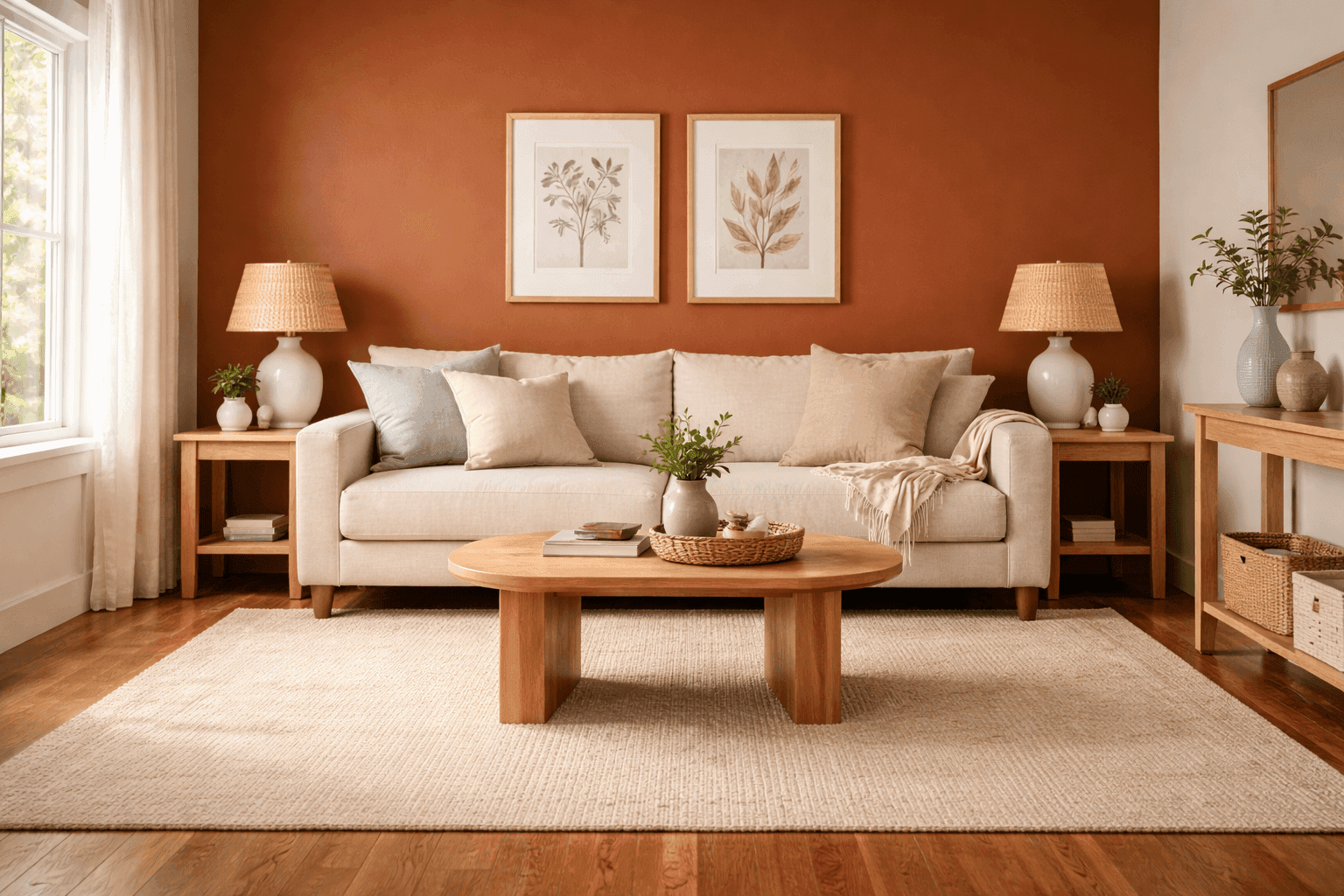
An accent wall works when it emphasizes an architectural feature that already exists — a fireplace wall, the wall behind a bed's headboard, a wall with built-ins. It doesn't work when it's applied randomly to whichever wall you could bear to paint a different color. The accent color should be a deeper or more saturated version of the room's primary color, or a complementary color that relates to it — not something completely disconnected. In small rooms, a single dark or saturated accent wall can actually make the room feel larger by creating depth, as long as the other three walls remain light.
Paint Finishes: Which Goes Where
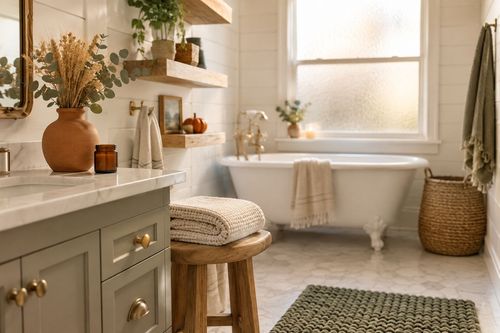
Flat/matte: best for ceilings and low-traffic adult spaces. Hides imperfections beautifully but marks easily and can't be wiped clean. Eggshell: the workhorse for main living areas — slight sheen, wipeable, looks sophisticated. Satin: ideal for kitchens, bathrooms, kids' rooms, and hallways — durable and cleanable. Semi-gloss: for trim, doors, and cabinets — easy to wipe, holds up to daily contact, highlights architectural detail. High-gloss: for furniture and accent pieces where maximum durability and drama are desired. The most common mistake is using flat paint in a kitchen or bathroom, where moisture and cleaning quickly damage it.
Interior designers almost never pick color from a chip card alone — they start with a piece of fabric, a rug, a piece of art, or a tile they love and pull the color from there. When you start with something you're already committed to (your sofa fabric, your kitchen tile, your favorite throw blanket), the color palette builds from something grounded and personal rather than abstract. Try this: bring your most important fixed element to the paint store and hold chips against it. The color that disappears harmoniously against it, rather than competing with it, is usually the right one.