Coir Blimey: Line Hanging Baskets with Coconut Fiber
A coir fiber sheet, a pair of scissors, and twenty minutes per basket — the natural liner that holds soil, drains perfectly, and makes wire baskets look like a high-end nursery display
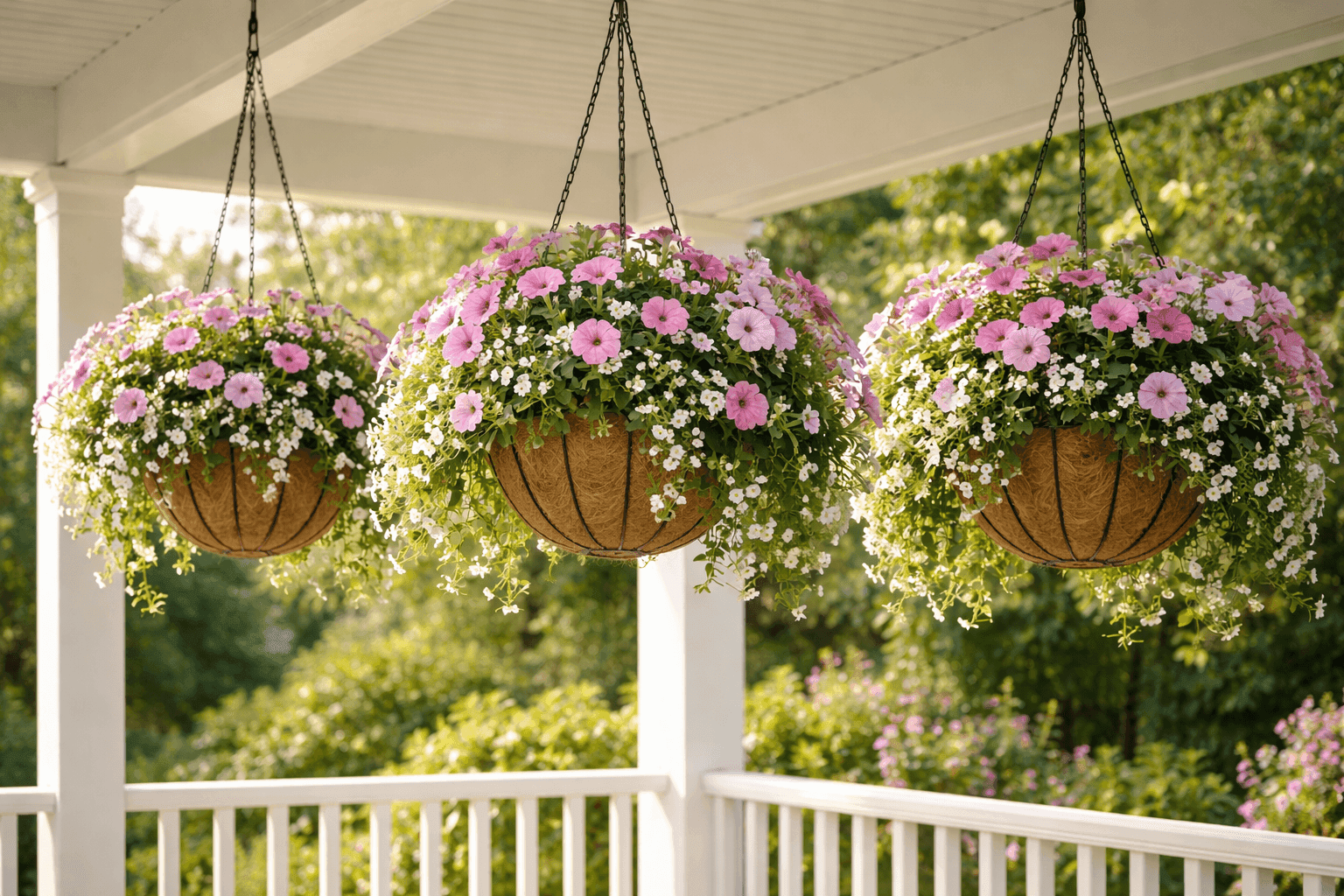
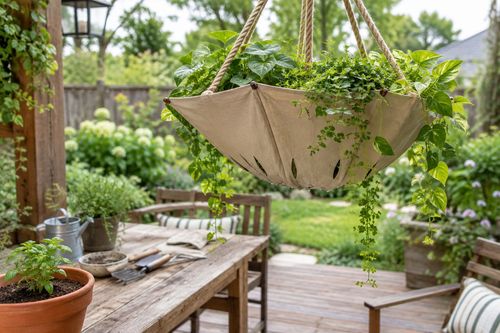
Wire hanging baskets are the best planting vessel for trailing flowers — their open structure allows you to plant through the sides for a full, cascading display that solid-sided plastic baskets can never achieve. The problem has always been the lining: the flimsy plastic foam liners most baskets come with collapse, drain poorly, and look cheap; moss liners work beautifully but cost more than most gardeners want to spend on a basket they paid a dollar for at a garage sale. Coconut coir fiber sheets are the solution that solves every objection simultaneously — they cost about $10 for a sheet that lines three to four baskets, cut easily with scissors, press firmly against the wire frame to hold their shape without support, drain naturally so roots never sit in standing water, and have a warm, textured natural appearance that looks genuinely premium against any flower planting. Line a wire basket with coir, fill with a quality potting mix, plant with trailing annuals, and the finished basket is indistinguishable from the $30 pre-planted nursery versions — at about a tenth of the cost and entirely on your own terms for plant selection and arrangement.
What You'll Need
- The Coir Liner
- Coconut coir liner sheets — sold in flat sheets or pre-formed rounds at garden centers, home improvement stores, and online. Flat sheets are more versatile than pre-formed rounds because they cut to any basket size and shape rather than being sized for specific basket diameters — ~$8–$12 for a sheet large enough to line three to four standard 10–12 inch baskets
- Pre-formed coir liner rounds sized to match your specific basket diameter as a convenient alternative — available in 10, 12, and 14-inch sizes at most garden centers for ~$3–$5 each. Pre-formed rounds require no cutting and press directly into the wire frame, but their pre-shaped edges don't conform as neatly to baskets with non-standard dimensions
- Coir thickness matters — thinner coir sheets (¼ inch) are easier to cut and shape but provide less insulation for roots in hot weather; thicker sheets (½ inch) hold moisture more consistently between waterings and provide better thermal buffering for roots in midsummer heat
- Confirm the coir is untreated natural fiber — some coir products are treated with binding agents or fire retardants that are not appropriate for food-growing applications. For purely ornamental baskets this is not a concern; for herb or edible baskets confirm untreated natural coir specifically
- The Baskets
- Wire hanging baskets in any diameter — 10-inch baskets suit small to medium porch hooks and produce a tidy, compact display; 12-inch baskets produce a fuller, more dramatic hanging display; 14-inch and larger baskets create the most lush, overflowing effect but are significantly heavier when watered and require hooks and hanging hardware rated for the increased load
- Check the basket hook and chain hardware for rust or corrosion before lining and planting — a basket with corroded hardware that fails after the coir lining and plants are established is significantly more frustrating to fix than one caught before planting
- The wire spacing of the basket determines how easily side-planting through the wire frame is possible — wider wire spacing (1.5–2 inches) allows plant stems to thread through easily for a full cascading effect from all sides; tighter spacing requires smaller plants or limits planting to the top only
- Soil & Plants
- Lightweight hanging basket potting mix with moisture retention properties — standard potting soil is too heavy for hanging baskets and causes the chain and hook hardware to strain under the combined weight of soil plus water plus plant. Hanging basket-specific mixes incorporate coir or perlite for lighter weight and water-retaining polymer crystals that reduce watering frequency — ~$8–$12 per bag that fills two to three baskets
- Slow-release fertilizer granules mixed into the potting mix at planting time — hanging basket plants are heavy feeders in a limited soil volume and exhaust available nutrients within four to six weeks without supplemental feeding. One application of slow-release granules provides continuous feeding for the full season
- Trailing and cascading annuals for maximum visual impact — wave petunias, bacopa, million bells (calibrachoa), trailing lobelia, sweet potato vine, and trailing verbena all perform excellently in coir-lined hanging baskets. Choose plants that trail or cascade naturally rather than upright plants that block the natural draping quality that makes hanging baskets beautiful
- Tools
- Sharp scissors or a utility knife for cutting flat coir sheets to shape — coir cuts reasonably cleanly with sharp scissors but resists dull blades significantly, tearing and fraying rather than cutting
- A bucket of water for pre-moistening the coir before fitting — dry coir is stiff and difficult to press into basket curves; briefly wetted coir becomes pliable and conforms to the wire frame much more easily and completely
- A small watering can with a fine rose head or a spray bottle for the initial watering after planting — pouring water directly into the basket before the coir and soil have settled can displace soil and plants before the system has stabilized
How to Do It
- Measure the basket before cutting any coir — measure the diameter across the top opening and the depth from rim to base. For a flat coir sheet, you need a circle approximately 6–8 inches larger than the basket diameter to account for the depth of the basket sides and have enough material to overlap the rim slightly at the top. Mark the circle on the coir sheet with a permanent marker before cutting, and cut several inches outside the marked line first before trimming to the final size — coir is easier to trim than to piece together if you cut too small.
- Pre-moisten the coir by dipping the cut piece briefly in a bucket of water and squeezing out the excess — the goal is damp and pliable, not dripping wet. Pre-moistened coir presses into the basket curves without cracking or tearing at the bend points and makes contact with the wire frame much more completely than dry coir, which tends to spring back from curved sections rather than holding the shape of the basket interior.
- Press the coir into the basket from the center base outward — set the damp coir circle centered over the basket opening, push the center down to the basket base, and work the coir firmly against the wire sides in all directions moving from the base upward toward the rim. Press firmly at each wire intersection so the coir forms a snug, gap-free contact with the full interior wire surface — gaps between the coir and the wire allow soil to press through and escape during watering, which is both wasteful and unsightly.
- Handle the rim excess by folding the coir that extends above the basket rim back over the top wire and pressing it against the outside of the basket — this creates a clean, finished-looking rim rather than a ragged coir edge, anchors the liner more firmly to the basket frame, and produces the neat, professional appearance that distinguishes a well-lined basket from a roughly thrown-together one. Trim any excess that extends more than 1 inch below the top wire on the exterior for the cleanest finished edge.
- Add side plants before filling with soil if planting through the basket sides — make small slits in the coir at the wire intersections in the lower half of the basket, thread plant root balls through the coir and wire from outside to inside with the foliage facing outward, and hold each plant in position while potting mix is added to anchor it in place. Side planting produces the fully cascading display where plants emerge from all sides of the basket, not just the top — this is what creates the round, lush ball of bloom that looks so impressive when the basket is hanging and in full growth.
- Fill with potting mix in layers working from the base upward — add enough mix to cover the root balls of any side plants, firm gently around each root ball, then add additional mix to approximately 1 inch below the basket rim. The 1-inch headspace below the rim allows watering without overflow — a basket filled to the very rim loses significant water volume in runoff before the soil has had time to absorb it, which reduces watering efficiency and can cause the coir to compress and pull away from the basket sides over time.
- Plant the top surface with three to five trailing plants positioned toward the basket edge rather than the center — plants positioned at the edge begin trailing over the basket sides immediately rather than growing upward toward the light before cascading. Press each root ball firmly into the potting mix and fill any gaps between root balls with additional mix so no coir surface is visible through the planting from above.
- Water gently and hang immediately — a gentle initial watering with a fine rose head or spray bottle settles the soil around the root balls and activates the slow-release fertilizer without dislodging newly planted top plants or side plants that haven't yet anchored. Hang the basket in its intended location before the soil is fully saturated so you're not moving a water-heavy basket at full weight after the initial watering. Check moisture daily for the first two weeks — coir-lined baskets in full sun may need watering twice daily in peak summer heat before the plants establish and their root systems develop enough to access deeper soil moisture more efficiently.
Professional nursery growers who produce hanging baskets for garden center display use a planting density that most home gardeners find surprisingly aggressive — and it's the specific reason why nursery hanging baskets look so lush and full compared to home-planted ones that use the same plant varieties. Commercial growers plant hanging baskets at two to three times the density most home gardeners use, knowing that the competition for resources drives plants to trail and cascade quickly and that the slow-release fertilizer and frequent commercial irrigation compensates for the compressed root space. For a 12-inch hanging basket, professional growers typically plant five to seven trailing plants in the top plus three to four plants through the sides — producing a basket that looks full and lush within two to three weeks of planting rather than requiring the six to eight weeks that a sparsely planted basket needs to fill in. This density requires consistent watering and feeding to support the plant load, but produces the overflowing, ball-of-bloom effect that makes a hanging basket genuinely stunning rather than merely pleasant. The thriller-filler-spiller principle applies to hanging baskets too — one slightly more upright plant in the center of the top planting for height, several mounding plants around it for body, and the cascading trailers at the rim for the draping effect — even in a vessel that's primarily designed to hang and trail.