
Closet to Cart: Transform Old T-Shirts Into Reusable Produce Bags
Turn worn shirts into eco-friendly shopping bags that cost nothing and keep plastic out of your kitchen
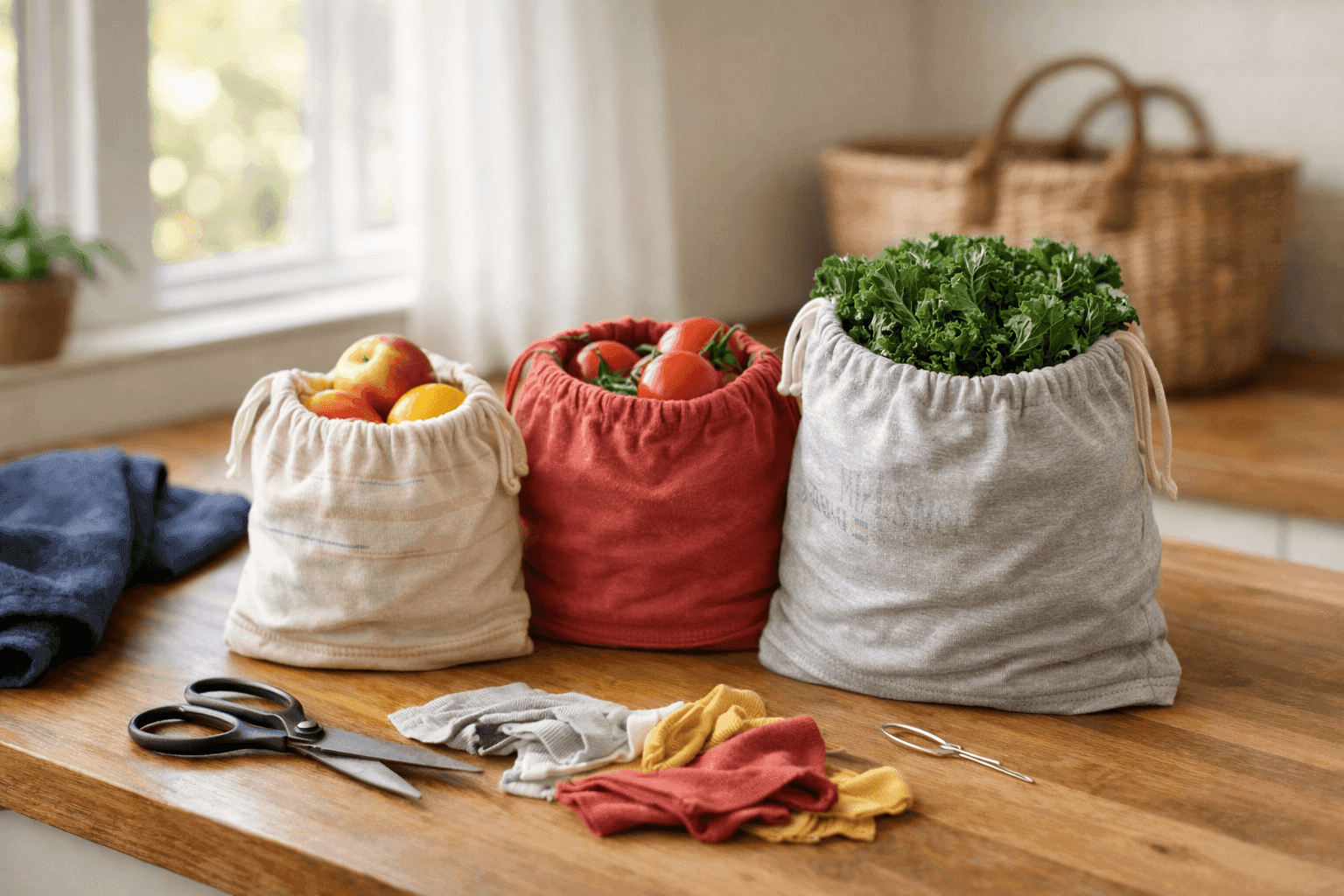
Those thin plastic produce bags at the grocery store are ridiculously wasteful—you use them for ten minutes during shopping and then they either go straight to the trash or accumulate in a cabinet until you have approximately four thousand of them. Store-bought reusable produce bags solve the environmental problem but they cost $15-20 for a set, which feels excessive when you have a drawer full of old t-shirts you'll never wear again but feel guilty throwing away. Making produce bags from worn t-shirts costs absolutely nothing, takes about an hour to create a set of five bags, and gives you a genuinely useful product from clothing that was otherwise headed to the donation pile. The cotton knit fabric is naturally breathable so produce stays fresh, it's stretchy enough to accommodate various shapes and sizes, and you get the satisfaction of reducing waste twice—once by not using plastic bags and again by upcycling something you already own.
What You'll Need
- T-Shirts: 2-3 old cotton t-shirts in any condition (each shirt makes 2 bags)
- Cutting Tools: Sharp fabric scissors or rotary cutter with mat
- Sewing Supplies: Sewing machine or needle and thread for hand-sewing
- Measuring Tools: Ruler or measuring tape, fabric chalk or washable marker
- Drawstring: Ribbon, cord, or strips cut from shirt hems ($2-5 if purchasing)
- Safety Pin: For threading drawstring through casing
- Time Investment: 1 hour for set of 5 bags (faster once you establish rhythm)
Step-by-Step Method
- Cut your t-shirt straight across below the armpits, removing the top portion—you'll use the bottom tube of fabric which already has one finished edge at the hem
- Decide your bag size by measuring how tall you want it (12-15 inches works well), then cut the tube to create two separate pieces if you're making multiple bags
- Turn your fabric tube inside-out so seams will be hidden on the finished bag, which looks cleaner and prevents fraying threads from getting caught
- Sew the bottom closed using a straight stitch if using a machine, or a simple running stitch if hand-sewing—go over it twice for strength since this seam carries weight
- Create a drawstring casing by folding the top edge down about 1.5 inches and sewing around the opening, leaving a small gap to thread your drawstring through
- Thread your drawstring using a safety pin attached to one end, feeding it through the entire casing until it emerges from where you started
- Tie the drawstring ends together in a knot, testing that it cinches closed properly and won't slip through the casing during use
- Turn right-side-out and you're done—the stretchy knit fabric doesn't require edge finishing because it naturally resists fraying unlike woven materials
Sustainable living experts recommend making bags in three different sizes rather than creating identical ones—use small bags for loose items like green beans or mushrooms, medium bags for apples or oranges, and one large bag for bulky items like lettuce or broccoli. This variety makes your bags more functional and prevents you from trying to cram everything into whatever size you grabbed first. Also, choose light-colored t-shirts if possible because produce clerks need to see through the bags to identify items for weighing and pricing—dark bags work fine but sometimes require opening at checkout which defeats the convenience factor. Keep your finished bags in your car alongside reusable shopping totes so they're always available when you need them, and wash them regularly in your normal laundry since they're literally made from t-shirt fabric that was designed to be washed repeatedly.