Clean Outdoor Light Fixtures in 20 Minutes Flat
Dead bugs and a winter's worth of grime are blocking more light than you'd ever guess
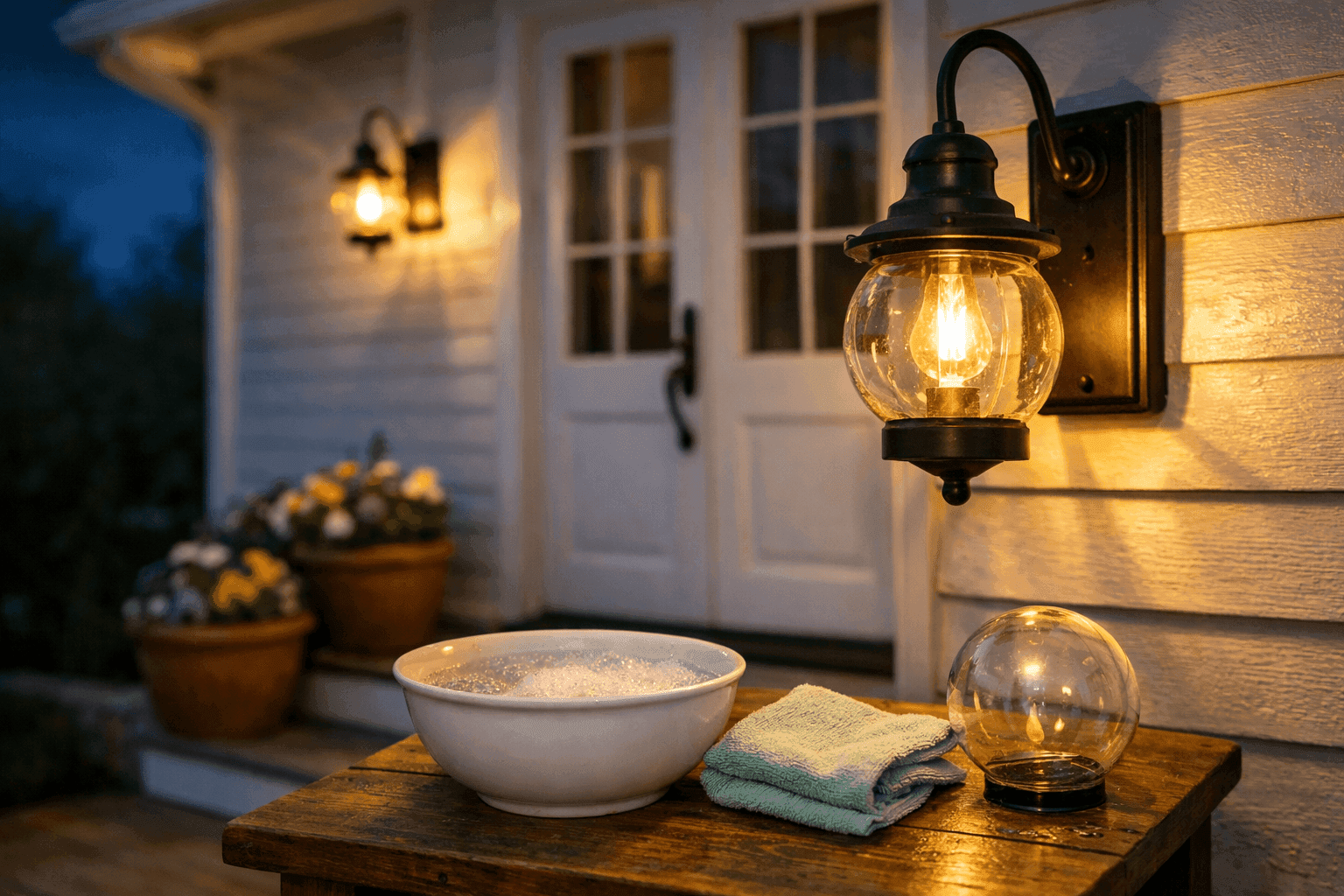
Outdoor light fixtures are one of those things that get dirty so gradually you stop noticing — until you clean one and suddenly realize your porch has been lit by about 60% of the light you're actually paying for, filtered through a globe full of dead moths and a winter's worth of dust and water spots. The difference in brightness between a dirty outdoor globe and a clean one is genuinely startling, and the curb appeal difference from the street is immediate: clean fixtures read as a well-maintained home the way grimy ones quietly suggest the opposite without anyone consciously registering why. This is the Sunday Spruce-Up that costs nothing to execute — warm soapy water, a clean cloth, 20 minutes — and delivers both more light and better first impressions from the moment you flip the switch back on. Porch lights, garage fixtures, and lamppost globes all deserve this treatment before spring entertaining season arrives, and working through all of them in one session turns a small chore into a satisfying sweep that makes the whole exterior feel reset.
What You'll Need
- Cleaning Supplies
- Dish soap and warm water — the only cleaning solution you need for glass globes, metal housings, and plastic covers; avoid harsh chemical sprays on metal fixtures that can strip protective coatings or dull powder-coat finishes
- Microfiber cloths — two or three, one for washing and one dry for buffing to a streak-free finish; paper towels leave lint on glass globes that shows up when the light is on
- A soft sponge or cloth for washing globes in the sink — avoid abrasive scrub pads that scratch glass and plastic covers
- White vinegar in a spray bottle — for water spots and mineral deposits on glass globes that warm soapy water alone won't fully remove; spray, let sit for two minutes, wipe clean
- For the Bug Cleanup
- A handheld vacuum or vacuum with a brush attachment for removing dead insect accumulation from inside the fixture base without spreading it around
- A dry paintbrush or soft toothbrush for dislodging dried debris from corners, screw holes, and decorative metalwork details where a cloth can't reach
- Disposable gloves if you're squeamish about the bug situation inside older fixtures — some of them have been hosting insects enthusiastically for years
- Bulb Supplies
- Replacement bulbs in the correct wattage for each fixture — check the maximum wattage sticker inside each fixture before replacing; exceeding the rated wattage is a fire hazard even in outdoor fixtures
- LED bulbs if any fixtures are still running incandescent — outdoor-rated LEDs produce the same or more light for a fraction of the energy and last years longer than incandescents in outdoor temperature swings
- Safety Equipment
- A stable step ladder for any fixture above comfortable arm's reach — never stand on a chair, bucket, or unstable surface for fixture work at height
- Total Cost
- Essentially free using dish soap and cloths you already own; add $8–15 if replacing burned-out bulbs with LEDs
How to Do It
- Cut power at the breaker before touching any fixture — not just the wall switch, which only interrupts the circuit rather than fully de-energizing it. Find the breaker for your exterior lights and flip it off, then test by toggling the wall switch to confirm no power is reaching the fixture. This takes 90 seconds and is the only step in this entire project that is genuinely non-negotiable for safety reasons.
- Remove globes and covers from all fixtures before washing any of them — work through the removal stage on every porch, garage, and post light in a single pass so all the glass pieces can soak together while you clean the housings. Most globes twist off counter-clockwise, unclip from a retaining ring, or release when a small retention screw at the base is backed out a half-turn; if a globe won't budge, look for a hidden set screw before forcing it.
- Wash globes in the sink with warm soapy water, working one at a time and giving each a thorough scrub inside and out with a soft sponge — the inside of the globe accumulates the most grime since insects are drawn to the heat and light and then can't escape. For stubborn water spots or mineral deposits from rain, spray the glass with undiluted white vinegar, allow two minutes of contact time, then scrub and rinse. Dry each globe immediately with a clean microfiber cloth and set aside on a towel.
- Clean the fixture housing while globes dry — vacuum out dead insects and debris from the base cavity first using the brush attachment so you're not wiping bug fragments around the interior. Then wipe all interior and exterior metal or plastic surfaces with a damp soapy cloth, paying attention to decorative metalwork details where grime collects in the recesses. Use the dry toothbrush to scrub decorative crevices and screw collar areas that the cloth skips over entirely.
- Check the bulb while the fixture is open and safe to work in — remove any burned-out bulbs and compare the wattage rating on the bulb against the maximum wattage sticker inside the fixture base. If there's no sticker, stay at or under 60 watts for incandescent or the equivalent LED. Wipe the bulb socket contact with a dry cloth if it shows any corrosion or discoloration, which is common in outdoor fixtures after a humid summer season.
- Wipe down the exterior housing with a clean damp microfiber cloth, working from the top of each fixture downward so any drips fall onto unswiped areas rather than back over cleaned surfaces. For black powder-coated fixtures, a tiny amount of car wax buffed onto the housing after cleaning protects the finish from UV fading and makes the next cleaning easier — the wax creates a hydrophobic surface that repels the water-spot-forming rain that dulls dark outdoor finishes over time.
- Reinstall globes and restore power — seat each globe firmly and test the retention mechanism to confirm it's secure before moving to the next fixture. Flip the breaker back on, walk outside, and turn on every exterior light you cleaned. The immediate brightness difference in fixtures that had dirty globes is usually significant enough to be noticed from the street, and the visual quality of the light — the color temperature and evenness — improves noticeably once the glass is clean and streak-free.
Exterior lighting designers and home stagers who prep houses for sale almost always do a night walkthrough after cleaning and replacing bulbs — standing at the curb after dark and evaluating the home's lit exterior is the only way to see what arriving guests and passersby actually experience, and it almost always reveals something the daytime clean-up missed: one fixture significantly dimmer than its neighbors indicating a lower-wattage bulb, a globe that looked clean in daylight showing streaks when backlit, or a post light at the end of the driveway that contributes more than expected to the overall impression. Five minutes at the curb after dark with fresh eyes is the quality check that turns a functional cleaning job into a genuine exterior lighting upgrade.