Clean Consistency: Create Systems That Actually Get Followed
Design rotation schedules that distribute work fairly and maintain order
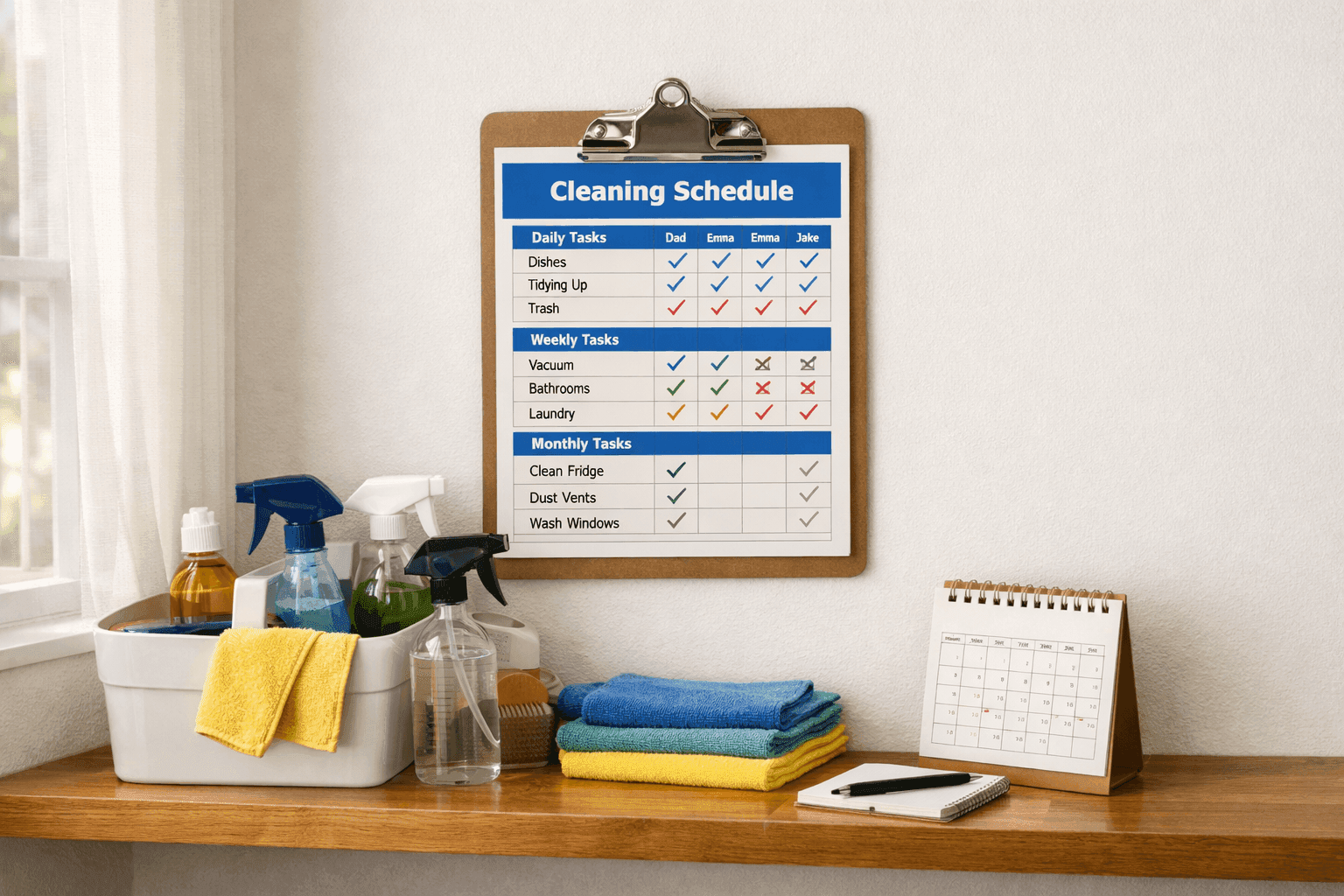
Homes without cleaning systems devolve into chaos through reactive maintenance where tasks happen only when mess becomes unbearable, creating cycles of intensive cleaning marathons followed by gradual decline until the next crisis forces action. Household cleaning schedules transform reactive chaos into proactive maintenance by distributing tasks across daily, weekly, and monthly rotations that prevent overwhelming buildup while ensuring everything gets attention at appropriate intervals rather than being forgotten until problems become obvious. This thirty-minute planning session costs under $10 for materials—poster board, markers, magnets or clips—but produces systems that save hours weekly by eliminating decision fatigue about what needs cleaning, reducing arguments about fair chore distribution, and preventing the all-day cleaning marathons that happen when maintenance gets neglected too long. The genius of good schedules is breaking large overwhelming tasks into manageable increments: fifteen minutes of daily maintenance prevents hours of weekend crisis cleaning, while monthly deep-cleaning rotations ensure nothing gets neglected long enough to require professional intervention. Beyond practical benefits, cleaning schedules create accountability and visibility—posted charts make expectations clear for all household members, rotating assignments ensure fairness rather than default patterns where certain people do everything, and checking off completed tasks provides satisfaction that motivates continued participation. These systems work equally well for single people maintaining personal standards, couples negotiating shared responsibilities, families teaching children household contribution, or roommates establishing equitable division of labor in shared spaces.
What You'll Need
- Display Materials ($5-8):
- Poster board or whiteboard for main schedule
- Markers in multiple colors for categorization
- Magnets or clips for posting
- Laminating sheets or page protectors for durability
- Organization Tools ($2-4):
- Small stickers or checkboxes for tracking completion
- Dry-erase markers if using wipeable surface
- Index cards for individual task cards
- Small reward stickers for children's participation
- Planning Essentials (free):
- Notebook for brainstorming tasks
- Realistic assessment of your home's needs
- Honest conversation with household members
- Understanding of everyone's schedules and abilities
- Task Categories:
- Daily: Dishes, counters, quick pickup
- Weekly: Bathrooms, vacuuming, laundry, mopping
- Monthly: Deep cleaning, organizing, maintenance
- Seasonal: Windows, baseboards, deep tasks
Build Your System
- List every cleaning task your home requires comprehensively, walking through each room noting what needs attention and how frequently—this exhaustive inventory prevents tasks from being forgotten because they weren't included initially.
- Categorize tasks by frequency: daily maintenance (15 minutes), weekly deep-clean (20-30 minutes per room), monthly intensive tasks (1-2 hours), and seasonal projects—realistic time estimates prevent schedules that look good on paper but fail in practice.
- Assign tasks fairly based on household members' abilities, schedules, and preferences—children handle age-appropriate duties, working adults get flexible tasks, and distribution ensures no one person bears disproportionate burden creating resentment.
- Distribute weekly tasks across different days rather than clustering everything into weekend marathons—Monday bathrooms, Tuesday vacuuming, Wednesday kitchen deep-clean creates manageable daily chunks instead of overwhelming weekend obligations.
- Create your visual schedule using poster board divided into daily, weekly, and monthly sections with clearly labeled tasks, assigned names, and spaces for checking off completion—visibility creates accountability.
- Laminate or protect your schedule in page protectors so it survives kitchen humidity, accidental spills, and daily handling without degrading—durable schedules get used while paper versions deteriorate and get replaced with mental (failed) systems.
- Post conspicuously in high-traffic areas like kitchens or mudrooms where everyone sees it daily—schedules hidden in closets or offices don't get followed because they're not top-of-mind during relevant decision moments.
- Review weekly during the first month, adjusting task frequency, time estimates, or assignments based on what's actually working versus theoretical plans that sounded good but prove impractical in daily reality.
Professional organizers recommend creating "cleaning sprints" where entire households tackle assignments simultaneously—everyone cleans for 15-20 minutes at the same time rather than scattered individual efforts, making tasks feel less isolating while ensuring collective accountability that prevents certain people from perpetually postponing their share. Rotate weekly assignments monthly so no one gets stuck permanently with the worst jobs—the person doing toilets this month does vacuuming next month, distributing unpleasant tasks fairly over time rather than creating permanent assignments that breed resentment. Include "choice tasks" where household members select from a list of equivalent-difficulty jobs, providing autonomy that increases buy-in compared to purely top-down assignment systems that feel dictatorial and inspire resistance. For families with children, tie completion to privileges rather than using monetary rewards—screen time, activities, or freedoms become available only after age-appropriate cleaning contributions are complete, teaching responsibility and household membership expectations. Build in grace periods and flexibility rather than rigid rules—life happens, and schedules that allow occasional swaps or missed days without total system collapse are more sustainable than perfectionist approaches that crumble at first deviation. The most important success factor: start small rather than creating elaborate comprehensive systems you abandon within weeks—begin with just daily and weekly tasks, adding monthly and seasonal rotations only after basic systems prove sustainable through several consistent weeks of successful execution.