Cast Shamrock Stepping Stones for $20 in 1 Hour
Concrete, a cookie cutter, and a little patience — garden pavers with genuine character
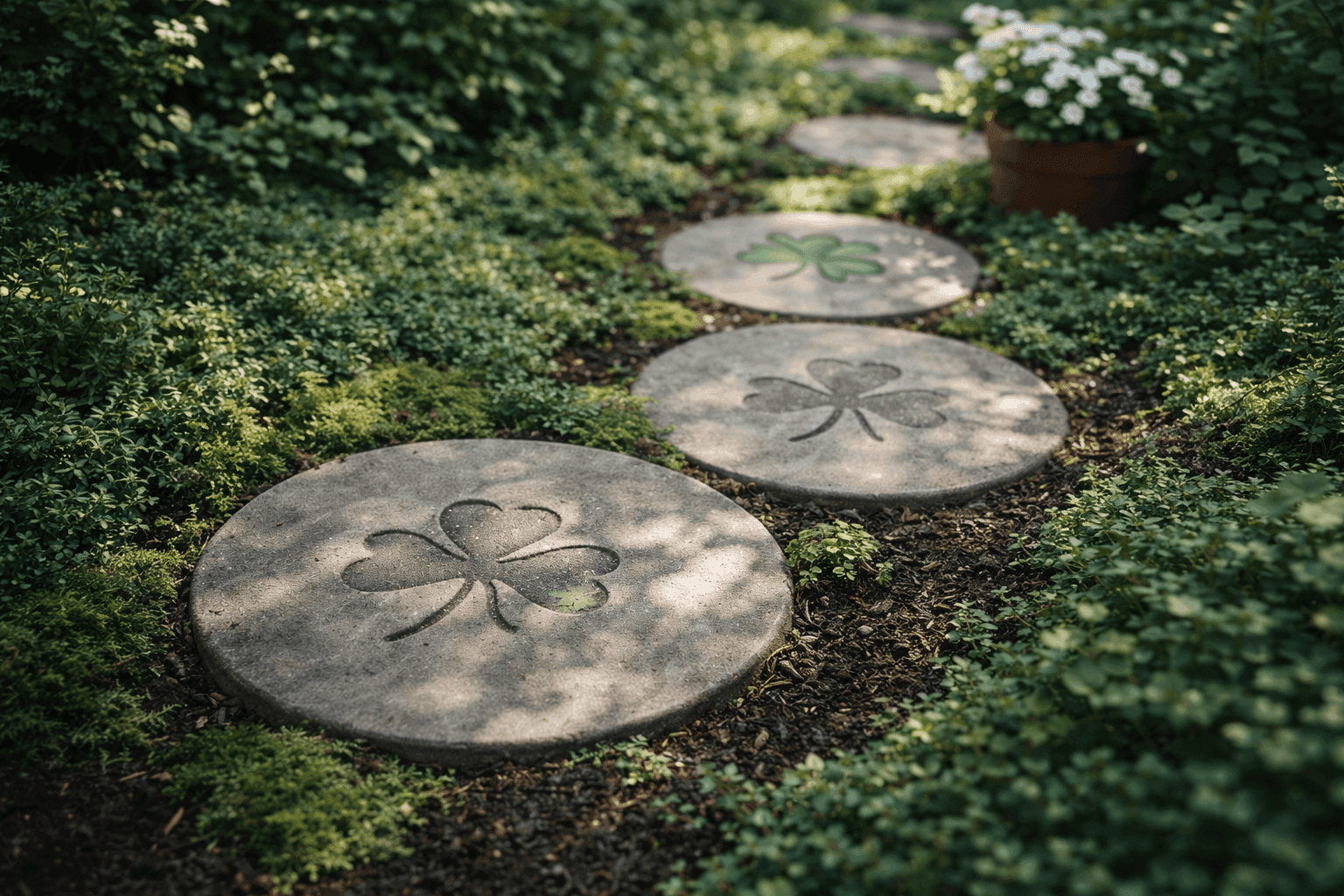
Store-bought concrete stepping stones are perfectly fine and completely forgettable — the kind of thing nobody ever notices on their way through a garden because there's nothing to notice. A stepping stone you cast yourself, with a shamrock pressed cleanly into the surface, is a different thing entirely: a garden detail that catches the eye, invites a closer look, and carries a little personal story about who made it and why. The technique is genuinely simple — pour quick-setting concrete into a mold, press a shamrock cookie cutter into the surface while it's still workable, remove the cutter once the impression is set, and cure for 24–48 hours before placing. The whole active work time runs about an hour, the materials cost $15–25, and the finished stones are tough enough to serve as functional garden path pavers for years. Make three or five for a full garden path, or cast a single statement stone to place near the door as a permanent welcome that celebrates Irish heritage in the most quietly charming way possible.
What You'll Need
- Concrete
- Quick-setting concrete mix — Quikrete or equivalent; a 50-pound bag makes 4–6 stepping stones depending on mold size and is the most economical option (~$7–10 per bag at any home improvement store)
- Stepping stone concrete mix sold in smaller hobby bags specifically for this project — typically makes 1–2 stones per bag and runs $5–8; easier to handle for a first attempt but costs more per stone
- Avoid high-strength structural concrete mixes, which set too rapidly and have a coarser aggregate that makes clean impressions difficult
- The Mold
- Plastic plant saucer 12–14 inches in diameter — the most common DIY stepping stone mold; flexible enough to release the cured stone with light bending (~$2–4)
- Disposable aluminum cake pan in round or square — a completely free option if you have one; may need to be cut away from the cured stone rather than flexed off
- Purpose-built stepping stone molds from craft stores — available in round, square, and irregular shapes (~$5–10 each)
- The Shamrock Impression
- Large metal shamrock cookie cutter — 3–4 inch size creates a bold, clearly readable impression; smaller cutters tend to lose detail in the concrete texture (~$2–4, or free if you already own one)
- Cooking spray or petroleum jelly to coat the cookie cutter before pressing — prevents concrete from sticking inside the cutter and allows clean removal
- A flat piece of wood or the bottom of a glass to press the cutter evenly to a consistent depth
- Optional Finishing
- Concrete colorant or oxide pigment mixed into the batch for a colored stone — green for an obvious Irish nod, charcoal for a more understated look, or terracotta for a warm garden-toned result (~$4–6 for a small packet that colors a full bag)
- Green acrylic craft paint and a small brush to paint just the shamrock impression after curing — picks out the design in color without committing the full stone to a tinted mix
- Concrete sealer spray for extending weather resistance in wet climates (~$8–12 for a can that covers multiple stones)
- Rubber gloves and safety glasses — concrete is highly alkaline and irritates skin on prolonged contact
- Total Cost
- $15–25 for a set of three to four stones using a standard concrete bag, molds, and cookie cutter; cost per stone drops significantly when making a full path set from one bag
How to Make Them
- Prepare your workspace on a flat, level surface outdoors or in a well-ventilated space — concrete dust is a respiratory irritant and the mixing and pouring process is genuinely messy. Lay down a plastic drop cloth or old cardboard under your molds, put on rubber gloves and safety glasses, and have your cookie cutter, cooking spray, and pressing block within arm's reach before you open the concrete bag. Everything moves faster than expected once the mix is wet.
- Mix the concrete to a peanut butter consistency — add water gradually to the dry mix in a bucket or wheelbarrow, stirring thoroughly between additions. The mix is ready when it holds its shape if you press a handful together but isn't so stiff it crumbles at the edges. Too wet and the impression won't hold its definition; too dry and the surface cracks during curing. This consistency is the single most important variable in the whole project.
- Fill the mold to about 1.5–2 inches deep, which is the minimum thickness for a functional outdoor stepping stone that won't crack underfoot. Tap the mold firmly on the ground several times after filling to settle the concrete and bring any air bubbles to the surface — trapped air pockets weaken the stone and create pits in the surface that blur the impression detail. Smooth the surface roughly level with a scrap of wood or gloved hand.
- Wait for the surface to firm before pressing — this is the step that determines whether your shamrock impression comes out crisp or smeared, and the timing window is narrower than most people expect. The surface should be firm enough to hold an impression without slumping back closed, but still soft enough to take a clean press — typically 15–30 minutes after pouring depending on temperature and humidity. Test with a light finger press: it should leave a clean mark without the concrete sticking to your glove.
- Coat the cookie cutter with a light film of cooking spray or petroleum jelly immediately before pressing — this release agent is what allows the cutter to pull free cleanly without lifting a chunk of concrete with it. Center the shamrock on the stone surface, place your pressing block flat on top of the cutter, and press down with firm even pressure to a depth of about 1/4 inch. Do not rock or twist the cutter — straight down and straight up is the motion that keeps the impression edges sharp.
- Remove the cutter by pulling straight upward with a smooth, steady motion — not a quick yank, which can disturb the impression walls, and not a slow wobble, which smears the edges. If concrete has clung inside the cutter despite the release agent, use a toothpick or skewer to gently clear it out before the mix hardens in the cutter itself, which makes the next stone's impression muddier. Set the stone in a sheltered spot out of direct sun and allow to cure undisturbed.
- Cure for 24–48 hours before demolding — the temptation to check progress by flexing the mold early is real and almost always results in a cracked or crumbled stone. Concrete gains roughly 70% of its final strength in the first 24 hours but is still fragile at the edges and impression details. Once demolded, place the stones on a flat surface and mist lightly with water once a day for three to five days — this slow damp curing process significantly strengthens the finished stone compared to letting it air dry without moisture.
- Finish and seal once fully cured — paint the shamrock impression with two thin coats of green acrylic craft paint using a small detail brush if you want the design to pop with color, working carefully within the impression walls and wiping any overpaint from the flat surface with a damp cloth before it dries. Apply one coat of concrete sealer spray across the full stone face once paint is dry to protect both the concrete and the painted impression from weather and foot traffic through the season.
Landscape designers who incorporate decorative concrete elements almost always install stepping stones slightly below the surrounding soil grade rather than sitting on top of it — the top face of the stone should sit roughly level with or just a hair above the surrounding lawn or ground cover surface, which protects the stone edges from being clipped by lawn mowers, prevents the tripping hazard of a raised edge, and makes the stones read as part of the landscape rather than objects placed on top of it. For a shamrock path, set each stone in a shallow bed of sand rather than directly on compacted soil — the sand base allows minor leveling adjustments without full reinstallation and provides just enough drainage beneath the stone to prevent frost heave from shifting the impression face-down over winter.