Cable Control: End Tangled Cord Chaos with Free Tubes
Transform recycling bin cardboard into a perfectly organized cord drawer
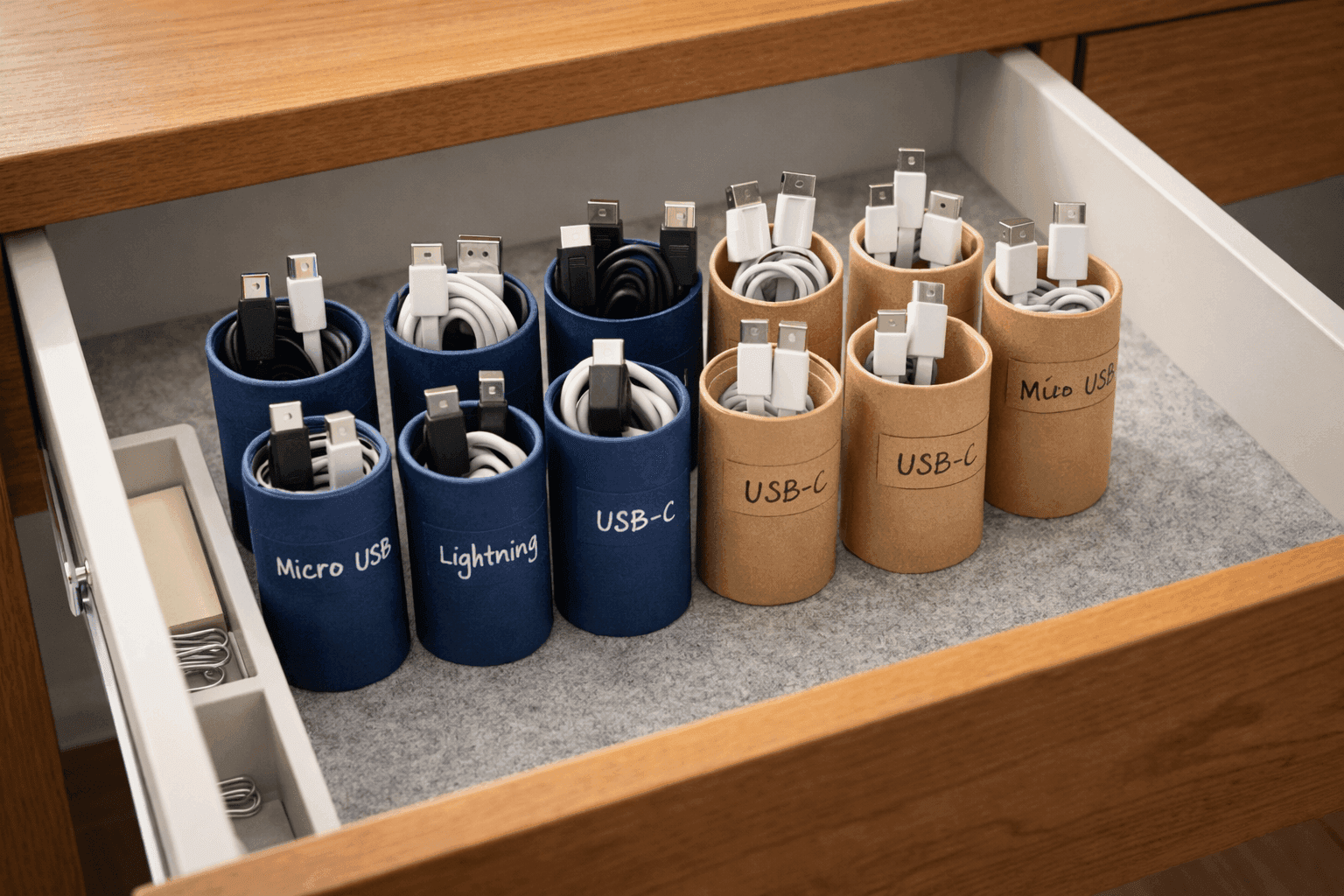
That drawer filled with mysteriously tangled cords you can never identify when you actually need them doesn't have to be a permanent source of frustration. While cable organization systems at container stores cost $20-30 and still leave you guessing which cord is which, toilet paper tubes provide the perfect solution for exactly zero dollars. The cylindrical shape prevents tangling while keeping each cable coiled and contained, and labeling them means you'll instantly grab the right charger instead of testing three wrong ones first. This isn't just about aesthetics—it's about reclaiming the minutes you waste untangling cords and the mental energy spent managing unnecessary clutter. The tubes fit perfectly in standard drawers, stack efficiently in bins, and can be decorated to match your space if plain cardboard doesn't spark joy. Best of all, you're already generating the raw materials, so this organization upgrade literally pays for itself while keeping cardboard out of recycling bins.
What You'll Need
- Tube Collection (free from recycling):
- Toilet paper tubes (standard size)
- Paper towel tubes (for longer cables)
- Collect 8-12 tubes depending on cable quantity
- Labeling Supplies:
- Permanent marker or label maker
- Masking tape or printable labels
- Colored markers for color-coding (optional)
- Optional Enhancements:
- Decorative paper or washi tape for covering tubes
- Small storage box or drawer organizer tray
- Velcro cable ties for extra-long cords
- Spray paint for uniform appearance
Organize Your Cables
- Collect all the charging cables, spare cords, and adapters currently living in various drawers, bags, and mystery locations throughout your home—seeing everything together reveals what you actually have.
- Test each cable to verify it still works properly and matches its apparent purpose, because there's no point organizing broken or obsolete cords that should head straight to electronics recycling.
- Sort cables into categories like phone chargers, laptop power cords, USB cables, HDMI cables, and device-specific adapters—grouping similar items makes the system intuitive to maintain.
- Label each toilet paper tube clearly with the cable type and device it serves, using descriptions like "iPhone Charger," "MacBook Power," or "Kindle Cable" so anyone in the household can find what they need.
- Coil each cable neatly using the over-under method to prevent internal wire damage, keeping the coil diameter slightly smaller than the tube's interior for a snug fit that won't unravel.
- Insert coiled cables into their designated tubes, allowing the connector ends to peek out slightly from the top for easy identification and removal without dumping out the entire cable.
- Arrange tubes upright in a drawer or storage box, positioning frequently-used cables toward the front and seasonal or backup cables toward the back for efficient access.
- Establish a return policy with your household that cables must go back in their tubes after use, because even the best organization system fails without consistent maintenance habits.
Professional organizers recommend creating a master inventory list that lives inside the drawer or storage box, noting which cables you have and their locations—when someone inevitably pulls out five tubes looking for the right one, the list eliminates guesswork. For a more polished look, cover tubes with decorative paper or spray paint them in coordinating colors before labeling, transforming functional recycling into attractive organization that doesn't scream "I'm storing things in toilet paper tubes." If you have exceptionally long cables like extension cords or projector cables, cut paper towel tubes to custom lengths rather than forcing oversized coils into standard tubes. Consider adding a "cable hospital" tube for damaged cords awaiting repair or recycling, preventing broken cables from contaminating your functional collection.