Cable Calm: End the Tangled Cord Chaos in 20 Minutes
Smart solutions for every charging cable scattered throughout your home
The average household now owns 8-12 devices that require regular charging, which means cables have multiplied like rabbits and scattered to every surface, drawer, and bag in your home. Hunting for the right charger wastes time, tangled cords create visual clutter that affects your mental state more than you realize, and that drawer full of mystery cables you're afraid to throw away is taking up valuable space. While elaborate cable management systems cost $30-50 and require complicated installation, smart organization actually costs almost nothing using supplies you already have around the house. The secret isn't buying more stuff—it's creating designated homes for cables based on where you actually use them, then using simple techniques to keep them from becoming tangled messes. This twenty-minute transformation addresses charging cables throughout your entire home with customized solutions for drawers, nightstands, desks, and kitchen counters. Once you've experienced the calm of knowing exactly where each cable lives and being able to grab what you need instantly, you'll wonder how you tolerated the chaos for so long.
What You'll Need
- Free Supplies from Home:
- Binder clips in various sizes
- Small decorative boxes or shoeboxes
- Bread bag twist ties for labeling
- Washi tape or masking tape
- Affordable Add-Ons (under $10):
- Velvet cable ties or reusable twist ties
- Adhesive cable clips for desk edges
- Small storage box with dividers (optional)
- Power strip for hidden charging stations
- Tools:
- Scissors or utility knife for box modifications
- Permanent marker for labeling
- Ruler for measuring cable exit holes
Organize Every Cable
- Gather all loose charging cables from every room, drawer, bag, and car in your home—seeing the full collection reveals duplicates you didn't know you had and helps identify what you actually need versus what's just clutter.
- Test each cable by plugging it in and verifying it charges properly, then immediately discard or recycle broken cables that no longer function—keeping dead cables "just in case" creates confusion without providing any value.
- Sort working cables by type and device: phone chargers, tablet cables, laptop power cords, camera chargers, headphone cables, and specialty device chargers each get their own category for logical organization.
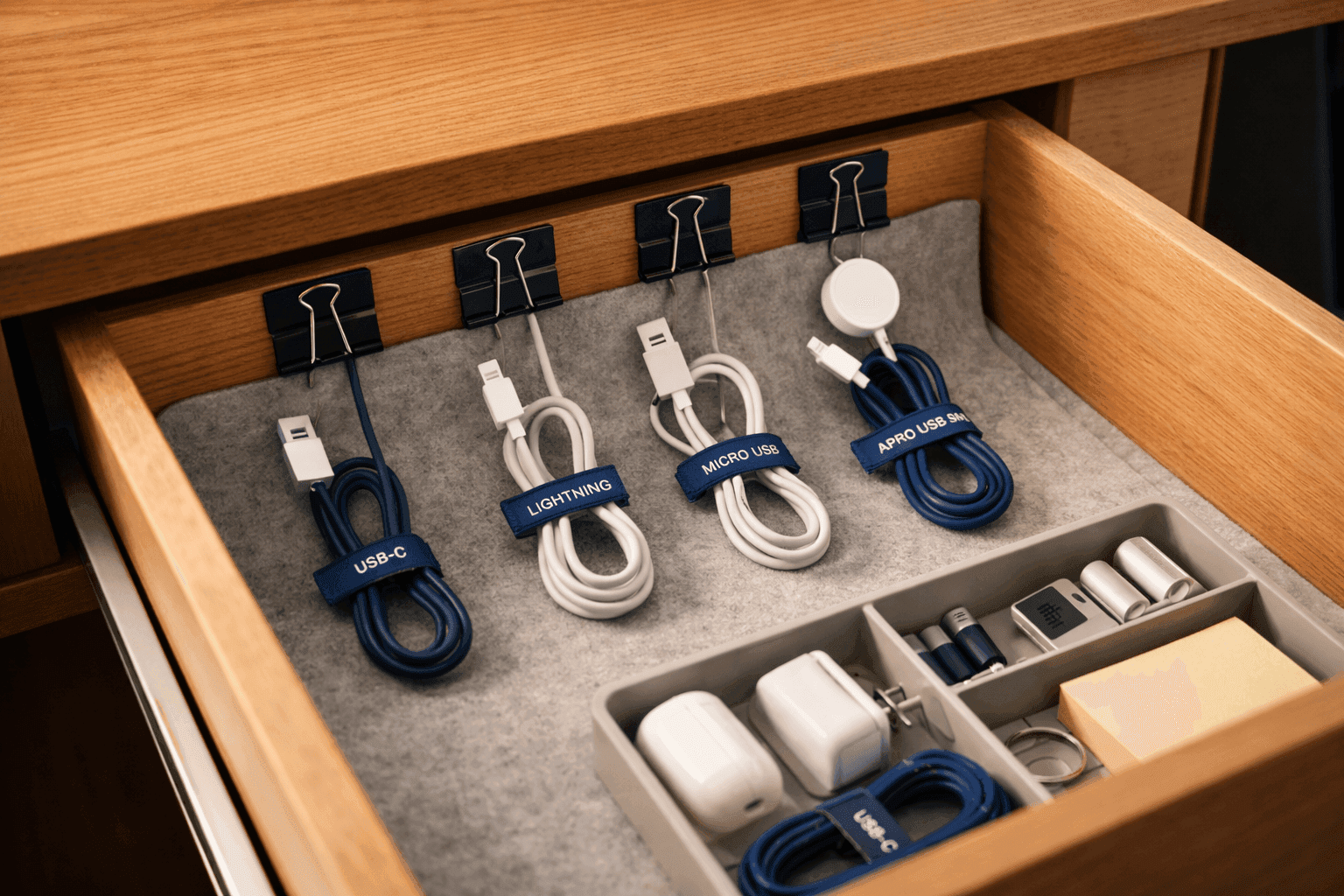
- Label every cable clearly using washi tape wrapped around the cord near the plug end, or bread bag twist ties with device names written in permanent marker—future you will appreciate not playing the guessing game.
- Create drawer storage by attaching binder clips to the drawer's back edge with handles facing up, then threading cables through the metal loops to prevent them from sliding around or tangling with neighbors.
- Build a nightstand charging station using a small decorative box with holes cut in the side for cables to feed through—devices charge inside the box while the mess stays completely hidden from view.
- Install a hidden kitchen charging station by mounting a power strip inside a drawer, drilling a small hole in the back for the main power cord, then routing device cables through dividers for organized family charging.
- Secure desk cables with adhesive cable clips attached to your desk's back edge, keeping frequently-used charging cables from disappearing behind furniture every time you unplug a device—they'll stay exactly where you need them.
Professional organizers recommend creating charging zones based on actual usage patterns rather than forcing cables into arbitrary locations. Bedroom cables stay in bedroom drawers, office cables live at your desk, and family-shared cables get their own kitchen or entryway station. For travel cables that you pack regularly, keep them in a separate small pouch that lives with your luggage—this prevents the frustration of disassembling your home charging setup every time you take a trip. Consider implementing a "one in, one out" rule where acquiring a new device means properly integrating its cable into your system and removing an old one. The biggest mistake people make is creating elaborate cable organization without maintaining it—spend thirty seconds returning each cable to its designated spot after use, and your system stays functional indefinitely instead of devolving back into chaos within weeks.