Build a Wooden Garden Tool Caddy for $12
Ninety minutes, a single board, and every tool you need travels with you through the garden in one trip
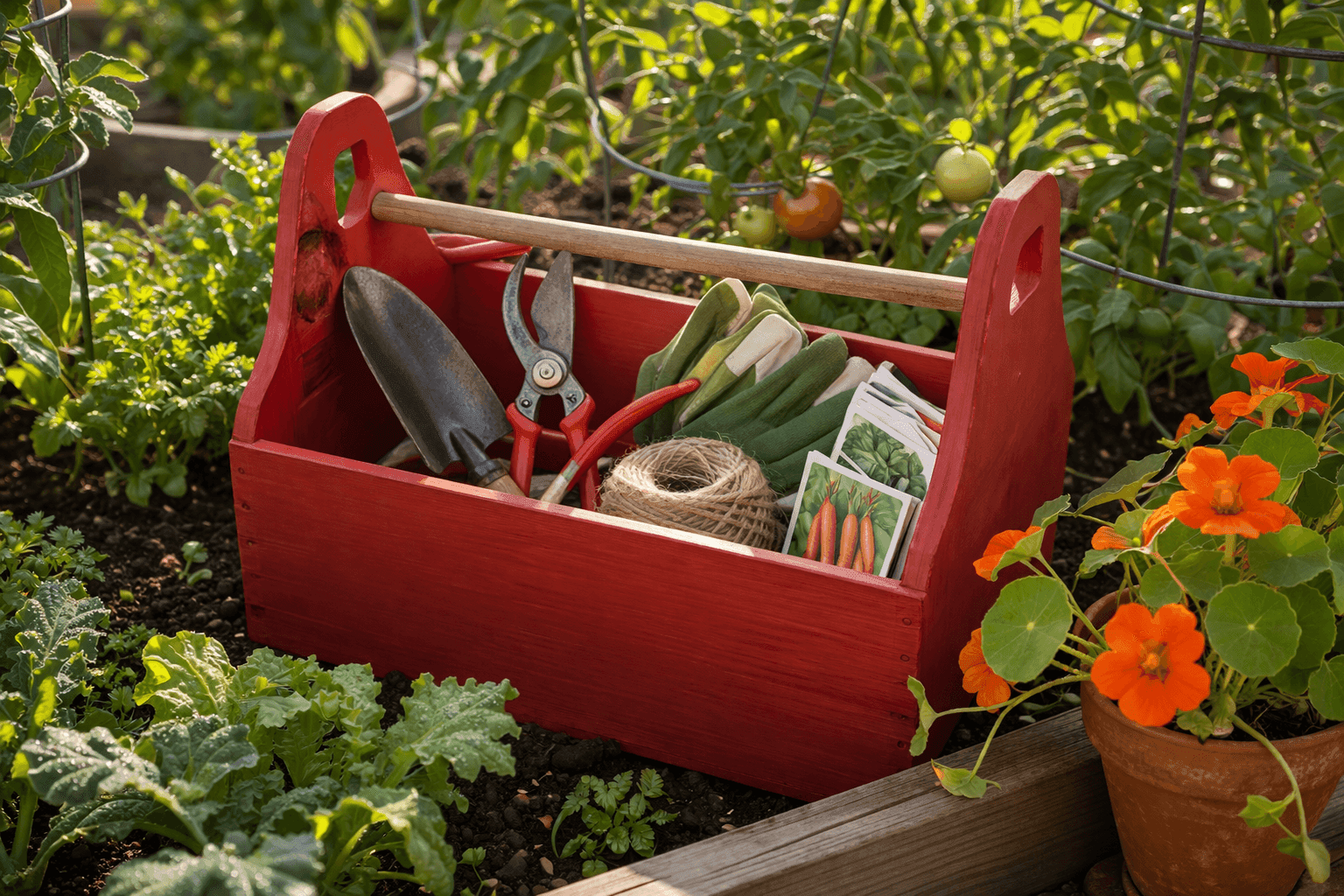
Every gardener has a version of the same inefficiency: you head out to the beds with what you think you need, spend twenty minutes working, realize you need the pruners you left in the shed, walk back, grab the pruners, realize you also need the twine, and so on until the round trips have eaten half the morning you meant to spend actually gardening. A wooden tool caddy with a comfortable handle cutout and a center divider solves that problem permanently — trowels on one side, pruners and gloves on the other, seed packets and twine tucked wherever they fit, and the whole kit travels with you in a single carry from bed to bed without setting anything down. The build takes about ninety minutes from first cut to finished caddy, costs $12 in lumber, and produces something so well-proportioned and genuinely useful that it tends to become the item other gardeners ask about every single time they see it sitting in your beds. A bright exterior paint color means it never gets left behind in the garden either — which, if you've ever lost a trowel to a tomato plant for three weeks, is no small thing.
What You Need
- 1×8 lumber, 6-foot length, qty 1 — yields both tall side pieces and the bottom piece with material to spare; cedar or pine both work well, cedar naturally resists moisture outdoors (~$6–8)
- 1×6 lumber, 2-foot length, qty 1 — for the two end pieces; often available as a short offcut at the lumber yard for less than a full board (~$2–3)
- Wooden dowel, 1" diameter, 10" length — optional center divider that spans between the two tall sides; prevents tools from sliding freely across the full interior width (~$1–2)
- Wood glue — for reinforcing every joint before fastening; glued and screwed joints on a caddy that gets carried daily are significantly more durable than fasteners alone
- Exterior screws, 1⅝", qty ~20 — for assembling all box joints; pre-drill every one to prevent splitting in the narrow end pieces
- Jigsaw — for cutting the handle opening in each tall side piece; the curved grip shape requires a jigsaw or coping saw rather than a straight-cut circular saw
- Drill with bit set and countersink bit — for pilot holes, countersinking screw heads, and drilling the dowel seat holes if adding a center divider
- Sandpaper, 120-grit and 220-grit — handle cutout edges require careful sanding at both grits; rough handle edges are felt on every single carry
- Exterior paint or outdoor stain — bright colors make the caddy easy to spot in the garden; two coats of exterior latex in red, cobalt, or sunshine yellow all hold up well through seasons of outdoor use (~$5–8 for a sample pot)
How to Build It
- Cut all pieces to length before picking up the jigsaw — two side pieces at 12 inches tall from the 1×8, one bottom piece at 10 inches from the remaining 1×8, and two end pieces at 8 inches from the 1×6. Cutting everything first confirms you have sufficient material and lets the assembly move without interruption once it begins.
- Trace your handle cutout on both tall side pieces using a comfortable grip as your template — position the opening centered horizontally and about two inches down from the top edge, sizing it so four fingers fit through with room to spare. A handle opening that is too small creates an uncomfortable carrying grip that digs into the fingers under load; trace it generously and err toward larger rather than smaller.
- Drill a starter hole inside the traced handle outline large enough for the jigsaw blade to enter, then cut carefully along the traced line with the jigsaw, keeping the blade just inside the line so final sanding brings the edge to the exact finished dimension. Cut both side pieces with the same template so the handles are identical — mismatched handle openings are immediately visible in the finished caddy.
- Sand both handle openings thoroughly at 120-grit and then 220-grit before any assembly begins — accessing the interior curve of a handle opening with sandpaper is straightforward before the caddy is assembled and nearly impossible after the end pieces are in place. This is the sanding that matters most in the entire build, since rough handle edges are felt on every single carry for the life of the caddy.
- Assemble the box by standing the two side pieces parallel and attaching the bottom piece between them flush with the lower edges, applying wood glue to both contact faces before driving two countersunk exterior screws through each side piece into the bottom piece ends. Glue every joint before screwing — a carried caddy experiences lateral stress on its joints every time it's lifted, and glue is what prevents those joints from racking and loosening over time.
- Attach the two end pieces between the side pieces at both open ends of the box, again gluing all contact surfaces before driving screws. Pre-drilling pilot holes at every fastener location in the end pieces is non-negotiable — 1×6 end pieces split along the grain under direct screw pressure without pilot holes, and a split end piece compromises the structural integrity of the joint that takes the most stress when the caddy is carried full of heavy tools.
- Install the center divider dowel if desired by drilling a 1-inch diameter hole centered in each end piece at mid-height, applying a small amount of wood glue to each hole, and pressing the dowel ends into place. The divider creates two dedicated compartments that prevent tools from shifting across the full caddy interior during carrying — a detail that seems minor until you've been poked by a loose pair of pruners mid-carry.
- Paint the fully assembled caddy with two coats of exterior latex in your chosen color, working paint into the handle opening interior and all corner joints where bare wood would otherwise be exposed to moisture. Allow full drying time between coats, and apply a third coat to the bottom exterior face that will sit on soil and wet surfaces — the bottom takes the most moisture exposure of any surface on the caddy and benefits from the extra protection.
Professional garden designers who use tool caddies on client sites always line the caddy interior base with a thin sheet of outdoor rubber matting cut to fit — the rubber surface prevents metal tool handles and trowel blades from sliding freely during carrying, which is what causes the rattling and shifting that loosens joints over time and scratches tool finishes. Hardware stores sell rubber shelf liner and stair tread material by the foot for about $3, and a single cut piece lasts the life of the caddy. The rubber also elevates the tool bases slightly off the wood floor, which dramatically slows the moisture transfer that causes wooden-handled tools stored in an outdoor caddy to develop the soft, spongy handles that signal wood rot beginning at the base.