Build a Raised Garden Bed in 2 Hours for $50
Corner brackets, untreated lumber, and zero complicated joinery — the raised bed that actually holds together
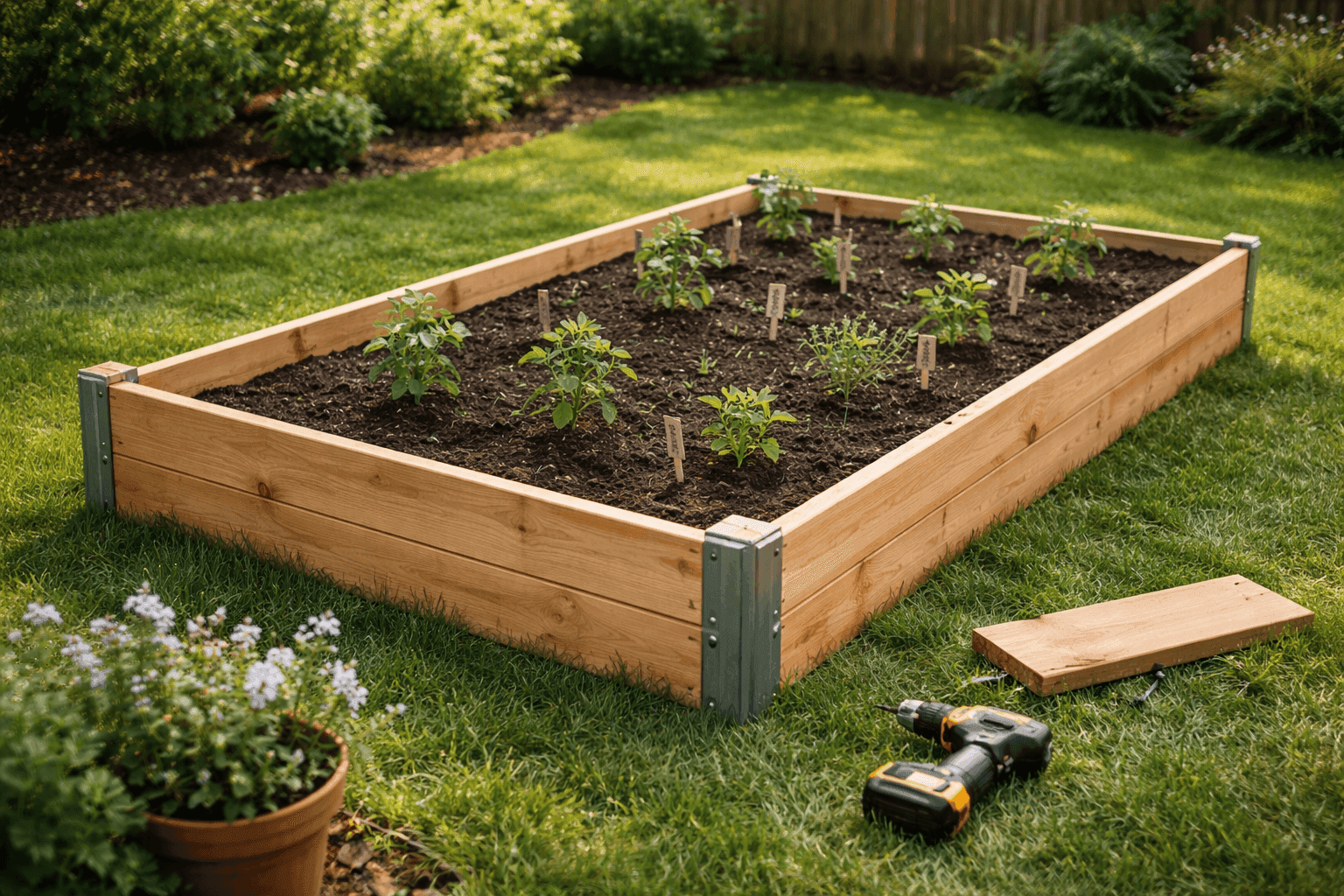
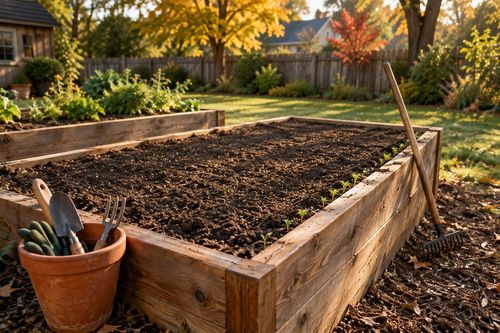
A raised garden bed is one of the highest-return projects in the whole home improvement world — better drainage, warmer soil in spring, no compaction from foot traffic, and a growing environment so superior to in-ground planting that most gardeners who try one never go back. The thing that stops people from building one is the assumption that it involves complicated woodworking: precise cuts, fancy corner joinery, maybe a dado jig. It doesn't. Corner bracket hardware has completely changed the math on raised bed construction — you cut four boards to length, slide them into the brackets, drive a handful of screws, and have a structurally sound frame in under two hours with no woodworking experience required. For $40–60 in lumber and hardware per bed, you get a garden infrastructure that'll outlast a decade of seasons and start paying back in homegrown produce from the very first planting. This is the build that always seems like more than it is right up until you're standing next to the finished frame wondering why you waited so long.
What You'll Need
- Lumber
- Untreated cedar or Douglas fir — cedar is the gold standard for raised beds due to its natural rot resistance and longevity; Douglas fir costs less and performs well for 5–8 years before degrading (~$15–25 for enough boards to frame a 4x8 bed)
- 2x6 boards for a single-tier 5.5-inch-deep bed — the most common starting depth for most vegetables and herbs
- 2x8 or 2x10 boards for deeper beds needed by root vegetables like carrots, parsnips, and potatoes that require 8–10 inches of loose soil depth
- Double up two tiers of 2x6 boards using the same corner brackets for a 11-inch-deep bed — the most versatile depth for mixed plantings
- Strictly avoid pressure-treated lumber for food gardens — the preservative compounds, while less toxic than older formulations, are still not approved for direct soil contact in edible plantings by most food safety standards
- Corner Brackets
- Metal raised bed corner brackets sized for your board width — most bracket sets are designed for 2x6 or 2x8 boards and include the screws needed for assembly; a set of four corners runs $15–25 and is the only hardware purchase that makes this build possible without woodworking skills
- Galvanized or powder-coated steel brackets resist rust better than bare metal in direct soil contact; stainless steel brackets cost more but essentially never corrode
- For double-tier beds, purchase bracket sets rated for stacking — these have a second slot above the first to hold the upper board course without additional hardware
- Additional Hardware
- Exterior wood screws — the included screws in most bracket kits are sufficient, but having a box of 1.5-inch exterior screws on hand covers any gaps
- Landscape fabric or cardboard for lining the bed base — cardboard is the no-cost option that smothers existing grass and weeds before decomposing into the soil over one season
- Drill with a Phillips bit — the only power tool this build requires
- Filling the Bed (~$20–40 additional)
- A mix of 60% topsoil, 30% compost, and 10% coarse sand or perlite fills a standard 4x8x6-inch bed — about 16 cubic feet of total fill material
- Mel's Mix (equal thirds vermiculite, compost, and peat moss) is the premium option for first-fill beds focused on maximum drainage and loose structure
- Total Cost Per Bed
- $40–60 for lumber and corner bracket hardware; add $20–40 for soil fill if purchasing rather than composting in place
How to Build It
- Choose and prepare the site before cutting a single board — the ideal raised bed location gets at least six hours of direct sun daily, sits on reasonably level ground, and has convenient water access nearby. For a 4x8-foot bed, the width of four feet is deliberate: it allows you to reach the center of the bed comfortably from either side without stepping in and compacting the soil, which is the entire structural advantage of a raised bed over in-ground planting.
- Cut lumber to length for a standard 4x8 bed: two boards at 8 feet for the long sides and two boards at 45 inches for the short ends — 45 inches rather than 48 accounts for the bracket thickness at each corner, keeping the outer dimension a true 4x8. Mark cuts with a speed square for a perfectly perpendicular line, or have the hardware store make the cuts at the lumber counter for a small fee if you don't own a saw.
- Assemble one corner at a time on a flat surface before moving to the site — slide one long board and one short board into the first corner bracket, check that they sit flush and square, and drive the included screws to secure both boards in place. Work around all four corners using the same sequence, checking that the frame stays roughly square as each corner is fastened. A perfectly square frame is easier to achieve on a flat driveway surface than directly on uneven lawn.
- Check for square once all four corners are fastened by measuring diagonally from corner to corner in both directions — if both diagonal measurements match, the frame is square; if they differ, apply gentle pressure to the longer diagonal to push the frame into alignment before the screws fully set. A square frame is what prevents the bed from developing a parallelogram lean after a season of soil pressure against the boards.
- Add a center support board for any bed longer than 6 feet — drive a 2x2 or 2x4 stake into the ground at the midpoint of each long side and screw the board face to the stake from the outside. Without a center support, soil pressure against 8-foot board spans eventually bows the sides outward enough to compromise the frame's structural integrity, particularly after the first winter freeze-thaw cycle.
- Position the frame on site and mark the footprint on the ground before killing any existing vegetation — set the assembled frame in its final position, mark the outline with spray paint or stakes, then remove the frame and lay cardboard or landscape fabric flat across the entire marked area to smother the grass below. Overlap cardboard edges by at least six inches so grass doesn't push through the seams, then set the frame back on top and press it firmly into level contact with the ground on all sides.
- Fill with soil mix in layers, watering each layer lightly before adding the next to help it settle and eliminate air pockets that create dry zones in the root area. Fill to within 2 inches of the top board to leave working room — a bed filled to the very brim dumps soil over the edge the first time you dig in it. Rake level, water thoroughly, and allow the soil to settle overnight before planting if time allows.
- Plant and label starting from the back of the bed and working toward the front, placing the tallest crops at the north end so they don't shade shorter plants as the season progresses. Drive plant labels at each planting zone immediately — waiting until later in the season to label what you planted where is how entire sections of a raised bed become a mystery by July when everything looks like a generic green seedling.
Market gardeners and intensive kitchen garden designers almost always orient their raised beds north to south rather than east to west — a north-south orientation means both long sides of the bed receive roughly equal sun exposure throughout the day as the sun tracks across the sky, whereas an east-west bed has one side in permanent shade cast by the crops on the other side. The difference is most pronounced for taller crops like tomatoes, beans, and corn, which can shade an entire east-facing half of an east-west bed from mid-morning onward. If your growing space constrains you to east-west orientation, simply reserve the north side of the bed for your tallest crops and plant progressively shorter varieties toward the south end so nothing shades what's growing beside it.