Build a Garden Trellis in 1 Hour for $10
Peas, beans, cucumbers, clematis — anything that wants to climb needs one of these behind it
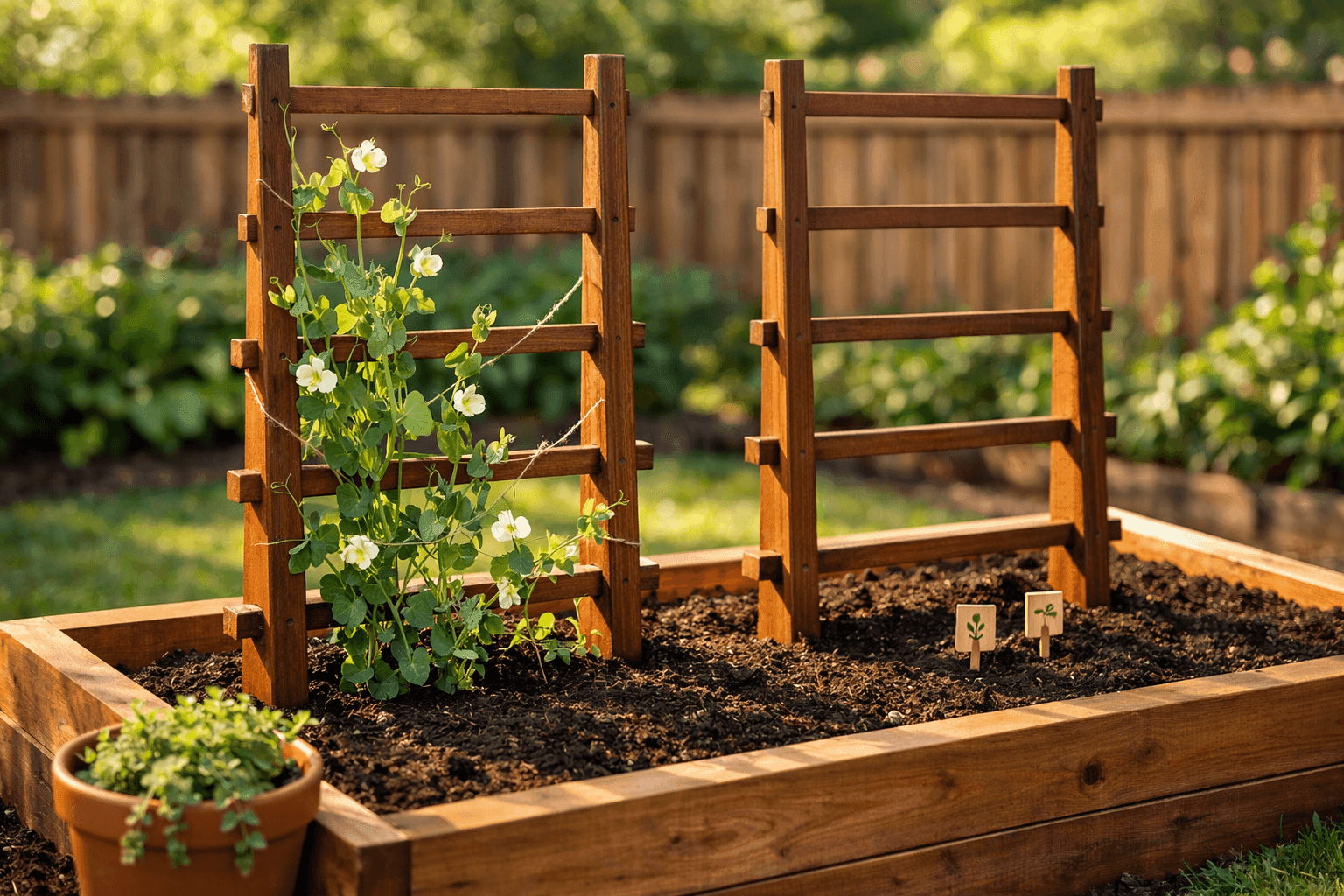
A trellis is one of those garden structures that seems easy to put off buying or building right up until your pea vines are sprawling across the ground in a tangled mess and you realize you should have had one in place two weeks ago. Building your own from 1x2 lumber takes about an hour, costs $8–12 per trellis, and produces something sturdier, better proportioned for your specific plants, and more satisfying to look at than most of the wire and plastic options at the garden center. The build is genuinely one of the simplest woodworking projects possible — two verticals, five or six crosspieces, a handful of screws — and a beginner with a drill and a measuring tape can produce a perfectly functional, good-looking result on the first attempt. Build two or three in a single session and you'll have the backbone of a productive climbing garden ready to support peas, beans, cucumbers, and flowering vines from the first warm week of the season.
What You'll Need
- Lumber
- 1x2 cedar or redwood boards — both species are naturally rot-resistant and hold up in direct soil contact without treatment; a single 8-foot 1x2 costs $2–4 and one 8-foot board yields both vertical posts for a standard trellis with just under a foot to spare for the ground stake portion (~$8–10 total for two verticals and five crosspieces)
- 1x2 pine as a lower-cost alternative — performs well for 3–5 seasons with a coat of outdoor stain, and costs roughly half what cedar runs at most lumber yards
- For a trellis taller than 6 feet, step up to 1x3 lumber for the verticals — the extra width adds meaningful rigidity when a heavy cucumber vine or a full season of bean growth is pulling against the frame
- Hardware
- 1.25-inch exterior wood screws — two screws per intersection, pre-drilled, is the most secure and split-resistant method for 1x2 lumber; a box of 100 runs $4–6 and covers several trellis builds
- Alternatively, 1.5-inch galvanized nails driven at opposing angles through each intersection create a surprisingly rigid joint without pre-drilling — faster but slightly less adjustable if a crosspiece shifts during assembly
- Tools
- Drill with a Phillips bit and a small pilot bit for pre-drilling
- Measuring tape and pencil for marking crosspiece positions
- Speed square for confirming perpendicular crosspiece placement before fastening
- Circular saw or miter saw for cutting crosspieces to length — or hardware store cut service if you don't own a saw
- 120-grit sandpaper for smoothing cut ends and any rough edges
- Finishing and Installation
- Outdoor wood stain in a color that complements your garden aesthetic — one coat on cedar or redwood extends the natural rot resistance and adds a finished, intentional look (~$5–8 for a small can that covers several trellises)
- Leave pine untreated only if planning to replace after a few seasons; a single coat of exterior stain or paint dramatically extends its outdoor lifespan
- Garden twine or soft plant ties for guiding young vines onto the trellis in the first weeks after installation
- Total Cost Per Trellis
- $8–12 in lumber and screws — less per trellis when building multiples from the same materials purchase
How to Build It
- Decide on dimensions before cutting anything — standard peas and beans climb comfortably on a 5-foot working height trellis, cucumbers prefer 5–6 feet, and perennial flowering vines like clematis benefit from the full 6-foot version. Account for the 8–12 inches of vertical post that will go into the ground when determining your total cut length: a trellis with 6 feet of working height above ground needs posts cut to 7 feet total.
- Cut all pieces to length before assembly — both verticals to your total post length and all five or six crosspieces to your chosen width (18 inches for a narrow raised bed trellis, 24 inches for a freestanding garden bed version). Cutting everything before assembly means you're working with a complete set of parts rather than stopping mid-build to make additional cuts, and it allows you to lay the full trellis out flat and visualize the finished result before a single screw goes in.
- Sand all cut ends with 120-grit sandpaper before assembly — the end grain of 1x2 lumber splinters easily on a fresh cut and those splinters work their way into hands during planting and harvesting season. Two minutes of sanding now eliminates a recurring frustration for the full life of the trellis.
- Lay out the full trellis flat on a driveway or workbench — place the two vertical posts parallel at your chosen width apart, then position crosspieces perpendicular across them at even intervals starting from the top. Mark the crosspiece positions on both verticals with a pencil before fastening anything, and use a tape measure to confirm spacing is consistent all the way down rather than eyeballing it, which inevitably produces a trellis with one noticeably wider gap.
- Pre-drill every intersection with a pilot bit slightly smaller than your screw diameter before driving any screws — 1x2 lumber is narrow enough that a screw driven without a pilot hole will split the wood at the intersection point, particularly near the ends of the crosspieces where the wood grain is most vulnerable. Pre-drilling takes an extra 30 seconds per intersection and completely eliminates splitting as a possibility.
- Fasten each intersection with two screws positioned at a slight diagonal to each other rather than straight in line — the diagonal pair resists twisting forces better than a parallel pair and keeps each crosspiece from rotating on the vertical over time as the wood expands and contracts through seasons. Drive screws until snug but not overtightened — stripped screw holes in narrow 1x2 are difficult to repair cleanly.
- Apply stain or finish before installing in the garden — coating a flat assembled trellis is straightforward; coating one that's already in the ground with plants growing through it is nearly impossible. One coat of outdoor stain applied with a foam brush, allowed to dry for the time specified on the can, gives a finished result that holds up significantly longer than bare wood in wet soil conditions and looks considerably more intentional in the garden.
- Install by pushing the post ends firmly into the ground 8–10 inches behind the plant row, spacing the two posts so the trellis stands perpendicular to the bed edge. For raised bed installation where ground depth is limited, drive a 12-inch wooden stake beside each post and screw the post to the stake for support. Once upright, use garden twine to gently guide the first tendrils of young climbing plants toward the lowest crosspiece — most vines find the structure on their own within a few days once pointed in the right direction.
Kitchen garden designers who plan productive climbing beds almost always install trellises on the north side of the bed before planting rather than after — a trellis on the north end means the climbing plants grow upward toward the south-facing sun without casting shade on shorter crops growing in front of them, which is the layout that gives you the full growing potential of both the vertical and the horizontal bed area simultaneously. Installing after planting disrupts the root zone of seedlings that have already established, often damaging more than the trellis installation is worth. The two-minute planning decision of north placement before the first seed goes in is the one that makes the difference between a raised bed that produces its maximum variety and one that sacrifices its front rows to shade for half the season.