Bug B&B: Build an Insect Hotel
Create a five-star retreat for beneficial bugs that'll work overtime protecting and pollinating your garden!
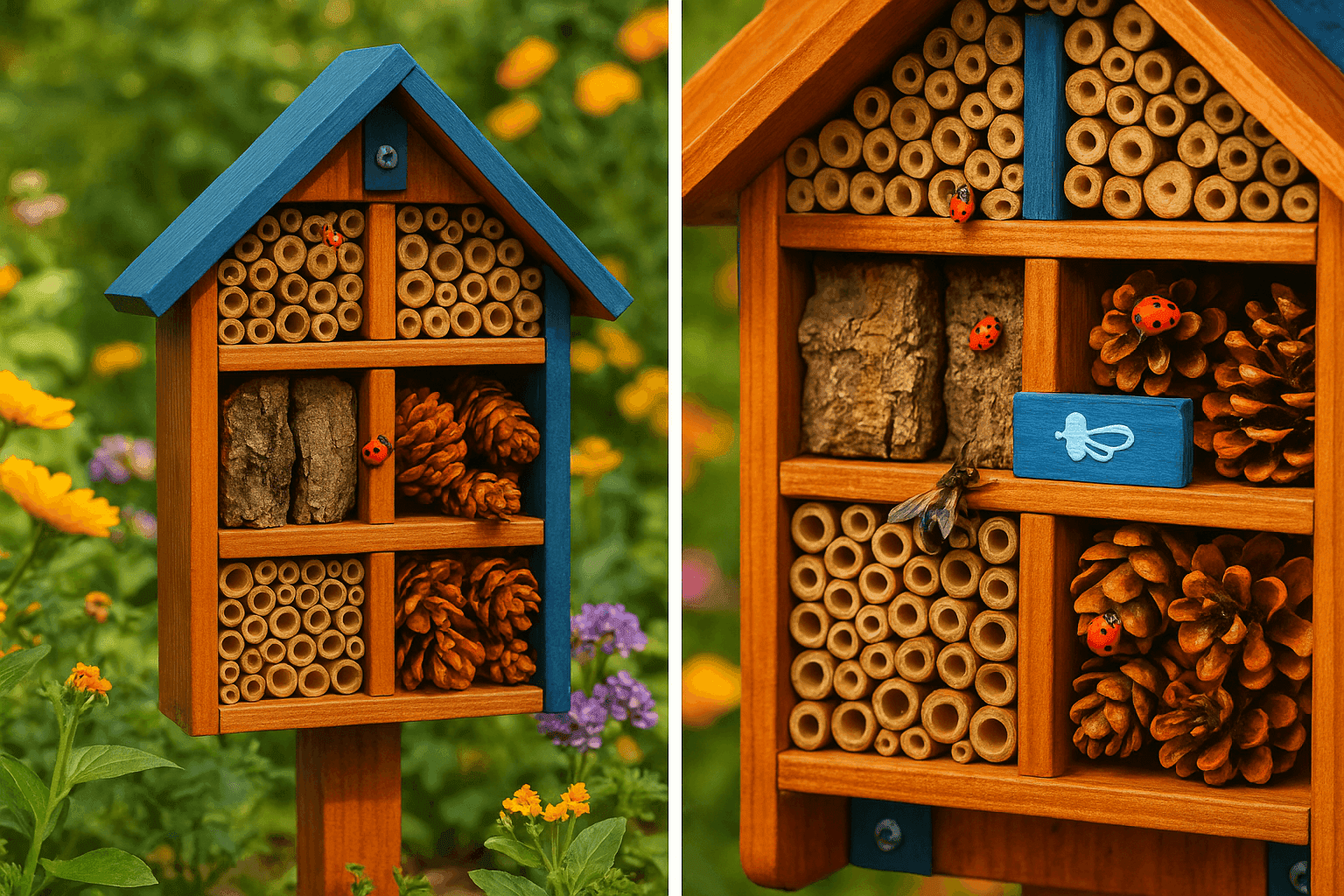
The first time I built an insect hotel, I'll admit I was skeptical – would bugs really move into a wooden box filled with sticks and pinecones? Within two weeks, I had my answer when I spotted tiny mason bees emerging from the bamboo tubes and ladybugs setting up shop in the bark crevices. Three years later, my garden is healthier than ever, with natural pest control and pollination happening 24/7 thanks to my six-legged tenants. This project costs under $20 and takes about two hours to build, but it's like hiring a full-time garden maintenance crew that works for free room and board. Plus, it's fascinating to watch – my kids love checking to see who's moved in each week, turning bug observation into a summer science lesson.
What You'll Need
- Frame Structure: Wooden box or frame (8×12 inches or larger), untreated cedar or pine works best
- Natural Materials: Bamboo tubes, hollow stems, pinecones, bark pieces, wood shavings (~$8-10)
- Filling Options: Drilled wood blocks, straw bundles, clay pots, corrugated cardboard
- Tools: Drill with various bit sizes, saw for cutting materials, wire mesh for securing
- Installation: Mounting brackets, screws, or simple stake for ground placement
- Weather Protection: Small roof overhang or slanted top, exterior wood stain (optional)
Step-by-Step Method
- Build or repurpose a wooden frame with multiple compartments for different insect preferences
- Prepare materials by cutting bamboo tubes to depth of frame and bundling hollow stems
- Drill holes in wood blocks using various bit sizes (6-12mm) for different bee species
- Layer materials systematically: bamboo tubes, drilled blocks, pinecones, and loose bark
- Pack materials snugly but not too tightly – insects need easy access to their chosen spots
- Secure contents with wire mesh or wooden slats to prevent materials from falling out
- Install in sunny, sheltered location facing southeast, 3-6 feet off ground for best results
- Maintain by checking annually and replacing any deteriorated materials as needed
Professional entomologists recommend creating diverse "neighborhoods" within your hotel – small holes (6-8mm) for mason bees, medium holes (10mm) for leafcutter bees, and larger spaces filled with loose materials for beneficial beetles and spiders. Position your hotel near flowering plants for convenient "room service," and never use treated lumber or pesticides nearby. The key is patience – it may take a full season for your first tenants to discover their new digs!