Budget Luxe: Transform Dollar Store Trays Into Faux Marble
Create serving pieces that look like $80 boutique finds for under $5 using simple painting techniques
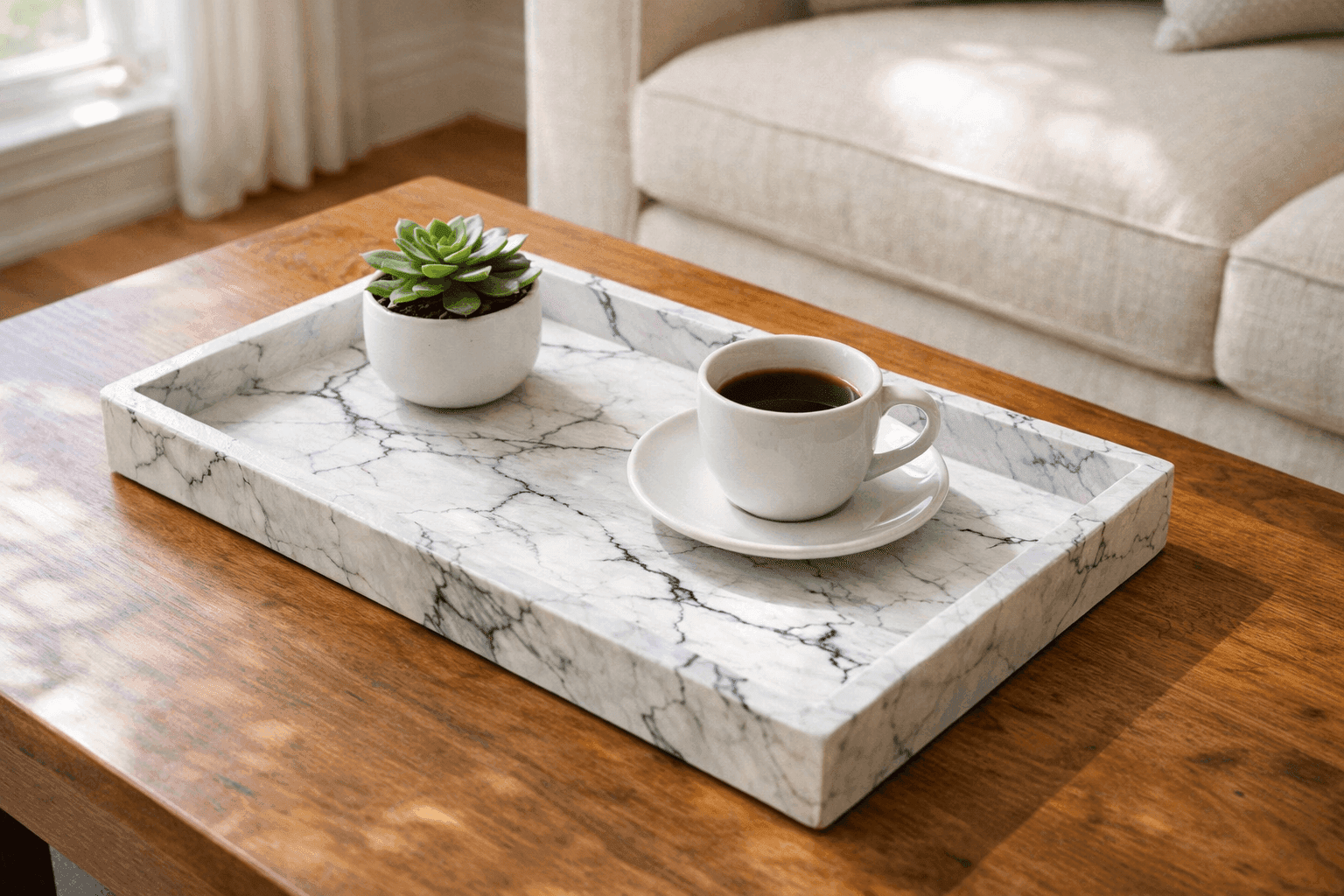
Those gorgeous marble trays at home décor boutiques cost $60-100 for what's essentially painted plastic or resin pretending to be natural stone, while dollar stores sell plain trays for $1-3 that become the exact same thing with thirty minutes of painting. The faux marble finish trend exists because real marble is expensive and impractical for everyday use, but the painted version delivers the same luxe aesthetic while being dishwasher-safe, lightweight, and costing under $5 to create. Transforming a basic tray into a marble lookalike takes about thirty minutes of active work plus drying time, using white spray paint as base and acrylic paints to create organic veining patterns that mimic natural stone. This project combines affordable crafting with high-end results, proving that expensive-looking home décor doesn't require boutique budgets when simple painting techniques fool the eye into seeing luxury materials that aren't actually there.
What You'll Need
- Base Tray: Plain plastic or wooden tray from dollar store ($1-3)
- White Spray Paint: For base coat creating marble foundation ($4-6)
- Acrylic Paints: Light gray, dark gray, and black for veining ($3-5 for set)
- Natural Sponge: For organic texture application, not synthetic kitchen sponge ($2-3)
- Detail Tools: Thin artist brush or feather for veining lines
- Clear Sealer: Glossy spray sealer for polished stone finish ($6-8)
- Time Investment: 30 minutes active work, 2-3 hours total with drying
Step-by-Step Method
- Apply white spray paint base coat evenly across entire tray surface, creating the marble foundation color
- Work quickly while paint is still slightly wet, using damp natural sponge to dab light gray paint in organic flowing patterns
- Add darker gray veining using thin brush or feather, following marble's characteristic diagonal flow rather than perfect straight lines
- Accent with tiny black veins here and there, keeping them sparse because real marble has subtle rather than overwhelming veining
- Soften harsh lines by lightly dabbing with clean damp sponge if veining looks too bold or artificial
- Allow paint to dry completely before sealing—rushing this step causes smudging that ruins the marble illusion
- Seal with 2-3 coats of clear glossy spray, allowing each coat to dry fully for that polished stone appearance
- Use for coffee table styling, bathroom organization, serving breakfast in bed, or anywhere you want budget luxury vibes
Professional faux finishers recommend studying real marble images before starting so you understand natural veining patterns—marble veins cluster in some areas while leaving other sections relatively clear, and they flow diagonally rather than creating grid patterns. Also, less is more with veining; amateur faux marble attempts fail by adding too many lines, while realistic versions show restraint with sparse delicate veining that suggests stone rather than screaming "I'm painted." For the most convincing results, vary your gray tones throughout the piece rather than using one consistent gray—real marble contains multiple shades creating depth that flat single-tone approaches can't achieve. Consider creating multiple trays in one session since you have paints and sealers out anyway—faux marble works on wooden boxes, terra cotta pots, picture frames, or any surface accepting paint, multiplying your return on minimal supply investment. The glossy sealer is non-negotiable for selling the stone illusion; matte or satin finishes look painted rather than polished marble, so invest in proper gloss topcoat even if it costs more than the tray itself. These trays make impressive gifts that recipients assume cost significantly more than your actual $5 investment, proving that perceived value often matters more than actual materials when presentation is executed well.