Budget Gallery Wall: Turn Cork Trivets Into Textured Art
Create dimensional wall installations from dollar store trivets for under $15
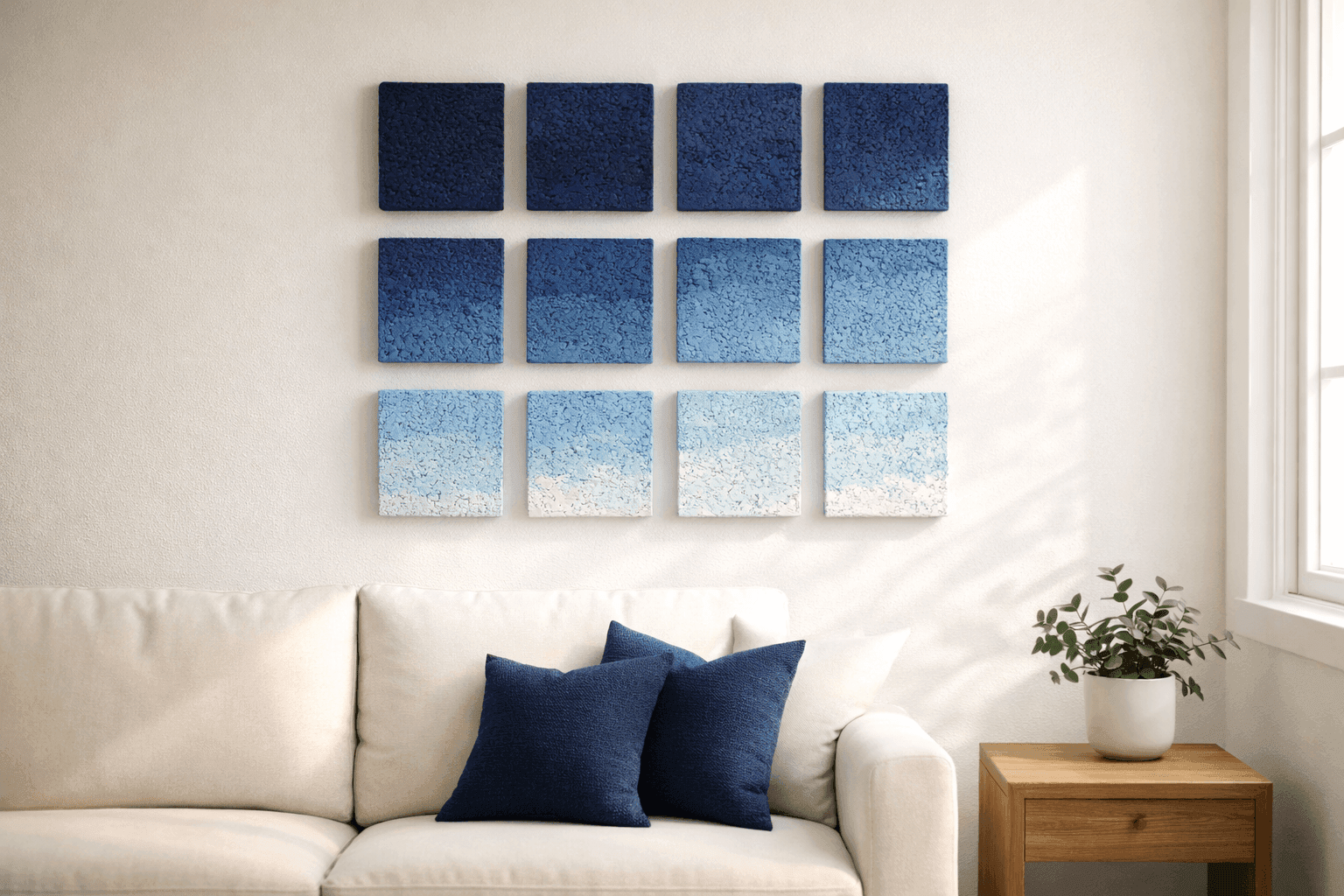
Gallery walls are everywhere in home design magazines and Pinterest boards, but purchasing enough quality artwork to fill significant wall space typically costs hundreds of dollars and requires commitment to specific pieces that you might tire of eventually. Cork trivets—those humble kitchen accessories that cost $1-2 each at dollar stores—offer a genius alternative that creates dimensional, textured wall art with organic visual interest that flat canvas simply cannot replicate. The natural cork texture provides built-in depth and character, the lightweight material makes installation easy without heavy-duty hardware, and the modular nature means you can rearrange or swap out individual pieces whenever you want to refresh your space without starting completely over. I stumbled onto this idea when I had a collection of matching cork trivets but needed wall art more than pot holders, and the transformation from utilitarian kitchen item to sophisticated wall installation genuinely shocked everyone who saw it—nobody guesses these are dollar store trivets unless you tell them. The entire project costs $8-15 depending on how many pieces you use, takes an afternoon to paint and arrange, and fills wall space that would cost $100-300 if you bought actual artwork or expensive canvas prints. This is one of those brilliant DIY hacks that proves expensive-looking design doesn't require expensive materials, just creative thinking about everyday objects.
What You'll Need
- Cork Trivets or Tiles: 4-9 pieces in matching sizes and shapes—square, round, or hexagonal all work beautifully ($1-2 each at dollar stores, kitchen sections, or online in bulk)
- Acrylic Craft Paint: Choose colors within one family for ombré effect (navy to sky blue, cream to chocolate brown) or contrasting colors for geometric patterns ($1-3 per bottle)
- Paint Brushes: Variety of sizes including foam brushes for base coats, detail brushes for patterns, sponge brushes for texture effects
- Painter's Tape: For creating clean geometric patterns, stripes, color blocking, or other crisp-lined designs
- Sea Sponge or Regular Sponge: For dabbing paint to create textured, dimensional finish that adds depth beyond flat color
- Hanging Hardware: Command strips for damage-free hanging in rentals, or small finishing nails/picture hangers for permanent installation
- Level and Measuring Tape: For ensuring grid arrangement is straight and evenly spaced—eyeballing never works as well as you think it will
- Pencil: For lightly marking wall positions before hanging
- Drop Cloth: Newspaper or plastic sheeting to protect work surface during painting
Step-by-Step Instructions
- Choose your color scheme by deciding whether you want ombré gradient (multiple shades of one color), monochromatic (different intensities of one hue), or geometric patterns with contrasting colors—having a clear vision prevents midstream changes.
- Prepare cork surfaces by lightly wiping with a damp cloth to remove any dust or manufacturing residue, then let dry completely—cork absorbs paint readily but needs to be clean first.
- Apply base coats to each trivet using foam brushes for smooth, even coverage, applying 2-3 thin coats rather than one thick coat to prevent dripping and ensure solid, opaque color.
- Let base coats dry completely between each layer—rushing this step results in muddy, uneven color that undermines the entire aesthetic you're trying to create.
- Add texture if desired by dabbing a sea sponge loaded with slightly lighter or darker paint over dried base coat, creating dimensional depth that mimics expensive textured canvases.
- Create geometric patterns using painter's tape to mask off sections, painting exposed areas in contrasting colors, then carefully removing tape while paint is slightly tacky to prevent peeling dried paint.
- Plan wall arrangement by laying all pieces on the floor in your desired grid pattern—square grids work for even numbers (4, 9), while asymmetrical arrangements suit odd numbers (5, 7).
- Mark wall positions using a level and measuring tape to ensure even spacing between pieces—typically 2-3 inches between each trivet creates cohesive gallery wall effect without looking cramped.
- Hang using appropriate hardware with Command strips for rental-friendly removable installation, or small nails for permanent mounting—cork's lightweight nature means minimal hardware requirements.
Here's the professional interior designer trick that elevates this from craft project to gallery-worthy installation: instead of arranging all pieces in a perfectly uniform grid with identical spacing, intentionally offset some pieces or vary the spacing slightly to create what designers call "organized asymmetry" that feels more organic and sophisticated than rigid perfection. Professional art curators know that perfectly aligned grids can feel sterile and institutional, while thoughtfully imperfect arrangements create visual interest and movement that holds attention longer. Try hanging a 3x3 grid where the center piece sits slightly lower than the others, or create a stepped arrangement where each row shifts incrementally to the right, or vary spacing so outer pieces have more breathing room than inner ones. This technique works because our brains register the overall pattern and cohesion while finding the subtle variations intriguing rather than jarring. Another insider move: paint the backs of your cork pieces in complementary colors so if you ever rearrange them or decide to flip some around, you have built-in design flexibility without needing to create entirely new pieces. This forward-thinking approach transforms a static art installation into a dynamic, reconfigurable design element that can evolve with your changing tastes and seasonal decor updates.