Breezy & Beautiful: Sew Garden Wind Socks
A one-hour fabric project that adds whimsical, dancing color to any garden bed or patio — for under $12 each
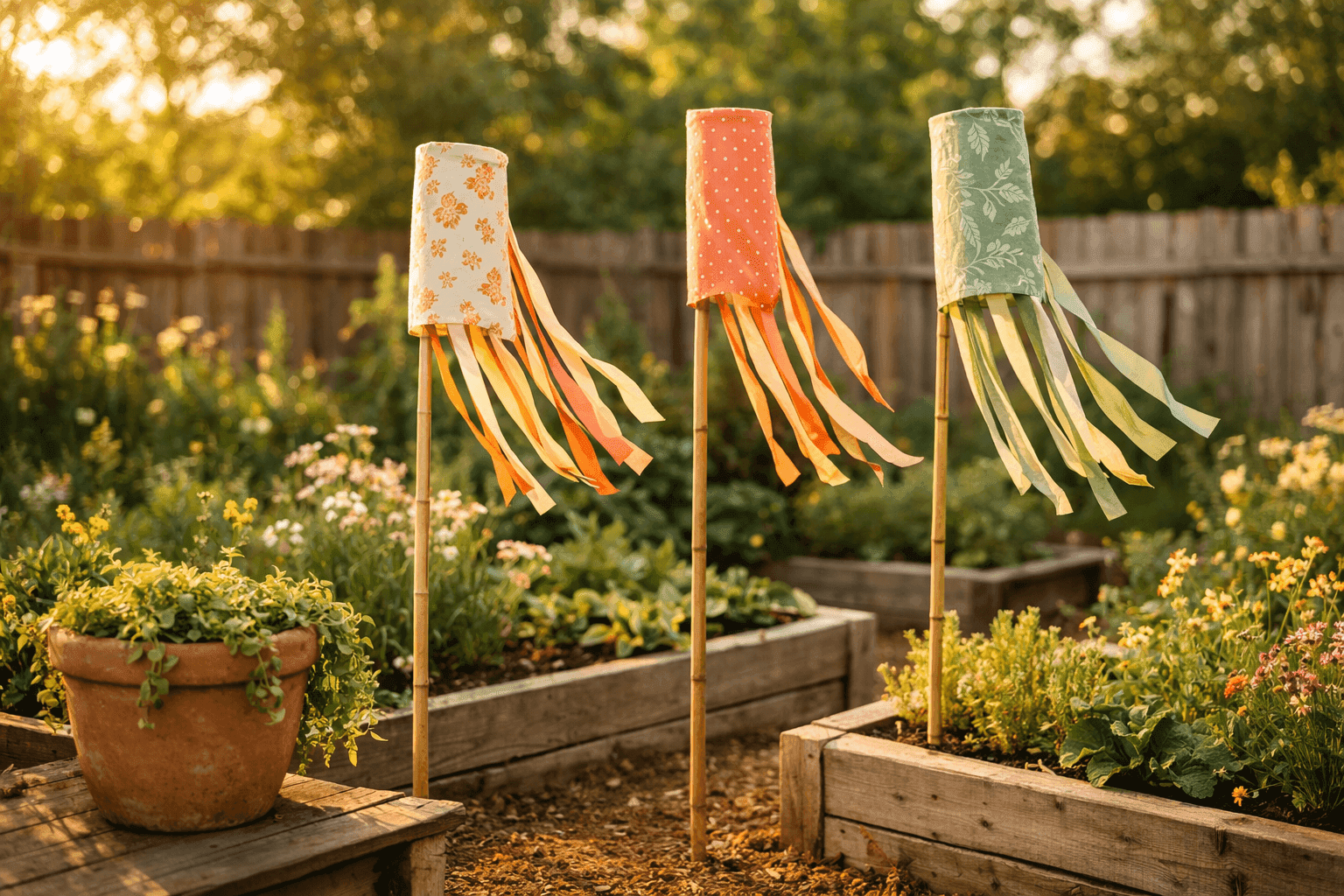
Garden décor is at its best when it actually does something — and few things are as satisfying as watching handmade wind socks spin and dance every time a breeze rolls through. These fabric tube wind socks are one of those rare projects that look like they took serious skill but genuinely come together in about an hour, even if you're a beginner with a sewing machine. At $8–$12 each, you can make a whole coordinated collection to line a garden path, dot a raised bed, or cluster on a patio for instant festival-style energy. The beauty of making your own is the freedom to choose any color palette — match your flowers, complement your outdoor furniture, or go wild with patterns that store-bought versions never offer. Once you make one, you'll want to make a dozen.
What You'll Need
- Fabric
- ½ yard outdoor or quilting cotton fabric per wind sock — ~$3–$5 per sock (look for bold prints, stripes, or solids)
- Outdoor fabric or ripstop nylon for extra weather resistance — slightly pricier but lasts longer in rain
- Streamers
- 1½–2 yards of ⅜-inch satin or grosgrain ribbon per sock in 4–6 colors — ~$1–$2 total per sock
- OR strips of coordinating fabric cut into ½-inch wide streamers
- Structure & Hanging
- 18-inch bamboo garden stakes or wooden dowels — ~$1–$2 each
- 12-inch length of wire or plastic-coated garden wire for the hoop opening — ~$2 for a pack
- Twine or jute cord for hanging loops — ~$3 for a spool (makes many socks)
- Sewing Supplies
- Sewing machine (or needle and thread for hand sewing)
- Scissors or rotary cutter and cutting mat
- Straight pins
- Iron and ironing board
- Fabric marker or tailor's chalk
How to Make Them
- Cut your fabric into a rectangle measuring 12 inches wide by 14 inches tall — this gives you a wind sock body with enough length to move gracefully without being floppy. Press the fabric flat with your iron before cutting so your measurements stay accurate.
- Fold the rectangle in half lengthwise with right sides facing together, pin along the long raw edge, and sew a straight seam with a ½-inch seam allowance to form the tube. Press the seam open with your iron, then turn the tube right-side out so the seam is hidden inside.
- Fold and press the top opening down by ½ inch toward the inside, then fold down again by ¾ inch to create a clean casing channel — this is where your wire hoop will live. Pin it in place all the way around, leaving a 1-inch gap unsewn to thread the wire through.
- Sew the casing channel closed (leaving your threading gap open), then bend your garden wire into a circle that fits snugly inside the top opening, twist the wire ends together to secure, and use a pencil or chopstick to push the wire hoop into the casing. Hand-stitch the gap closed once the hoop is in place.
- Attach your ribbon or fabric streamers at the bottom opening by folding each one in half, sliding the folded loop inside the bottom edge of the tube, and sewing across the entire bottom with a ½-inch seam — catching all the streamer loops in one pass. Aim for 8–12 streamers of varying lengths between 12 and 20 inches for the most dynamic movement.
- Add three evenly spaced hanging loops at the top by cutting three 6-inch lengths of twine, folding each into a loop, and hand-stitching them securely to the wire casing at the 12 o'clock, 4 o'clock, and 8 o'clock positions. Tie all three loops together at the top — this is what keeps the sock hanging level and open to the breeze.
- Mount your wind sock by tying the gathered hanging loops to the top of a bamboo stake with a secure double knot, leaving a few inches of movement so the sock can spin freely rather than being pulled taut. Push the stake 6–8 inches into the soil so it stands upright without wobbling in the wind.
The secret to wind socks that look professionally made rather than homemade is weight distribution — your streamer bottom needs to be slightly heavier than your fabric tube so the sock hangs open and catches air properly instead of collapsing sideways. Use ribbon streamers in a mix of widths (some ⅜-inch, some ¾-inch) and vary the lengths by 2–3 inches each so they move at different rhythms in the breeze. For outdoor durability, treat your finished fabric with a light coat of water-resistant spray like Scotchgard before mounting — it won't affect the movement but it'll keep the colors vibrant through a full season of weather. If you're making a set, group them in odd numbers (three or five) at slightly varying heights on stakes for a display that looks intentional and styled rather than randomly placed.