Box Brilliance: Turn Amazon Boxes Into Designer Storage
Create custom storage bins that look intentional, not recycled
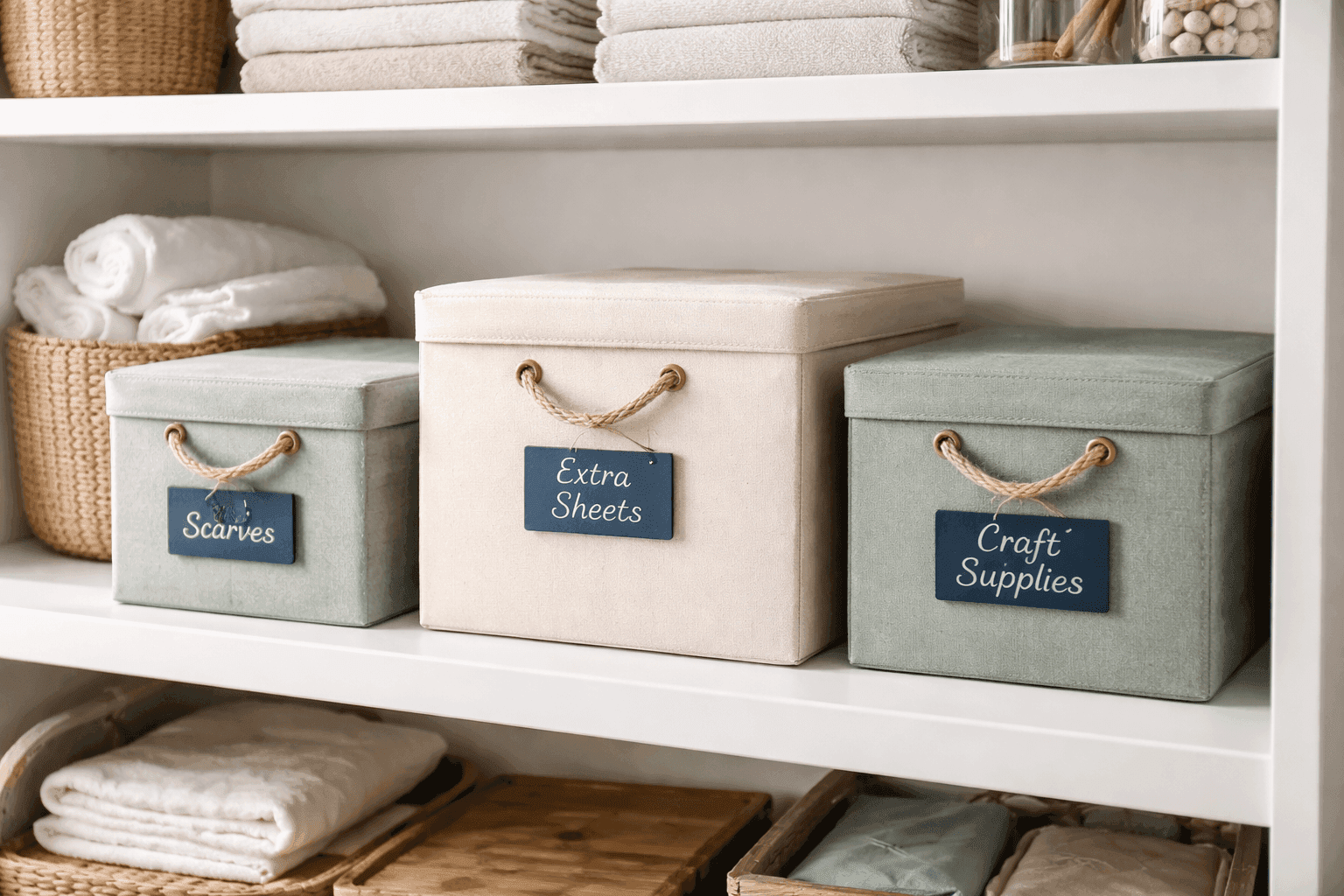
Those Amazon boxes and shipping containers piling up in your recycling aren't just trash—they're free raw materials for custom storage solutions that rival anything you'd find at container stores charging $20-30 per bin. The cardboard underneath all that branded packaging is surprisingly sturdy, and with the right covering technique, these transformed boxes become completely unrecognizable as recycled materials. While store-bought storage bins force you to accept whatever sizes and styles retailers decide to stock, DIY cardboard storage lets you create exactly the dimensions you need for your specific shelves, closets, or organizational challenges. Cover them with fabric remnants, contact paper, or decorative scrapbook paper in coordinating patterns, and suddenly you have a cohesive storage system that looks professionally designed rather than cobbled together. The best part is the cost—even if you buy all new covering materials, you're spending $3-5 per box instead of $25, and most people can raid their craft stash for fabric scraps or leftover wrapping paper. These custom bins organize everything from craft supplies to toys to pantry items while proving that thoughtful DIY can absolutely compete with retail quality when you take the time to finish details properly.
What You'll Need
- Box Foundation (free from recycling):
- Sturdy cardboard shipping boxes in various sizes
- Amazon boxes work perfectly when flattened logos disappear
- Look for thick, undamaged cardboard
- Covering Materials ($3-5 per box):
- Contact paper in coordinating patterns or solid colors
- Fabric remnants or yard sale finds
- Decorative scrapbook or wrapping paper
- Spray adhesive for fabric attachment
- Finishing Supplies:
- Hot glue gun and glue sticks
- Thick twine or rope for handles
- Hole punch or sharp scissors for handle holes
- Chalkboard labels or decorative tags
- Ruler and pencil for measuring
Create Your Bins
- Measure your intended storage space—shelf height, closet depth, drawer dimensions—then select boxes that will fit those spaces perfectly when trimmed to the right height for maximum efficiency.
- Cut boxes to your desired height using a sharp utility knife and straightedge, because shorter bins work better for shelves and closets where you need to see contents at a glance without digging.
- Prepare your covering material by measuring each box face with a few extra inches on all sides for wrapping around edges—precise cutting now prevents frustrating gaps and exposed cardboard later.
- Cover the exterior completely starting with the largest faces, wrapping like a present and securing edges with hot glue or spray adhesive while folding corners neatly to eliminate bulk and create crisp lines.
- Line the interior with contrasting wrapping paper or matching fabric for a polished, finished look that makes these bins feel intentionally designed rather than obviously repurposed from shipping materials.
- Add rope handles by punching holes on opposite sides about 2 inches from the top edge, threading thick twine or rope through, and knotting securely on the inside—this transforms static boxes into portable storage.
- Create labels using chalkboard contact paper for changeable contents, printed tags for permanent categories, or hand-lettered labels that add personality while keeping your system functional and easy to maintain.
- Make multiple boxes in coordinating patterns rather than random designs—a cohesive storage system with matching or complementary fabrics looks professionally curated and elevates your entire space's aesthetic.
Professional organizers recommend reinforcing box bottoms with an extra layer of cardboard glued inside if you're storing heavy items—this simple step dramatically extends the lifespan of your custom bins. For an even more polished look, wrap the top edge with grosgrain ribbon secured with hot glue, which covers any imperfect cuts and adds a boutique storage feel. Consider creating a graduated system where matching bins in different heights stack efficiently or nest inside each other when not in use. The key to making these look expensive rather than DIY is taking time with corner folds—mitered corners like you'd wrap a gift create clean lines that separate amateur projects from professional-looking results. If you're covering multiple boxes, cut all your fabric or paper pieces at once in an assembly-line process, then cover all boxes sequentially rather than completing one at a time, which maintains consistency and speeds up the overall project significantly.