Boot Camp: Build a Shoe Rack That Conquers Mudroom Chaos
Construct functional storage that keeps shoes organized and handles the reality of winter boot season
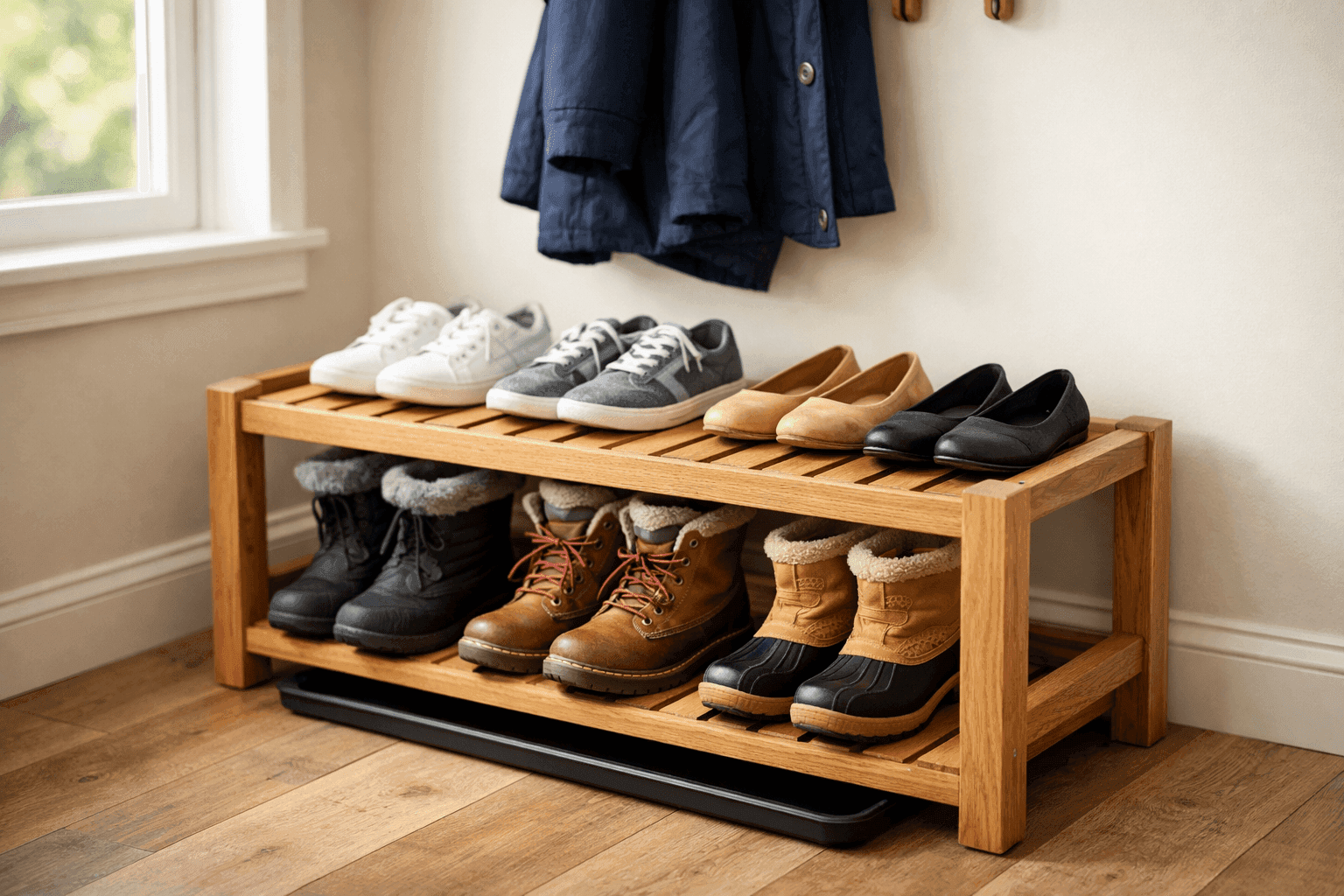
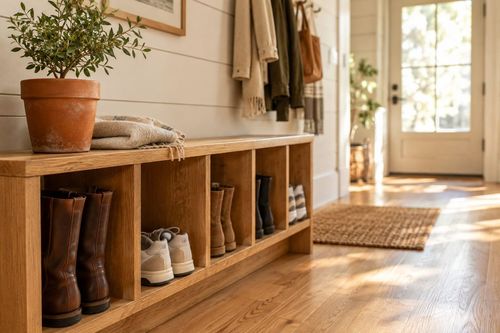
Your entryway has become a minefield of scattered shoes where boots topple over, sneakers migrate across the floor, and finding matching pairs requires an archaeological dig through the pile accumulating by the door. Store-bought shoe racks either cost $50-100 for sturdy versions or they're flimsy wire things that collapse under the weight of winter boots within weeks, neither option truly solving the problem of wet, muddy footwear needing organized storage. Building a simple wooden shoe rack takes about three hours and costs $25-35 in lumber, creating durable storage that actually handles real-world use including heavy boots, allows wet shoes to air-dry through slatted shelves, and keeps your entryway looking intentional instead of chaotic. This straightforward woodworking project requires only basic tools and skills, but it creates functional organization that stands up to daily family traffic rather than becoming another piece of furniture that doesn't quite work for how you actually live.
What You'll Need
- Lumber: Four 2x4 boards (two 36-inch pieces for sides, slats for shelves, $20-25)
- Shelf Slats: 1x2 or 1x3 boards for creating slatted shelves with drainage ($10-15)
- Hardware: 2.5-inch wood screws, wood glue for reinforcement ($5-8)
- Finishing: Sandpaper (120 and 220-grit), stain or paint, polyurethane sealer ($10-15)
- Tools: Drill with bits, saw (circular or miter), measuring tape, level, pencil
- Optional: Rubber feet or felt pads to protect flooring from moisture
- Time Investment: 3 hours including cutting, assembly, and finishing
Step-by-Step Method
- Measure your space and decide on rack dimensions—36 inches wide works well for most entryways, with 12-inch depth for adult shoes and boots
- Cut two vertical side pieces from 2x4 lumber to your desired height—24 inches accommodates two shelves with space for tall boots
- Mark shelf positions on side pieces, spacing shelves 10-12 inches apart vertically to accommodate various shoe heights from flats to boots
- Cut shelf slats from 1x2 or 1x3 boards, creating multiple pieces that span between side supports with gaps for air circulation and drainage
- Assemble the frame by attaching horizontal support pieces between the vertical sides at marked shelf heights using wood glue and screws
- Attach slats across each shelf level, spacing them about half an inch apart so wet shoes drain and air circulates preventing mildew
- Sand all surfaces smooth to prevent snagging clothing or scratching shoes, paying attention to edges and corners
- Finish with stain or paint plus polyurethane sealer to protect wood from moisture that inevitably comes with wet winter footwear
Professional mudroom designers recommend building shoe racks low and wide rather than tall and narrow—a two-shelf rack that's 36 inches wide holds more shoes while remaining stable under the weight of heavy boots, whereas tall narrow racks tip easily when loaded unevenly. Also, space slats carefully; gaps that are too wide let small shoes fall through, while slats too close together trap dirt and prevent drainage. Half-inch gaps work perfectly for most footwear while allowing debris to fall through to a tray underneath. Consider adding a removable boot tray on the bottom shelf during winter months to catch snow melt and mud, making cleanup as simple as dumping the tray rather than mopping the entire floor. For households with children, build the bottom shelf low enough that kids can actually reach it themselves—shoe organization systems fail when they require adult assistance for basic use. The key to a shoe rack that actually works long-term is overbuilding slightly; use thicker lumber than seems necessary because footwear storage takes surprising abuse from wet boots being dropped rather than placed, and reinforcing joints with both glue and screws prevents wobbling that makes cheap racks unusable within months.