Boho Macramé Plant Hangers for $10 Each
No weaving experience needed — just cord, a few knots, and an hour to spare
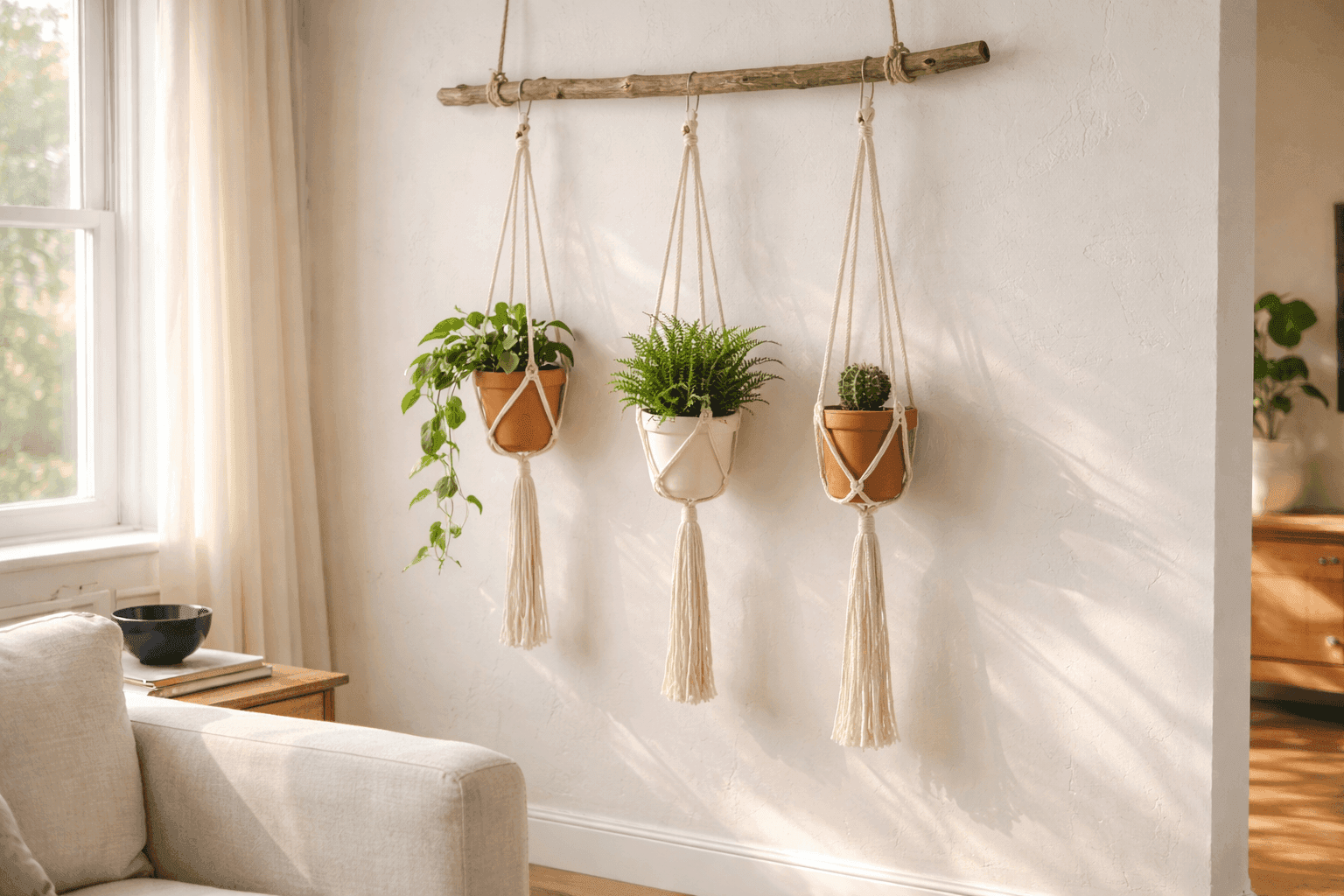
If you've ever walked past a boutique home store, spotted a macramé plant hanger with a $45 price tag, and thought "I could make that" — you're completely right, and it's even easier than you'd expect. Macramé sounds intimidating until you realize the whole thing is built on just two or three basic knots that anyone can learn in about five minutes. Once you get the rhythm going, knotting a hanger is genuinely meditative — the kind of project that lets your hands stay busy while your brain fully unwinds. The finished result earns you that airy, layered boho look that plant shops and interior designers charge serious money for, and you'll have it hanging in your home for about $10 in materials. Make two or three in different lengths and suddenly you've got a full styled vignette that looks like it took a designer's eye and a decorator's budget.
What You'll Need
- Cord
- 3mm natural cotton macramé cord – 100–120 feet per hanger (a 200-ft spool covers two hangers and runs $6–9)
- Colored or dip-dyed cord – optional upgrade for a more personalized look (~$8–10 per spool)
- Hardware
- 1-inch wooden or metal ring per hanger for the hanging loop ($1–2 each at any craft store)
- Ceiling hook or curtain rod for hanging while you work
- Tools
- Measuring tape
- Sharp scissors
- Comb or stiff-bristle brush for fringing the ends
- Clipboard or S-hook to anchor the ring while knotting
- The Plant
- 4–6 inch nursery pot – standard plastic pots fit most hanger basket sections perfectly
- Total Cost Per Hanger
- $8–12, less per hanger when you make multiples from the same spool
How to Make It
- Cut eight cords, each measuring about 14–15 feet long. Folding each cord in half gives you 16 working strands total, which is the standard count for a balanced hanger with good structure.
- Attach all eight folded cords to your wooden ring using a simple lark's head knot: fold each cord in half, loop the folded end over the ring, and pull both tails through the loop. Pull snug. Hang the ring from your hook or clipboard so the cords hang freely below.
- Tie a gathering knot about 3 inches below the ring to bundle all 16 strands together into a clean starting point. Wrap one separate short piece of cord tightly around the bundle 8–10 times and knot it off at the back.
- Divide the 16 strands into four groups of four. These four groups will form the basket structure that cradles your pot. Keep the groups evenly spaced as you work — this is what gives the hanger its symmetrical shape.
- Knot each group of four using square knots, working downward about 12–14 inches from the gathering knot. For each square knot: take the left outer cord across the two center cords, bring the right outer cord over it and through the left loop, then pull both ends firmly. Repeat the mirror image to complete one full square knot. Aim for 4–6 square knots per group.
- Create the basket by joining adjacent groups together: take two strands from one group and two from the neighboring group, and tie a single square knot about 3–4 inches below the last knots. Repeat all the way around all four groups — this cross-linking is what forms the pocket that holds the pot.
- Gather all 16 strands back together below the basket and tie a final gathering knot to close the bottom. Leave at least 6–8 inches of cord hanging below this knot for a full, flowing fringe tail.
- Trim the fringe ends evenly with sharp scissors, then comb them out vigorously with your stiff brush to separate the fibers into a soft, feathery finish. Set your pot inside the basket to test the fit before hanging.
Interior stylists who work with macramé almost always hang pieces in odd-numbered groupings at varying heights rather than in a single row — three hangers staggered at high, medium, and low positions creates the kind of layered vertical interest that makes a blank wall feel intentional and alive. The trick is to keep your cord color consistent across all three hangers while varying the pot and plant types for contrast. A trailing pothos at the top, a full bushy fern at mid-height, and a small succulent at the lowest point gives you movement and texture without any of the arrangements competing with each other.