Bloom on a Budget: Make a $7 Spring Centerpiece
Dollar store tulips, a low bowl, and twenty minutes — the spring table centerpiece that looks like a $30 florist arrangement for a fraction of the cost
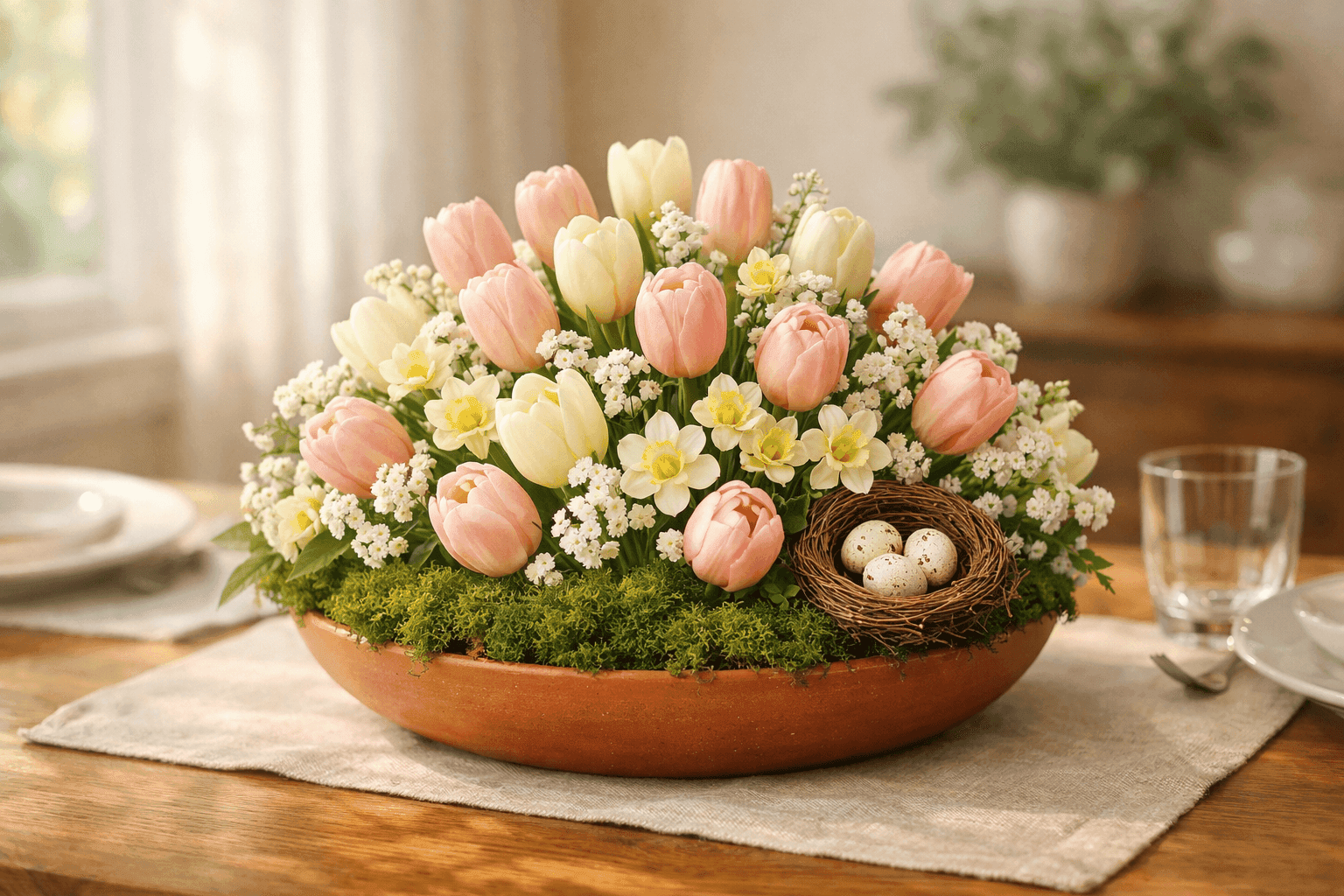
There's a particular kind of magic that a fresh floral centerpiece brings to a dining table — it changes the whole energy of the room, makes an ordinary Tuesday dinner feel considered, and gives guests something to comment on the moment they sit down. The problem is that a professionally arranged centerpiece from a florist runs $30–$60 and lasts a week before it's compost. This dollar store version costs $5–$8, takes about 20 minutes to build, looks genuinely lush and intentional from across the room, and — if you use artificial blooms — lasts the entire spring season with zero maintenance. The technique is the same one florists use: floral foam as the base structure, a dome-shaped arrangement that's tallest in the center and tapers to the edges, and foam coverage so no mechanics show in the finished piece. The dollar store just happens to carry everything you need to pull it off for about the cost of a single stem from an upscale florist. This is the Thrifty Tuesday win that brings spring indoors beautifully without spending like it's a special occasion.
What You'll Need
- The Container
- A low, wide bowl, basket, or tray from the dollar store — the container should be wider than it is tall so the finished arrangement reads as a generous, full dome rather than a narrow upright bouquet — ~$1.25
- Terracotta-toned bowls, white ceramic dishes, or natural woven baskets all photograph beautifully and complement spring flower colors without competing with them
- Avoid containers with high sides that will hide the lower flowers — the visual payoff of a dome centerpiece is seeing the full graduated height from the table level, not just the top
- Structure
- One block of dry floral foam — available at dollar stores, craft stores, and garden centers — cut to fit snugly inside your container with the top surface mounding slightly above the rim for a fuller finished shape — ~$1.25
- A hot glue gun and glue sticks for securing the foam block to the container bottom so it doesn't shift during arrangement — one small dab is sufficient
- If using fresh flowers, soak the foam in water for 60 seconds before use; for artificial flowers, use dry foam straight from the package
- Flowers & Greenery
- Two to three bunches of artificial spring flowers — tulips, daffodils, ranunculus, or mixed spring blooms — from the dollar store floral section — ~$1.25 per bunch, most bunches contain 6–8 stems
- One bunch of artificial greenery or filler — small leaf sprigs, baby's breath, or eucalyptus stems — for filling gaps between blooms and adding natural depth — ~$1.25
- Choose a color palette before shopping rather than grabbing whatever looks pretty — two coordinating colors plus white or cream reads as intentional and elegant, while five unrelated colors reads as chaotic regardless of how nicely each individual stem is arranged
- Coverage & Finishing
- Sheet moss, decorative grass, or Easter grass for covering any visible foam at the base of the arrangement — ~$1.25 per bag, and this single finishing step is what separates a polished result from one that looks unfinished — critical
- Optional accent elements — a small faux bird's nest, a few decorative speckled eggs, a bow of narrow ribbon, or a few small butterflies on wire picks — ~$1.25 each
- Wire cutters or strong scissors for trimming artificial flower stems to length — most dollar store artificial stems have a wire core that regular scissors will struggle with
How to Make It
- Plan your color palette before leaving the dollar store — hold stems next to each other in the aisle and confirm the colors work together before committing to the combination. The most reliable spring centerpiece palettes are soft yellow and white, blush and cream, mixed pastels anchored by one deep accent, or a single bold color carried across all stem varieties for a modern monochromatic look. Buying whatever catches your eye separately and hoping it works together at home is the single most common reason dollar store floral projects look like dollar store floral projects.
- Prepare the foam by cutting or breaking it to fit snugly inside your container — the foam should sit with its top surface about ½ inch above the container rim so the lowest flowers angle slightly outward and downward over the edge rather than pointing straight up from inside the bowl. Apply a small hot glue dot to the container bottom before pressing the foam in so it stays put while you're working and doesn't rock as you insert stems.
- Separate your stems by cutting each bunch apart and grouping all flowers by type and color in front of you before inserting a single stem — this overview of your full material inventory lets you plan placement rather than just inserting stems one at a time and hoping the distribution looks balanced. Count your stems and divide roughly equally between center placement (tallest), mid-level, and edge placement (shortest) before you begin.
- Insert the focal flowers first — your largest or most prominent bloom type goes into the center of the foam at the tallest height of the arrangement, typically 6–8 inches above the container rim. Insert three to five stems in a loose cluster at center, angling them very slightly outward from vertical, and use these as your height reference point for everything else — every subsequent stem gets cut shorter than these center stems as you work outward toward the edges.
- Build the dome shape by working in concentric rings outward from your center stems, cutting each ring of stems progressively shorter so the arrangement follows a smooth dome curve from center peak to outer edge. The dome shape is what gives a centerpiece its professional, full look — a flat-topped arrangement reads as a hedge, a peaked arrangement reads as a bouquet in a vase, and only the dome reads as a deliberate centerpiece designed to be seen from all sides at table level.
- Fill with greenery by inserting leaf sprigs and filler stems into any visible gaps between blooms, angling them to follow the dome shape and echo the curve of the flowers around them. Greenery does two things in a dom