Beds That Look Like a Pro Did It: Landscape Design Basics
The design principles landscapers use — applied to your own yard
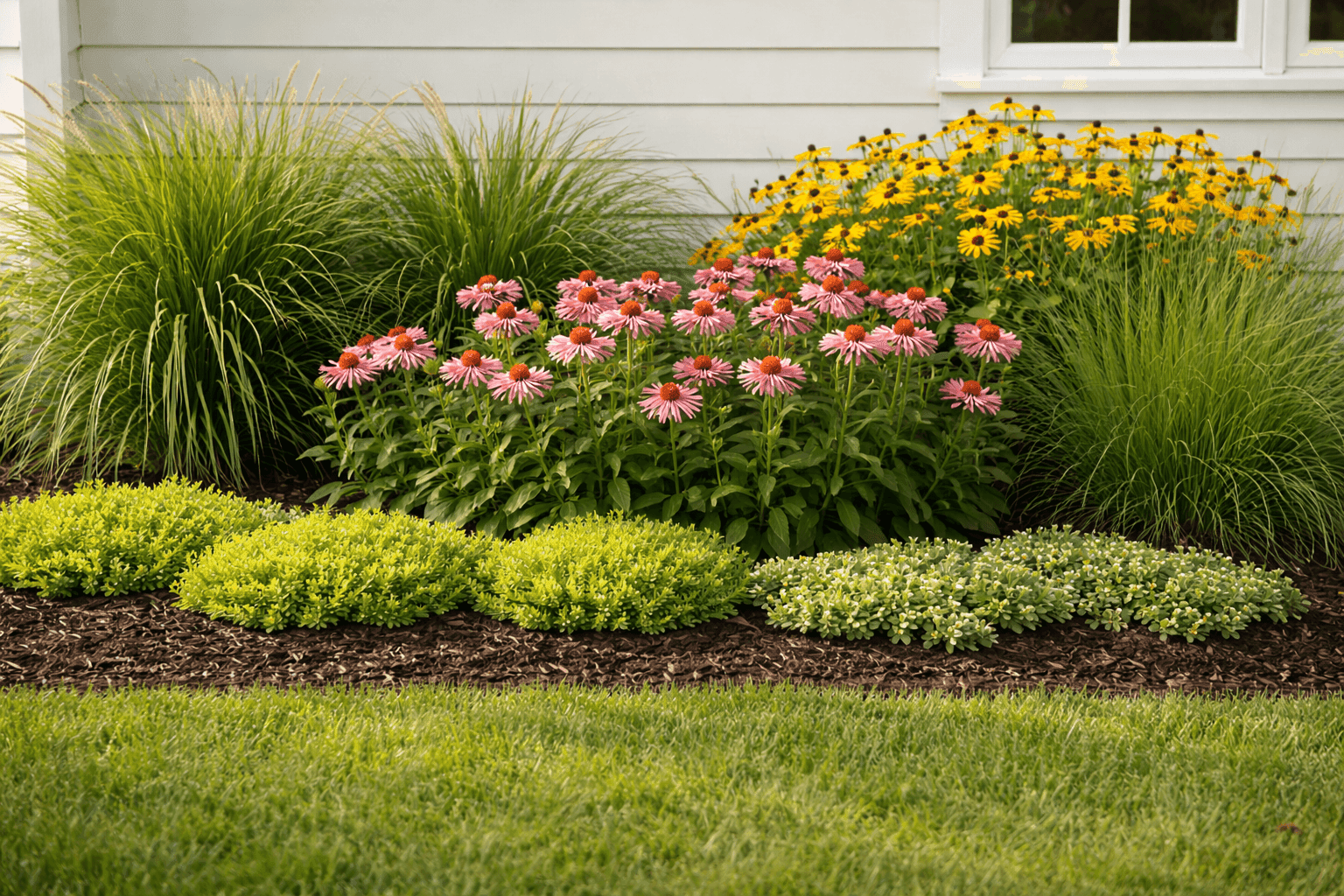
The difference between a landscaped yard and a yard with plants in it is almost entirely design — specifically, understanding how to layer plants by height, create visual repetition, and use structure to make a planting look intentional year-round. These are learnable principles that professional landscapers apply to every project, and once you understand them, your eye for what's working and what isn't changes completely.
The Three-Layer Rule
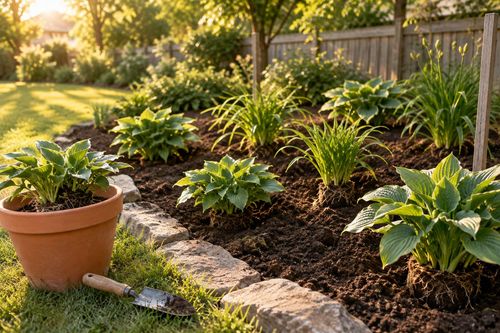
Every well-designed landscape bed has three layers: tall background plants (shrubs, ornamental grasses, or tall perennials at the back), medium-height feature plants in the middle (flowering perennials, mid-height ornamental grasses), and low ground-level plants or ground cover at the front edge. This layering creates depth, ensures every plant is visible, and means the bed looks structured even when nothing is in bloom. Violating the three-layer rule — mixing heights randomly — is why many home landscape beds look messy despite containing nice individual plants.
Repeat Plants for Cohesion
Professional landscape designers repeat the same plant species throughout a bed rather than using one of everything. A single lavender plant looks like an accident; three lavender plants spaced throughout the bed looks designed. Repetition creates visual rhythm and cohesion — the eye finds a pattern and follows it, which makes the planting feel intentional. A practical approach: choose 3–4 plant varieties for a bed and use multiples of each, rather than buying one of every interesting plant you see at the nursery.
Perennials vs. Annuals: Building the Right Foundation
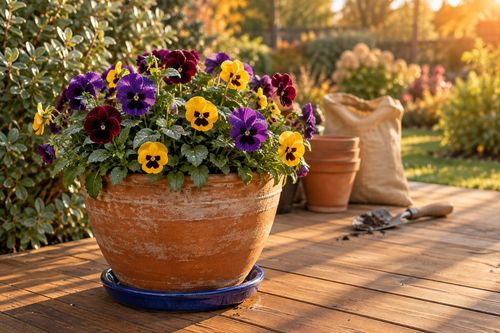
Perennials come back every year — they're the structural backbone of a long-term bed. Annuals bloom for one season and need to be replanted — they provide consistent color but require annual investment. A smart strategy: build your bed foundation with perennials (coneflower, black-eyed Susan, ornamental grasses, Russian sage), which fill in more each year, then use annuals in gaps for first-year color while the perennials establish. By year 3, your perennials will have filled in enough that you need very few annuals to fill gaps.
Mulch: More Than Aesthetics
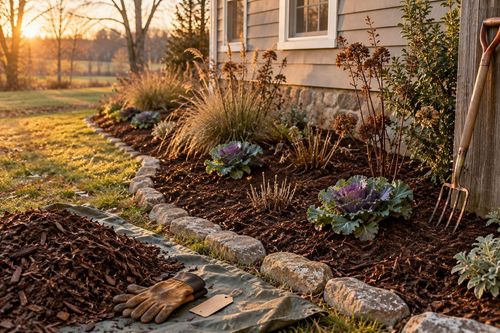
Fresh dark mulch at 2–3 inches deep does three things: suppresses weeds (dramatically reducing bed maintenance), retains soil moisture (reducing watering frequency), and regulates soil temperature. Visually, it creates a clean, unified bed background that makes every plant pop. Apply mulch after planting and keep it 2–3 inches away from plant stems to prevent rot. Refresh annually in spring — old mulch breaks down and contributes organic matter to the soil, which is beneficial, but the depth decreases and a fresh top layer restores the weed suppression and aesthetic effect.
Before buying a single plant, draw a rough sketch of your bed and note: how much sun does it get (full sun = 6+ hours, part shade = 3–6 hours, full shade = under 3 hours)? What are your soil conditions (wet, dry, average)? What's the mature size of the space — not just now but in 5 years? Plants are almost always sold at a fraction of their mature size, and the most common landscaping mistake is planting too close together. A bed that looks sparse at planting will fill in beautifully in 2–3 years if you respect mature spacing. Resist the urge to pack things in for immediate fullness.