Beat the Screen Time Blues: DIY Backyard Obstacle Course
Create irresistible outdoor adventure that wins against homework and devices every time
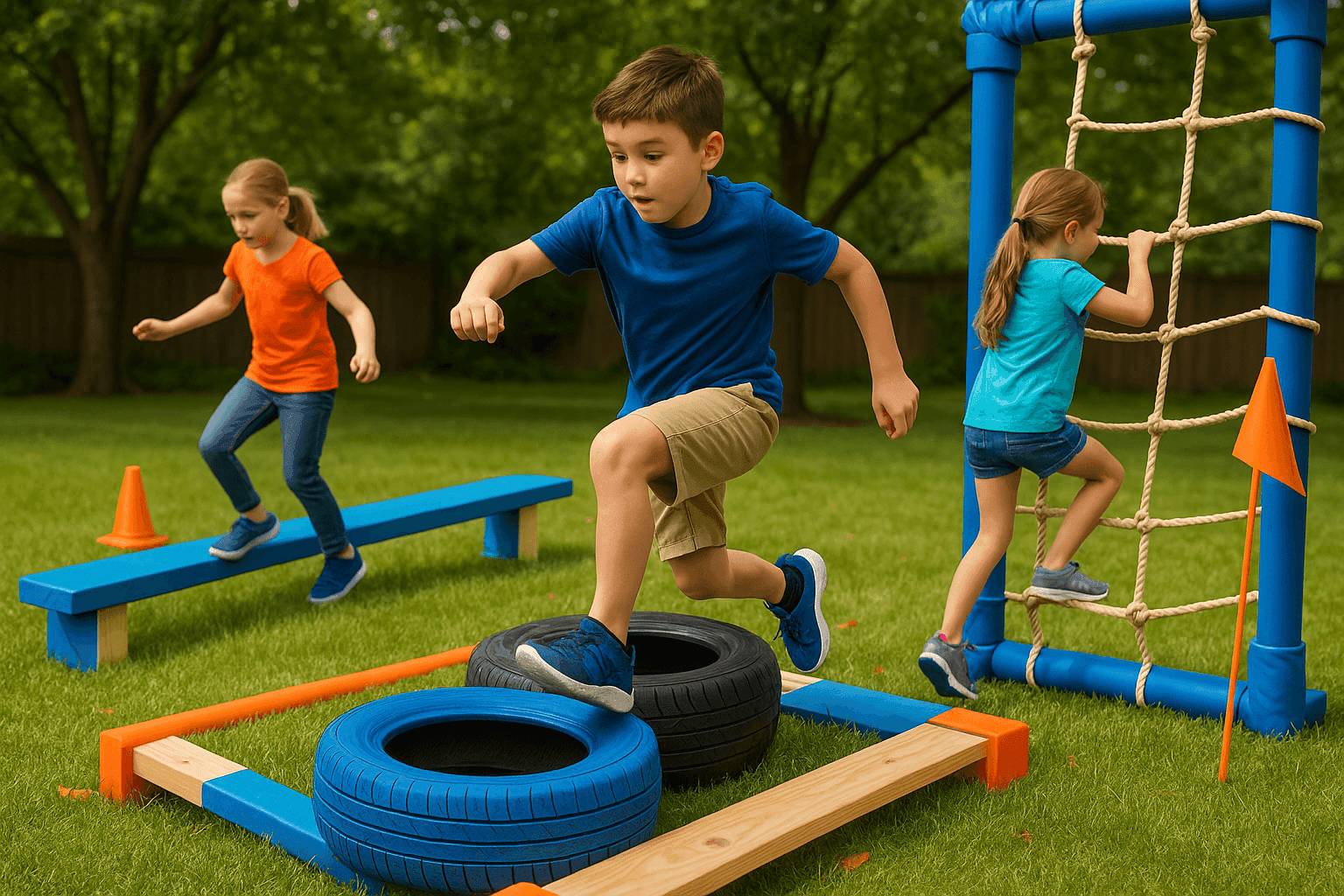
As a parent who's watched my kids gravitate toward screens the moment school stress kicks in, I knew I needed something seriously fun to compete with tablets and video games. That's when I discovered the magic of a backyard obstacle course – and wow, did it deliver! Within hours of setting up our first version using old tires and some rope, my kids were outside racing each other and completely forgetting about their devices. There's something about the physical challenge combined with the adventure element that just clicks with kids' natural desire to move and explore. The best part? You can build this entire setup in a weekend using mostly recycled materials, and it grows with your kids as they get braver and more coordinated.
Materials & Equipment
- Foundation Elements: 6-8 used tires (free from tire shops), wooden pallets or 2x8 planks ($30-50)
- Climbing Features: Climbing rope, cargo net, or thick rope ladder ($40-80)
- Balance Challenges: 2x4 lumber for beam construction, stepping stones or stumps ($25-40)
- Safety Materials: Sand for tire filling, rubber mulch for landing zones ($40-60)
- Hardware: Eye bolts, carabiners, heavy-duty rope, zip ties ($30)
- Fun Additions: Pool noodles, cones, tunnels, or fabric flags ($20-30)
- Tools: Drill, level, measuring tape, post-hole digger if installing permanent features
Course Construction
- Plan your layout considering space, safety zones, and natural traffic flow from start to finish
- Prepare tire stations by filling with sand for stability and creating jumping or crawling challenges
- Install balance beams at varying heights, securing ends with ground anchors or stable supports
- Set up climbing elements using strong anchor points like trees or fence posts with proper hardware
- Create agility sections with cone weaving, hurdle jumping, or army crawl tunnels
- Add safety zones with rubber mulch or soft landing areas under climbing features
- Test each element for stability and safety before letting kids loose on the course
- Establish rules and time challenges to keep the course engaging and competitive
The secret to an obstacle course that kids actually want to use repeatedly is making it modular and changeable. Instead of building everything permanently, use removable elements that can be rearranged weekly to create new challenges. I learned this from watching playground designers – they know that novelty is what keeps kids engaged long-term. Pro tip: involve your kids in the redesign process! Let them suggest new challenges or time trials. When they have ownership in creating the course, they're infinitely more invested in using it. Also, consider seasonal modifications – add sprinklers in summer, leaf pile jumps in fall!